
Tamagawa Onsen Akita Prefecture Complete Guide | Japan’s Largest Discharge Volume and Strong Acidic Hot Spring Spa
Tamagawa Onsen, located in Senboku City, Akita Prefecture, has long been cherished as one of Japan’s foremost hot spring therapeutic spas. Situated within the Towada-Hachimantai National Park, this hot spring resort boasts Japan’s largest discharge volume of 9,000 liters per minute, is known for its strongly acidic spring water with a pH of 1.2, and is recognized as the birthplace of infrared heated stone therapy. This article comprehensively covers everything you need to know before visiting Tamagawa Onsen, including its characteristics, therapeutic effects, facility differences, and access methods.
What is Tamagawa Onsen | Japan’s Premier Hot Spring Resort Prized by Akita
Tamagawa Onsen is a hot spring resort located at an elevation of approximately 740 meters in the mountains of Hachimantai in the northern part of Senboku City, Akita Prefecture. This area is designated as part of the Towada-Hachimantai National Park, surrounded by pristine beech forests and majestic mountains in a natural, abundant environment.
The hot spring has a long history, already known as a therapeutic spa during the Edo Period. The powerfully acidic spring, once called “Tamagawa Poison Water,” was initially unsuitable for drinking or agricultural use, but its unique therapeutic effects gradually became recognized, and the number of people visiting for treatment purposes increased.
Currently, the Tamagawa Onsen district has two accommodations: “Tamagawa Onsen” and “Shin-Tamagawa Onsen,” each operating with different concepts. Both facilities use the same hot spring source and offer thermal therapeutic experiences that harness its abundant water volume and unique spring quality.
Japan’s Largest Discharge Volume and Strong Acidic Spring | The Spring Quality and Characteristics of Tamagawa Onsen
Overwhelming Discharge Volume
The greatest characteristic of Tamagawa Onsen is that it boasts Japan’s largest discharge volume from a single source at 9,000 liters per minute. This abundant volume ensures a constant supply of fresh hot spring water, allowing visitors to experience the therapeutic effects of pure source water without circulation or dilution. The hot spring flows at a high temperature of 98 degrees Celsius, allowing one to feel the powerful energy of the earth.
pH 1.2 Strongly Acidic Spring
Tamagawa Onsen’s spring quality shows a pH of 1.2, Japan’s most strongly acidic level. This is a rare spring composition worldwide, primarily containing hydrochloric acid. Despite being colorless and transparent, it emits a strong sulfur odor. This strongly acidic water has extremely high sterilizing properties and is said to be effective for skin diseases.
The spring classification is “Acidic-carbon dioxide, iron (II), aluminum-chloride spring,” containing diverse mineral components including iron and aluminum. After bathing, the skin feels silky smooth, and it also has the aspect of being a “beauty spring.”
Radium Content and Low-Level Radiation Hormesis Effect
Another major characteristic of Tamagawa Onsen is its trace radium content. This hormesis effect from low-level radiation has drawn attention from the medical community, and is said to enhance the body’s natural healing abilities. It is believed that moderate radiation stimulus activates cells, contributing to improved immunity and anti-aging effects.
The Therapeutic Effects of Tamagawa Onsen | A Hot Spring Suitable for Treatment and Long-term Spa Therapy
Tamagawa Onsen developed historically as a spa treatment destination, and many visitors come for extended stays aimed at improving various ailments.
Primary Applicable Conditions
The unique spring composition of strongly acidic water and radium content is said to be effective for the following conditions:
- Skin Diseases: Atopic dermatitis, chronic eczema, psoriasis
- Rheumatic Diseases: Rheumatoid arthritis, osteoarthritis
- Neuralgia and Muscle Pain: Sciatica, stiff shoulders, lower back pain
- Chronic Digestive Disorders: Improvement of gastrointestinal function
- Diabetes: Stabilization of blood sugar levels
- Hypertension: Normalization of blood pressure
- Women’s Ailments: Menopausal disorders, cold sensitivity
- Fatigue Recovery and Health Promotion: Improved immunity, stress relief
Spa Therapy Methods and Precautions
Spa therapy at Tamagawa Onsen requires strict adherence to proper bathing methods due to the strength of the spring quality. Beginners must always start with diluted hot spring water and gradually acclimate their bodies.
Initial bathing time should be approximately 3-5 minutes, and even after becoming accustomed, it should not exceed 10 minutes. Additionally, adequate rest and hydration after bathing are important, and daily bathing should be limited to 2-3 times.
To achieve therapeutic effects from extended stays, a minimum of one week, ideally 2-3 weeks of residence, is recommended.
Birthplace of Infrared Heated Stone Therapy | The Charm of Natural Stone Therapy
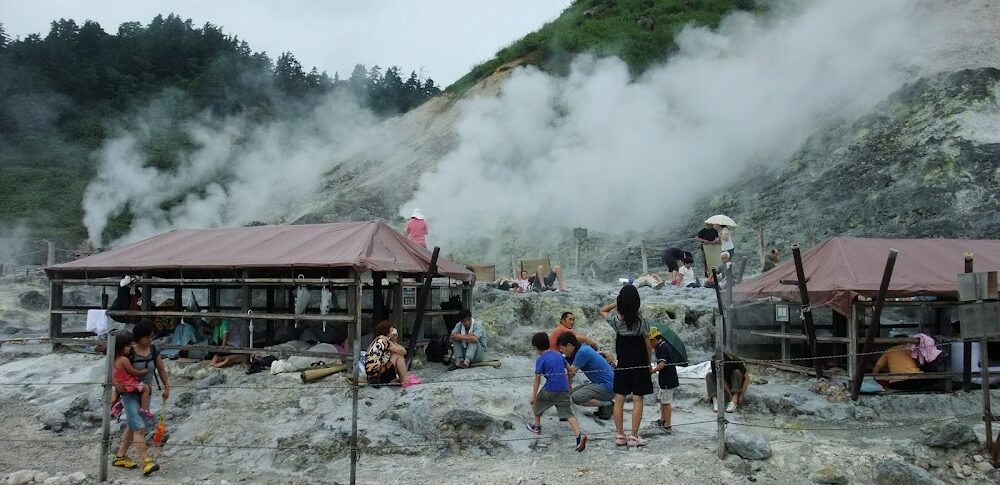
Tamagawa Onsen is nationally known as the “birthplace of infrared heated stone therapy.” The rock formations surrounding the hot spring source emit geothermal heat and trace radiation, and by lying on these rocks, one can simultaneously experience thermal effects and hormesis effects.
Characteristics of Natural Stone Therapy
The natural stone therapy at Tamagawa Onsen is conducted in the rock area containing “hokutolite” (北投石), located a few minutes’ walk from the hot spring facility. Hokutolite is a precious mineral designated as a Special Natural Monument and contains radium.
When using stone therapy, one lies down on a mat or mat, taking 30 minutes to an hour to gradually warm the body. The rock temperature varies by location, and it is important to select an appropriately warm area of around 40-50 degrees Celsius.
Benefits and Usage of Stone Therapy
Stone therapy can provide improved blood circulation, detoxification effects, and relaxation benefits. When combined with hot spring bathing, synergistic effects can provide enhanced health promotion.
Usage is limited to the snow-free period from late April to early November. Since the stone therapy area is outdoors, appropriate clothing based on weather and temperature is necessary, along with preparation of mats, leisure sheets, towels, and other items. Drinking water for hydration must also be brought.
Differences Between Tamagawa Onsen and Shin-Tamagawa Onsen | Comparison of Two Facilities
The Tamagawa Onsen district has two accommodations, “Tamagawa Onsen” and “Shin-Tamagawa Onsen,” which use the same hot spring source while operating with different concepts.
Tamagawa Onsen | Traditional Spa Specializing in Treatment Therapy
Tamagawa Onsen is operated as a facility specializing in traditional spa therapy with the concept of “home of spa treatment.” It is an accommodation aimed at those seeking treatment and recuperation, offering facilities and services that presuppose extended stays.
Facility Characteristics:
- Guest rooms feature simple construction without bath, toilet, or TV facilities
- Two accommodation options: self-catering and inn-style
- Large bathing area with 11 different bathtubs
- Quiet environment centered on spa therapy
- Relatively reasonable accommodation rates
Tamagawa Onsen is suitable for those seeking genuine spa therapy, those planning extended stays, and those wishing to recuperate in a quiet environment.
Shin-Tamagawa Onsen | Comfortable Mountain Hot Spring Resort
Shin-Tamagawa Onsen operates as a facility providing more comfortable stays with the concept of “a hot spring resort inviting you to a healing space.” While drawing from the Tamagawa Onsen source, it functions as a mountain resort hotel with modern facilities and services.
Facility Characteristics:
- Guest rooms fully equipped with bath, toilet, TV, and air conditioning
- Large bathing area with 14 different bathtubs and outdoor hot spring bath
- Meals featuring Akita regional cuisine
- Comfortable facilities as a resort hotel
- Environment allowing both tourism and therapeutic bathing
Shin-Tamagawa Onsen is suitable for those wishing to enjoy hot springs in a comfortable environment, those combining tourism with their trip, and families or first-time visitors.
Which Should You Choose
The choice depends on your purpose of stay, duration, and desired level of comfort. For extended spa therapy treatments, Tamagawa Onsen is appropriate; for enjoying hot springs and tourism in a comfortable environment, Shin-Tamagawa Onsen is suitable. Both facilities are within walking distance, so it is possible to stay at one while using the other’s hot spring as a day-visit.
Tamagawa Onsen’s Large Bathing Areas and Facilities Guide
Both Tamagawa Onsen and Shin-Tamagawa Onsen feature large bathing areas with diverse bathtubs, allowing visitors to enjoy hot springs in various bathing styles.
Tamagawa Onsen’s Baths (11 Types)
Tamagawa Onsen provides 11 different bathtubs ranging from pure strongly acidic source water to weakly acidic water to reduce physical burden.
- 50% Source Water Bath: Source water diluted to 50%, suitable for beginners
- 100% Source Water Bath: Pure strongly acidic source water
- Bubble Bath: Massaging effect from bubbles
- Lying Bath: Shallow bathtub allowing horizontal soaking
- Waterfall Bath: Stimulation to shoulders and lower back
- Box Steam: Thermal bathing by steam
- Sauna: High-temperature perspiration effect
The design allows gradual body acclimation while selecting baths suited to individual physical condition.
Shin-Tamagawa Onsen’s Baths (14 Types)
Shin-Tamagawa Onsen features an even more diverse selection of 14 bathtubs and outdoor baths compared to Tamagawa Onsen.
- 100% Source Water Bath: Genuine strongly acidic water
- 50% Source Water Bath: Reduced physical burden
- Weakly Acidic Bath: Skin-gentle spring composition
- Outdoor Bath: Bathing while experiencing seasonal nature
- Jacuzzi: Relaxation by water flow
- Lying Bath and Walking Bath: Various bathing styles
- Steam Bath: Thermal bathing by hot spring steam
As a resort facility, it offers a more diverse bathing experience.
Day-Visit Bathing Information
Both facilities accept day-visit bathing.
Tamagawa Onsen:
- Hours: 10:00-14:30
- Fee: Approximately 1,000 yen for adults (varies by season)
Shin-Tamagawa Onsen:
- Hours: 10:00-15:00
- Fee: Approximately 1,200 yen for adults (varies by season)
Entry restrictions may apply depending on congestion, so advance confirmation is recommended.
Accommodations and Room Information
Tamagawa Onsen’s Accommodation Options
Tamagawa Onsen offers two accommodation styles based on traditional spa therapy.
Self-catering Section:
- Self-prepared meal style
- Shared communal kitchen facilities
- Economical rates suitable for extended stays
- 6-8 tatami mat Japanese-style rooms
Inn Section:
- One-night, two-meal plans
- Meals promoting health from within
- Enjoy meals while undergoing treatment
- 8-10 tatami mat Japanese-style rooms
Both room styles lack private bath, toilet, and TV facilities, utilizing shared facilities instead. This approach honors the original spirit of spa therapy, providing an environment conducive to concentrated thermal treatment.
Shin-Tamagawa Onsen’s Rooms
Shin-Tamagawa Onsen offers comfortable rooms designed with inspiration from Akita’s forests.
- Japanese-style Rooms: 8-10 tatami mat tranquil spaces
- Western-style Rooms: Twin rooms and others
- Japanese-Western Rooms: For groups or families
All rooms feature complete bath, toilet, TV, and climate control facilities for comfortable stays. Windows overlook the majestic Hachimantai natural scenery, allowing enjoyment of seasonal landscapes.
Dining | Akita Regional Cuisine and Health-conscious Meals
Tamagawa Onsen’s Meals
The inn section provides health-conscious meals enjoyable during treatment therapy. Aimed at achieving health from within, meals feature nutritionally balanced menus.
Dishes showcase Akita regional cuisine and seasonal ingredients, designed to enhance the therapeutic effects of thermal treatment. In the self-catering section, guests can purchase ingredients from nearby shops and prepare meals at their own pace.
Shin-Tamagawa Onsen’s Meals
Shin-Tamagawa Onsen provides meals featuring Akita regional cuisine and seasonal flavors.
- Kiritanpo: Representative Akita regional dish
- Hinai Jidori: Akita’s famous ingredient
- Mountain Vegetable Cuisine: Seasonal mountain bounty
- Fresh Local Ingredients: Produce from the Senboku area
Buffet-style or kaiseki cuisine dining options are available depending on the plan, providing abundant culinary enjoyment as a hot spring resort.
Access Methods | How to Get to Tamagawa Onsen
As Tamagawa Onsen is located in a mountainous area, planned preparation for access is necessary.
Access by Train and Bus
From Tokyo Area:
- Tohoku Shinkansen to Morioka Station or Akita Shinkansen to Tazawako Station
- From JR Tazawako Station, take the “Express Tamagawa Line” bus
- Approximately 70-80 minutes to Shin-Tamagawa Onsen
- Approximately 80-90 minutes to Tamagawa Onsen
Winter Period (December-March):
- Tamagawa Onsen closes for winter; the “Express Shin-Tamagawa Line” operates only to Shin-Tamagawa Onsen
- Road conditions change due to snow, so confirm operating status in advance
Bus Fares:
- Tazawako Station to Shin-Tamagawa Onsen: Approximately 1,500 yen one-way
- Tazawako Station to Tamagawa Onsen: Approximately 1,600 yen one-way
Access by Car
Via Tohoku Expressway:
- Approximately 90 minutes from Morioka IC via Routes 46 and 341
- Or approximately 60 minutes from Kazuno Hachimantai IC
Via Akita Expressway:
- Approximately 120 minutes from Daisen IC via Routes 105 and 341
During winter, studless tires or chains are essential due to road surface freezing and snow. Road closures may occur depending on weather, so confirm road information beforehand.
Parking Information
Both facilities feature free parking.
- Tamagawa Onsen: Approximately 200 spaces
- Shin-Tamagawa Onsen: Approximately 300 spaces
Congestion may occur during winter or holiday periods, so early arrival is recommended.
Surrounding Tourism | Enjoying the Nature of Hachimantai
Numerous tourist attractions showcasing the abundant natural scenery of the Towada-Hachimantai National Park are scattered around Tamagawa Onsen.
Hachimantai Asphalt Line
A mountain road spanning approximately 27 kilometers connecting Iwate and Akita Prefectures, crossing high elevations exceeding 1,600 meters. Spectacular scenery varies seasonally: spring’s “snow corridor,” summer greenery, and autumn foliage.
Lake Tazawa
Japan’s deepest lake with a depth of 423.4 meters, Lake Tazawa is characterized by its beautiful lapis lazuli-colored surface. Located approximately 40 minutes by car from Tamagawa Onsen, visitors can enjoy lakeside walks and cruises.
Nyuto Onsen Gorge
A secret hot spring resort area located approximately 30 minutes by car from Tamagawa Onsen. Seven hot spring inns are scattered throughout, each offering hot springs with different spring qualities. Hot spring hopping is possible, making it an irresistible area for hot spring enthusiasts.
Dakigaeri Gorge
Known as “Tohoku’s Yabakei,” this beautiful gorge is renowned as a scenic spot for fresh greenery and autumn foliage. Well-maintained hiking paths allow close enjoyment of gorge beauty.
Four-Seasonal Charm | Enjoying Tamagawa Onsen by Season
Spring (April-June)
Tamagawa Onsen reopens with snowmelt (around late April). Fresh greenery sprouts, and it is also the mountain vegetable gathering season. The stone therapy area becomes available for use, and thermal treatment can be enjoyed in pleasant weather.
Summer (July-September)
The high elevation provides a cool, comfortable climate even in summer. Alpine flora of Hachimantai blooms spectacularly, making it ideal for trekking. Stone therapy can be enjoyed comfortably, and it is also popular as a summer retreat.
Autumn (October-November)
The entire Hachimantai area is painted with spectacular autumn foliage. The contrast between beech yellowing and the green of evergreens is beautiful, allowing simultaneous enjoyment of hot springs and autumn leaf viewing. Tamagawa Onsen enters winter closure around early November.
Winter (December-March)
Tamagawa Onsen closes for winter, though Shin-Tamagawa Onsen operates year-round. Hot spring bathing amidst snowy landscapes is exceptional, and stays combining winter sports such as skiing and snowshoeing can also be enjoyed.
Reservation and Usage Precautions
Reservation Methods
Both facilities accept reservations through their official websites. Telephone reservations and bookings through travel agencies are also available. Particularly during autumn foliage season and holiday periods, facilities often reach capacity quickly, so early reservations are recommended.
Spa Therapy Plans and Extended Stays
Tamagawa Onsen offers spa therapy plans designed for stays of one week or longer. Consecutive night discounts apply, reducing financial burden while allowing genuine treatment therapy.
Items to Bring
Tamagawa Onsen (Self-catering Section):
- Cooking utensils and dishware
- Food ingredients
- Bedding is provided, though bringing familiar pillows is advisable
- Towels and toiletries
When Using Stone Therapy:
- Mats or leisure sheets
- Towels for ground covering
- Hats and sun protection
- Drinking water
Health-related Precautions
Due to the strongly acidic nature of the hot spring, the following points require attention:
- First-time bathers should start with short bathing periods
- Adequate hydration before and after bathing is essential
- Those with chronic conditions should consult with a doctor beforehand
- Shower with fresh water after bathing
- Remove metal accessories as they may discolor
- Avoid contact with eyes and mucous membranes
Tips for Maximum Enjoyment of Tamagawa Onsen
Recommended Stay Duration
While day visits allow experience of hot spring benefits, to fully experience spa therapy effects, a minimum of 3-4 nights and preferably one week or longer is ideal. Time is necessary for the body to acclimate and the therapeutic benefits to fully emerge.
Combining Hot Spring and Stone Therapy
Alternating hot spring bathing and stone therapy can produce synergistic effects. A common pattern involves stone therapy in the morning and hot spring bathing in the afternoon. However, when both are used the same day, adequate rest time should be considered to reduce physical burden.
Interaction with Local People
Many visitors from across Japan come to Tamagawa Onsen for extended stays, and interaction among long-term guests is part of spa culture. Information exchange and mutual encouragement enhance mental refreshment effects.
Combining with Surrounding Tourism
Combining not only thermal treatment but also nearby nature tourism and drives creates a more enriching stay. However, for spa therapy purposes, avoid strenuous tourism schedules, prioritizing physical condition management.
Conclusion | Refresh Mind and Body at Tamagawa Onsen
Tamagawa Onsen in Akita Prefecture is a unique hot spring destination featuring Japan’s largest discharge volume, strongly acidic spring water, and stone therapy. The two facilities, Tamagawa Onsen and Shin-Tamagawa Onsen, each serve different needs, offering diverse stay styles from traditional spa therapy to comfortable hot spring resort experiences.
In an environment surrounded by abundant nature, one can slowly immerse in powerfully therapeutic hot spring water and warm the body through natural stone therapy. Such a unique experience makes Tamagawa Onsen the ultimate destination to heal minds and bodies exhausted by modern stress society.
Both those seeking genuine spa therapy and those wishing to enjoy hot spring travel combined with tourism can find stays suited to their individual purposes. While access presents minor inconveniences, the therapeutic hot spring effects and natural beauty more than compensate.
Why not experience the power of Japan’s premier hot spring amidst the Hachimantai natural landscape, which displays different seasonal faces? A stay at Tamagawa Onsen will surely become an unforgettable memory, leaving you with a refreshed sense of being reborn in both mind and body.

