Higashiyama Onsen, Fukushima Prefecture: Complete Guide to the 1,300-Year-Old Hot Spring Resort in the Inner Recesses of Aizu-Wakamatsu
Higashiyama Onsen, located in Aizu-Wakamatsu City, Fukushima Prefecture, is a historic hot spring resort boasting approximately 1,300 years of history. Together with Kaminoyama Onsen and Yunohama Onsen in Yamagata Prefecture, it is called “Ou-San Rakugo” (Three Pleasures of the Ou Region) and has long been beloved by tourists and hot spring therapy visitors as the inner sanctum of Aizu-Wakamatsu. The hot spring town spreading along the Yugawa River is a special place where visitors can experience picturesque scenery, high-quality hot springs, and the historical culture of Aizu.
History and Origins of Higashiyama Onsen
Legend of Discovery by Monk Gyoki
The origins of Higashiyama Onsen date back to the Tenpyo era (729–749). According to legend, the eminent Buddhist priest Gyoki was led to this location by a three-legged crow with feathers of an unusual color, where he discovered the hot spring. Gyoki found the hot spring welling up near “Fushimi Falls,” and its high efficacy became known to many people.
Development in the Edo Period and the Aizu Domain’s Bathhouse
During the Edo period, it was designated as the official bathhouse of the Aizu Domain and served as a place of recuperation for domain samurai and common people. Located in the mountainous area to the east of Aizu-Wakamatsu Castle (Tsuruga Castle), it was named “Higashiyama” (East Mountain) and developed as the inner sanctum of Aizu-Wakamatsu. Records indicate that feudal lords and their retainers frequently visited to enjoy the hot spring’s benefits.
The Boshin War and Shinsengumi Vice-Commander Hijikata Toshizo
During the Boshin War of the late Shogunate period, historical records show that Hijikata Toshizo, vice-commander of the Shinsengumi, healed his wounded body in these waters. Even during the turbulent times, the waters of Higashiyama Onsen were believed to be effective for wounds and bruises, and many injured people came for treatment. This historical episode speaks to the high healing power possessed by Higashiyama Onsen.
Status as Ou-San Rakugo
Higashiyama Onsen, together with Kaminoyama Onsen and Yunohama Onsen in Yamagata Prefecture, came to be called “Ou-San Rakugo.” This designation as one of three premier hot springs representing the Tohoku region reflected highly valued appreciation of its beautiful scenery, hot spring quality, and hospitality. Today, this tradition is carried on, and the resort remains known as a hot spring destination frequented by literary figures and celebrities.
Spring Quality and Benefits of Higashiyama Onsen
Characteristics of the Spring Quality
The spring quality of Higashiyama Onsen is sulfate spring (calcium-sodium sulfate-chloride hot spring). It is colorless and transparent with a faint sulfur aroma, making it a high-quality hot spring. The source temperature is approximately 50–60 degrees Celsius and boasts an abundant water volume. Multiple springs line the Yugawa River, and many inns have their own private springs, allowing guests to enjoy fresh hot spring water.
Primary Benefits
The waters of Higashiyama Onsen are said to be effective for:
- Wounds, bruises, and sprains: Healing effects known since the Boshin War
- Joint pain and muscle aches: Analgesic effects due to sulfate spring properties
- Neuralgia and rheumatism: Symptom relief through thermal effects and mineral components
- Chronic skin conditions: Skin protective action from chloride spring components
- Fatigue recovery and health promotion: Blood circulation promotion from hot spring minerals
- Cold sensitivity and gynecological ailments: Thorough warming effect on the body
Sulfate springs are also called “wound springs” and promote skin regeneration. Additionally, the chloride spring components form a salt film on the skin, enhancing the warming effect and preventing rapid heat loss.
Higashiyama Onsen Hot Spring Town and Scenery
Picturesque Hot Spring Town Along Yugawa River
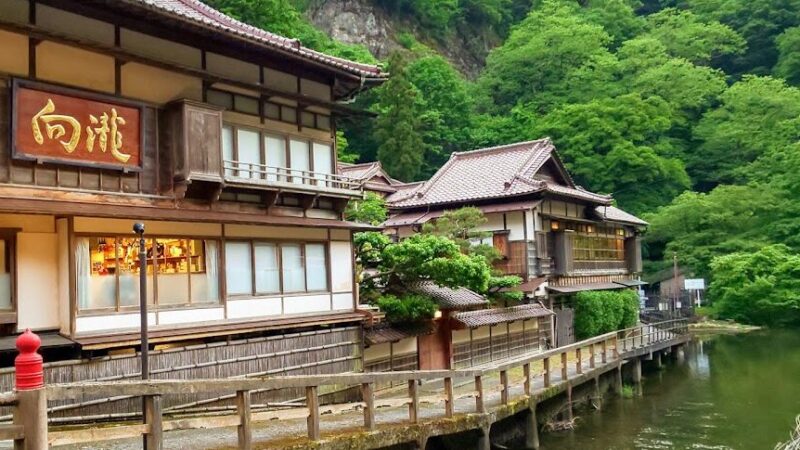
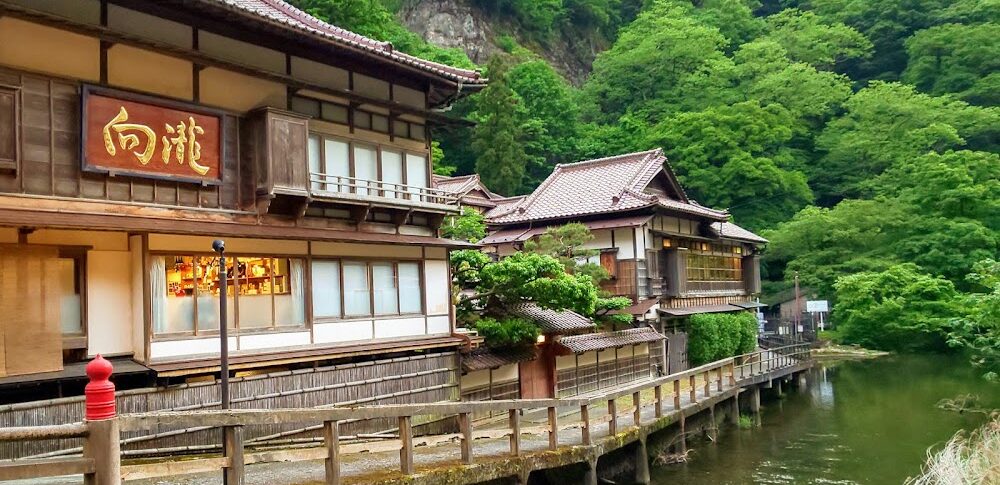
The hot spring town of Higashiyama Onsen is formed along the Yugawa River gorge. Many bridges span the river, each with its own character. Walking through the hot spring town, visitors can enjoy beautiful scenery where the babbling of the river, green trees, and historic inn buildings harmonize. Unlike flashy neon-lit streets, the town maintains a serene appearance befitting Aizu’s inner sanctum.
Four Seasons’ Charm
Higashiyama Onsen displays different faces in each season:
Spring: Cherry blossoms lining the Yugawa bloom in full splendor, tinting the entire hot spring town pink. Evening illuminations create a fantastical atmosphere.
Early Summer: Fresh green foliage is brilliant, and visitors can enjoy hot springs in clear, refreshing air. The season is ideal for hiking in the Yugawa Gorge.
Autumn: Autumn leaves color the hot spring town, and the view of colored leaves from outdoor baths is exceptional. The Aizu region has many famous autumn foliage spots, making Higashiyama Onsen an ideal base for foliage viewing.
Winter: Snow-viewing bathing season. The snowy hot spring town is enveloped in silence, deepening its charm.
Fushimi Falls and Yugawa Gorge
“Fushimi Falls,” said to be the birthplace of Higashiyama Onsen, is a beautiful waterfall in the heart of the hot spring town. Legend preserves the story of Monk Gyoki discovering hot springs near this waterfall. The Yugawa Gorge features waterfalls and unique rock formations, offering opportunities for nature walks. The area around Higashiyama Dam also spreads grand natural scenery, making it a spot where visitors can enjoy both hot springs and nature.
Major Hot Spring Inns at Higashiyama Onsen
Higashiyama Onsen offers diverse accommodations ranging from traditional established inns to modern hotels.
Oyado Toho (Orix Hotels & Resorts)
A large resort hotel representing Higashiyama Onsen. Its observation open-air bath offers panoramic views of the Aizu Basin, with night views being particularly beautiful. The buffet restaurant serves diverse cuisines including Aizu regional dishes. The facility accommodates families, couples, and groups with comprehensive amenities.
Shosuke no Yado Taki no Yu
An established inn located right beside Fushimi Falls. Its signature open-air bath overlooks the waterfall, allowing visitors to fully experience the atmosphere of Higashiyama Onsen’s birthplace. Traditional Aizu hospitality and kaiseki cuisine using local ingredients are popular. The inn features foot baths and gardens for leisurely relaxation.
Kururogi Yado Shintaki and Chitaki
Sister inns operating under different charms. Shintaki stands along the Yugawa River, offering bathing while viewing the gorge. Chitaki is a traditional Japanese inn with a calm atmosphere, recommended for those wishing to quietly enjoy hot springs. Cross-inn hot spring tours are possible, allowing guests to experience different springs.
Harataki
An established inn with its own private spring. Boasting abundant hot spring volume, guests can enjoy fresh hot spring water in large baths and open-air baths. The charm lies in Japanese spaces evoking Aizu’s history and culture, with guest rooms overlooking the clear Yugawa stream. Cuisine features kaiseki using Aizu’s seasonal ingredients, enjoyed with local sake.
Tsuki no Akari
A luxury inn with private open-air baths in all rooms. It offers the luxury of exclusively enjoying hot spring water in private space. Guest rooms feature refined design blending modernity and tradition, ideal for special occasions or trips with loved ones. Cuisine is creative kaiseki centered on locally sourced ingredients, enjoyable for both eye and palate.
Oedo Onsen Monogatari Higashiyama Grand Hotel
A popular hotel offering hot springs and buffet dining at reasonable prices. Oedo Onsen Monogatari group features abundant buffet and plentiful hot spring facilities. Suited for families and group travel, providing casual enjoyment of Higashiyama Onsen.
Higashiyama Park Hotel Shinfugetsu (Ito En Hotels)
An Ito En Hotels group facility with excellent cost performance. Hot springs feature source water continuously flowing, allowing relaxed bathing in spacious large baths. Popular buffet plans with free drinks suit those seeking casual hot spring travel.
Konjyakutei
A hideaway inn for sophisticated travelers. Relaxed Japanese-modern space allows quiet hot spring stays. With limited guest rooms, guests receive meticulous service. Cuisine features seasonal kaiseki carefully crafted from local ingredients.
Hanare Matsushima Kaku
A luxury inn featuring suite rooms with guest-exclusive open-air baths. Completely private space allows undisturbed hot spring enjoyment. Ideal for special occasions or luxurious hot spring travel. Cuisine offers special kaiseki using Aizu’s finest ingredients for blissful moments.
Access to Higashiyama Onsen
Train and Bus Access
From JR Aizu-Wakamatsu Station:
- Local Bus: Board Aizu Bus “Higashiyama Onsen-bound,” approximately 15 minutes. Alight at “Higashiyama Onsen Station.” Buses operate approximately 1–2 times hourly.
- Sightseeing Bus “Haikara-san” and “Akabe”: Sightseeing buses touring Aizu-Wakamatsu’s attractions also stop at Higashiyama Onsen. Convenient for combining sightseeing and hot springs.
- Taxi: Approximately 10 minutes, fare approximately ¥1,500–2,000.
From Tsuruga Castle:
- Local Bus and Sightseeing Bus: Accessible in approximately 10 minutes. Proceeding to Higashiyama Onsen after castle viewing is the standard route.
- Taxi: Approximately 5–10 minutes.
Car Access
- From Banetsus Expressway Aizu-Wakamatsu IC: Approximately 15 minutes via National Routes 49 and 121.
- From Tohoku Expressway Koriyama JCT: Approximately 1 hour via Banetsus Expressway.
- Parking: All inns have parking facilities. Day-use bathing facilities often accommodate parking.
Access from Tokyo and Sendai
From Tokyo:
- Tohoku Shinkansen to Koriyama Station (approximately 1 hour 20 minutes), JR Banetsu-Seisenline to Aizu-Wakamatsu Station (approximately 1 hour 10 minutes), then bus or taxi to Higashiyama Onsen.
- By car via Tohoku Expressway and Banetsus Expressway: approximately 3.5 hours.
From Sendai:
- Tohoku Shinkansen to Koriyama Station (approximately 40 minutes), JR Banetsu-Seisenline to Aizu-Wakamatsu Station, then bus or taxi to Higashiyama Onsen.
- By car via Tohoku Expressway and Banetsus Expressway: approximately 2 hours.
Sightseeing Spots Around Higashiyama Onsen
Tsuruga Castle (Aizu-Wakamatsu Castle)
Approximately 10 minutes by car or 15 minutes by bus from Higashiyama Onsen, this symbol of Aizu is known as a famous castle that endured a month-long siege during the Boshin War. Now functioning as a museum with interior viewings, the keep offers panoramic views of the Aizu Basin. Particularly beautiful during cherry blossoms in spring and autumn foliage, drawing many visitors.
Iimori Hill—White Tiger Corps Self-Immolation Site
A location preserving the tragic story of the White Tiger Corps (Byakkotai) fallen in the Boshin War. Iimori Hill features a White Tiger Corps memorial hall and self-immolation site where visitors can learn Aizu’s history. Approximately 15 minutes by car from Higashiyama Onsen.
Aizu Samurai Mansion
A historical theme park recreating the mansion of Nishigo Yorime, a senior retainer of the Aizu Domain. Visitors experience Edo-period samurai life with abundant activity programs including archery and Akabekko (red doll) painting.
Nanoka-Machi Avenue
A retro shopping street preserving Taisho-era ambiance. Lined with storehouse-style buildings, visitors purchase traditional crafts including Aizu lacquerware and Aizu cotton, local sake, and confectioneries. Numerous cafes and restaurants make the area enjoyable for exploration.
Lake Inawashiro and Mount Bandai
Approximately 40 minutes by car from Higashiyama Onsen. Japan’s fourth-largest lake, Lake Inawashiro, is also called the “Mirror of Heaven.” Mount Bandai’s magnificent form mirrors in the lake, offering spectacular views across seasons. Summer allows lake swimming and water sports; winter features skiing.
Day-Use Bathing Information
Many Higashiyama Onsen inns offer day-use bathing, allowing enjoyment of quality hot springs without lodging.
Major Facilities Offering Day-Use Bathing
- Oyado Toho: Popular observation open-air bath. Fee approximately ¥1,000–1,500.
- Shosuke no Yado Taki no Yu: Open-air bath overlooking Fushimi Falls. Fee approximately ¥1,200.
- Harataki: Abundant spring volume from private source. Fee approximately ¥1,000.
- Higashiyama Park Hotel Shinfugetsu: Spacious large bath. Fee approximately ¥800.
※Day-use bathing hours and fees vary by facility. Availability may be restricted due to congestion or cleaning times. Advance confirmation with each facility is recommended.
Foot Bath Spots
Free foot bath spots exist throughout the hot spring town. Conveniently enjoying hot springs during walks, these are popular with tourists. Foot baths along the Yugawa allow relaxation while viewing gorge scenery.
Aizu Food Culture and Higashiyama Onsen
Aizu Regional Dishes
Higashiyama Onsen inns serve cuisine reflecting Aizu’s rich food culture:
- Kozuyu: Aizu’s representative regional dish. An elegant broth featuring dried scallop stock with taro, carrots, kikurage, and shirataki.
- Basashi (horse meat sashimi): Aizu’s rooted horse meat culture offers fresh basashi.
- Herring in Sansho Pepper Marinade: Aizu’s traditional preserved food. Distinctive flavor with sansho pepper fragrance.
- Aizu Regional Chicken: Local chicken dishes featuring concentrated umami.
- Aizu Koshihikari Rice: Rice grown in the fertile Aizu Basin renowned for its deliciousness.
Aizu Sake
The Aizu region is a sake production center with numerous breweries. Higashiyama Onsen inns offer local premium sake. Famous nationally available brands include “Sharaku,” “Hiroroshi,” and “Suehiro.”
Model Courses for Enjoying Higashiyama Onsen
One-Night, Two-Day Model Course
Day One:
- Morning: Arrival at Aizu-Wakamatsu Station, Tsuruga Castle viewing
- Lunch: Aizu ramen or regional cuisine at Nanoka-Machi Avenue
- Afternoon: White Tiger Corps self-immolation site and Aizu Samurai Mansion viewing
- Evening: Arrival at Higashiyama Onsen, check-in
- Night: Enjoy hot springs and kaiseki cuisine
Day Two:
- Morning: Early bathing, breakfast, check-out
- Morning: Hot spring town stroll, Fushimi Falls viewing
- Lunch: Hot spring town or Aizu-Wakamatsu
- Afternoon: Lake Inawashiro and Mount Bandai sightseeing or Ouchi-Juku village visit
- Evening: Departure
Day-Trip Model Course
- Morning: Aizu-Wakamatsu Station arrival, Tsuruga Castle viewing
- Lunch: Aizu regional cuisine in Aizu-Wakamatsu
- Afternoon: Higashiyama Onsen day-use bathing, hot spring town walk
- Evening: Souvenir shopping at Nanoka-Machi Avenue
- Night: Departure from Aizu-Wakamatsu Station
Events and Festivals at Higashiyama Onsen
Aizu Festival (Late September)
Aizu’s largest festival featuring Aizu Domain procession and drum-and-fife parades themed on history. Many tourists stay at Higashiyama Onsen while enjoying the festival, making this period particularly lively.
Higashiyama Onsen Cherry Blossom Festival (Mid to Late April)
Held during peak bloom of cherry blossoms lining the Yugawa. Evening illuminations display fantastical night cherry blossoms.
Aizu Picture Candle Festival (Early to Mid-February)
Winter festival using Aizu traditional craft picture candles. Tsuruga Castle, Oyakuen Garden, and various city locations glow with picture candle light, enveloped in a fantastical atmosphere.
Lodging Budget and Selection at Higashiyama Onsen
Budget-Based Inn Selection
Reasonable (One night with 2 meals ¥10,000–15,000):
Oedo Onsen Monogatari Higashiyama Grand Hotel and Higashiyama Park Hotel Shinfugetsu chain hotels recommended. Casual buffet-style enjoyment.
Standard (One night with 2 meals ¥15,000–25,000):
Traditional inns like Kururogi Yado Shintaki and Chitaki, Harataki, offering kaiseki and hot springs.
High-Class (One night with 2 meals ¥25,000–40,000):
Oyado Toho and Shosuke no Yado Taki no Yu featuring comprehensive facilities and service. Ideal for special travels.
Luxury (One night with 2 meals ¥40,000 and above):
Tsuki no Akari and Hanare Matsushima Kaku with private open-air baths in all rooms or special suites enabling top-tier stays.
Purpose-Based Inn Selection
Family travel: Large public baths and buffet inns convenient. Oyado Toho, Oedo Onsen Monogatari Higashiyama Grand Hotel recommended.
Couples and spouses: Private open-air bath rooms or serene atmosphere inns recommended. Tsuki no Akari, Konjyakutei.
Group travel: Inns with spacious banquet halls and in-room dining options convenient. Harataki, Shintaki and Chitaki.
Solo travel: Select inns offering solo lodging plans. Higashiyama Park Hotel Shinfugetsu accommodates.
Summary: Charm of Higashiyama Onsen
Higashiyama Onsen in Aizu-Wakamatsu City, Fukushima Prefecture, is a historic hot spring resort with 1,300 years of history, remaining beloved as Aizu’s inner sanctum. The fusion of high-quality sulfate springs, picturesque scenery along the Yugawa, beautiful natural landscapes across seasons, and Aizu’s rich historical culture makes it a premier Tohoku hot spring destination.
An ideal base for Aizu history tourism with connections to Tsuruga Castle and White Tiger Corps sites, visitors can combine hot springs and sightseeing for enriched travel. Diverse accommodations from established inns to modern hotels suit various budgets and purposes.
Day-use bathing allows casual stops during Aizu tourism. Excellent accessibility from Tokyo and Sendai makes it ideal for weekend getaways.
Heal heart and body in historically esteemed mineral springs, savor Aizu’s culture and nature—Higashiyama Onsen is a must-visit hot spring destination when traveling to Fukushima Prefecture.