Yamashiro Hot Spring, Ishikawa Prefecture Complete Guide | Thoroughly Explaining the History and Charm of 1,300 Years Since Opening
Yamashiro Hot Spring, located in Kaga City, Ishikawa Prefecture, is one of the premier hot springs in the Hokuriku region with a history spanning over 1,300 years since its opening. As the core hot spring resort of the Kaga Hot Spring Area, it flourished as the domain hot spring of the Kaga Clan during the Edo period, and has been known since the Meiji era as a distinguished hot spring destination visited by many literary figures and artists. This article comprehensively conveys the charm of this hot spring resort, covering everything from its history, water quality, tourist attractions, accommodations, to gourmet information.
History and Cultural Background of Yamashiro Hot Spring
The Legend and History of Opening 1,300 Years Ago
Yamashiro Hot Spring is said to have been discovered in the second year of Jinki (725) during the Nara period. According to legend, the Buddhist priest Gyoki discovered the hot spring after seeing a wounded crow healing its wounds by bathing in the water while traveling toward Hakusan. This “legend of the crow’s bath” remains an important anecdote that tells the origin of Yamashiro Hot Spring.
By the Heian period, it was already known as a hot spring resort, and from the Kamakura period onward, it developed as a therapeutic bathing destination. Particularly during the Edo period, it was designated as the domain hot spring of the Maeda family of the Kaga Clan, and became a hot spring resort that deeply reflected the culture and traditions of the million-stone Kaga domain.
Birthplace of the Japanese “Gojuon” (Fifty-Sound Diagram)
Yamashiro Hot Spring is also culturally significant. During the Muromachi period, a Shingon Buddhist priest named Myokaku is said to have completed the “Gojuon” (fifty-sound diagram) that organized the phonetic system of the Japanese language while staying in this area. For this reason, Yamashiro Hot Spring is known as the “birthplace of the Gojuon,” and a monument commemorating Myokaku stands in the hot spring town. This historical fact shows that Yamashiro Hot Spring is not merely a therapeutic bathing destination, but a place that contributed to the development of Japanese culture.
Connection with Literary Figures and Artists After the Meiji Era
From the Meiji era onward, Yamashiro Hot Spring was beloved by many literary figures and artists. Notable cultural figures such as Izumi Kyoka, Akiko Yosano, and Rosanjin Kitaohji visited this place, made it the setting for their works, and left records of their stays. In particular, Rosanjin Kitaohji stayed at Yamashiro Hot Spring for an extended period and devoted himself to ceramic art and culinary research with “Iroha Cottage” as his base. Today, this cottage is preserved as “Rosanjin’s Former Residence Iroha Cottage” and is open to the public.
Water Quality and Beneficial Effects of Yamashiro Hot Spring
Characteristics of the Hot Spring Source and Water Quality
Yamashiro Hot Spring has multiple sources, with the representative one being called “Gensenrurikou” (Original Spring Lapis Lazuli Light). The water quality is sodium and calcium sulfate-chloride spring water, colorless and transparent with a faint salty taste. The source temperature is approximately 70 degrees Celsius with abundant hot spring water.
This water quality is also known as a “beauty hot spring,” being gentle on the skin, and leaving the skin feeling moisturized after bathing, making it particularly popular among women. Due to the characteristics of sulfate springs, it has excellent moisturizing effects, and due to the characteristics of chloride springs, it has excellent heat-retention properties, offering the advantage of not cooling quickly after bathing.
Therapeutic Effects of the Hot Spring
The therapeutic effects of Yamashiro Hot Spring are diverse. Common indications include neuralgia, myalgia, arthralgia, frozen shoulder, motor paralysis, joint stiffness, contusions, sprains, chronic digestive disorders, hemorrhoids, chilliness, post-illness recovery period, fatigue recovery, and health promotion.
In particular, due to the characteristics of sulfate springs, it is said to be effective for arteriosclerosis, cuts, burns, and chronic skin diseases. Additionally, drinking the water is said to be effective for chronic cholecystitis, gallstones, chronic constipation, etc., but when drinking, always follow the facility’s instructions.
Kotosouyu and Yu no Gawarae | The Center of the Hot Spring Town
Charm of Kotosouyu
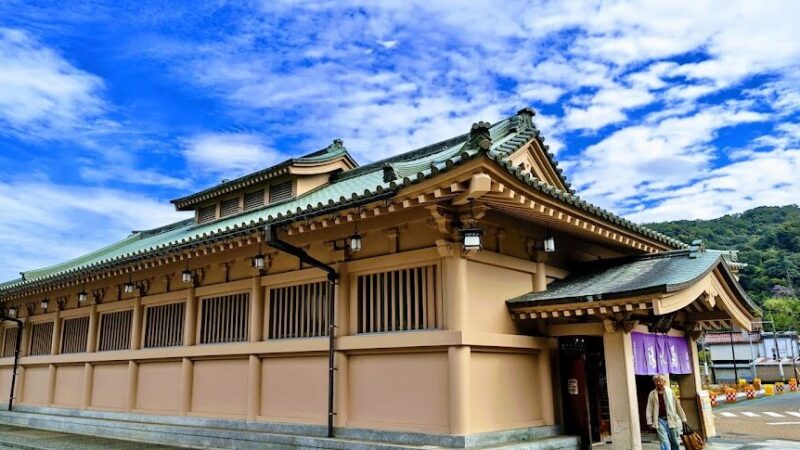
The symbolic existence of Yamashiro Hot Spring is “Kotosouyu.” A souyu is a public bathhouse, and Kotosouyu is a facility that restores the bathhouse from the Meiji era. Rebuilt in 2010, this building faithfully reproduces the structure from 1886 (Meiji 19), with a traditional bathhouse architecture featuring beautiful deep-red cross-lattice woodwork and tile roof on the exterior.
The interior is a valuable facility where visitors can experience the bathing methods of that era, with the flooring and bathing pools tiled with Kutani ware, and walls finished with wiped lacquer—a luxurious construction. While soaking in the bath, one can feel the bathing culture of the Edo and Meiji periods.
At Kotosouyu, visitors can experience a traditional bathing style called “yuami.” This is a bathing method using “fresh hot spring water” where the source water flows directly into the bathing pool without added water, heating, or circulation. However, since the source temperature is high, caution is needed for those who prefer less hot water.
Strolling Through Yu no Gawarae
The hot spring town spreading out from Kotosouyu is called “Yu no Gawarae” (The Hot Spring Enclosure). This is a unique townscape where ryokans and shops are arranged in a circle around the public bathhouse, reflecting remnants of community culture centered on hot springs.
Yu no Gawarae features stone-paved roads with charming ryokans, restaurants, and souvenir shops lined up. One can enjoy leisurely walks while experiencing the atmosphere unique to hot spring towns. At dusk, lanterns are lit, further enhancing the charm.
Yamashiro Hot Spring Souyu (Modern Version)
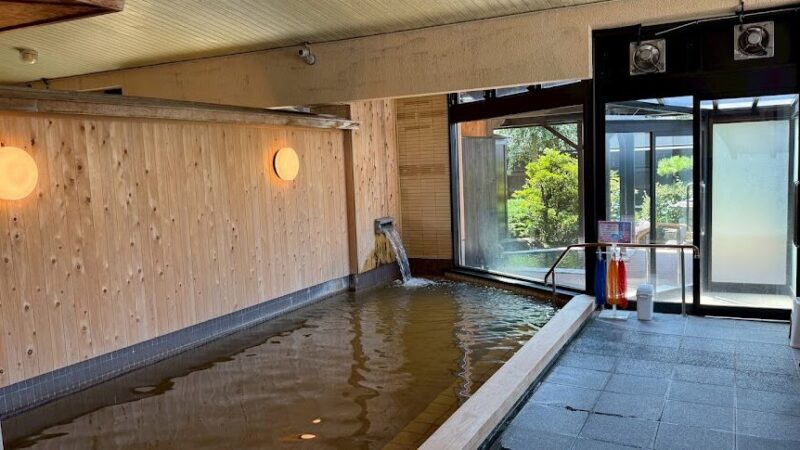
Just near Kotosouyu stands the modern “Yamashiro Hot Spring Souyu,” a contemporary public bathhouse. This is an active communal bathhouse used by both local residents and tourists and was renovated in 2012.
The bright bathroom is filled with natural light from large windows, featuring spacious bathing pools and complete shower and faucet facilities for comfortable bathing. The reasonable entry fee makes it a popular place to casually enjoy Yamashiro Hot Spring’s source water.
Tourist Attractions at Yamashiro Hot Spring
Rosanjin’s Former Residence Iroha Cottage
“Iroha Cottage,” where Rosanjin Kitaohji stayed for approximately half a year from 1915 (Taisho 4), is a representative cultural facility of Yamashiro Hot Spring. Here, Rosanjin devoted himself to artistic activities including ceramic art, calligraphy, and seal engraving, laying the foundation for his later career as an artist.
Now open to the public as a museum, visitors can view Rosanjin’s works and materials, as well as the living spaces of that era. The beautiful Japanese garden is also a highlight, offering seasonal scenery throughout the year. A must-see spot for those interested in the arts.
Hattori Shrine and Yakuooin Onsen Temple
Hattori Shrine, revered as the guardian deity of Yamashiro Hot Spring, is situated on a hilltop overlooking the hot spring town. Worshipped as the protective deity of hot springs, the traditional “Yamashiro Odaigaku” ritual is held every July.
Yakuooin Onsen Temple is a temple associated with the Buddhist priest Gyoki, who was involved in the opening of Yamashiro Hot Spring. In the temple grounds, there is a statue of a crow related to the “Legend of the Crow’s Bath,” where visitors can feel the history of hot springs.
Kutani Ware Kiln Ruins Exhibition Hall
Yamashiro Hot Spring is also known as a production area for Kutani ware. The Kutani Ware Kiln Ruins Exhibition Hall preserves and displays the remains of a climbing kiln built in the late Edo period, where visitors can learn the history and manufacturing techniques of Kutani ware.
In addition to viewing actual kiln ruins up close, masterpieces of Kutani ware are also displayed. The experience of touching the romance of old Kutani and being immersed in the “beauty and elegance” that lives today is a cultural charm unique to Yamashiro Hot Spring.
Source Hot Spring Foot Bath and Relaxation
Multiple free source water foot baths are installed throughout the hot spring town. They are popular spots where visitors can casually enjoy hot springs while taking breaks during their stroll. Foot baths around Kotosouyu in particular have become a gathering place for tourists and locals.
Soaking in the foot bath while enjoying the views of the hot spring town or chatting with locals is one of the pleasures of a hot spring vacation.
Experience Facilities and Shops
The hot spring town has various experience facilities and shops. “Harara Craft” handles local crafts and miscellaneous goods, where visitors can find souvenirs unique to Yamashiro Hot Spring.
“Jikuudo” is a shop dealing in antiques and curios, where one can encounter items from a bygone era. It’s a spot worth visiting during a stroll through the hot spring town.
Accommodations at Yamashiro Hot Spring
Luxury Ryokans and Hotels
Yamashiro Hot Spring has numerous luxury ryokans inheriting the traditions of the million-stone Kaga domain.
Rurikou bears the name of the “Gensenrurikou” source and is a representative ryokan. Operated by the Yorozuya Tourism Group, it is popular as a ryokan that blends traditional hospitality rooted in Kaga hot spring area culture with modern comfort. It features spacious public baths, open-air baths, and excellent views from guest rooms—all the attractions of a hot spring ryokan.
Yunokuniten-sho is a large ryokan known for offering three different public baths within one facility. Each bath has its own distinct character, allowing guests to enjoy multiple hot springs. The buffet-style meals are also popular, where guests can fully enjoy the seafood and Kaga vegetables unique to Ishikawa.
Mansho-kaku is a long-established ryokan that retains strong traditions of the million-stone Kaga domain. It is characterized by formal hospitality and delicate Kaga cuisine. Some guest rooms feature private open-air baths, allowing guests to spend private time.
Shiki-tei and Tachibana Shiki-tei
Tachibana Shiki-tei is popular as a ryokan where visitors can feel the beauty of each season. The garden is highly regarded for its beauty, and guest rooms offer views of seasonal changes. The cuisine is kaiseki using local ingredients, and the “Gourmet Duet Kaiseki” is known as a luxurious course combining premium fish and beef roast. From appetizers onward, the refined cuisine is truly an adult’s indulgence.
During the main building renovation commemoration period, it offers an exclusive premium Japanese-Western buffet, with all-you-can-drink plans also popular.
Mid-Size Ryokans and Business Use
Yamashiro Hot Spring has numerous mid-size ryokans operated by families. These accommodations offer the charm of a homey atmosphere and attentive service. The prices are relatively reasonable, making them recommended for those wishing to casually enjoy hot springs.
Also, as a hub hot spring in the Hokuriku region, its convenient location is suitable for business use. Being near Kaga Onsen Station with good access to Kanazawa and Fukui, business travelers increasingly use these accommodations.
Gourmet and Dining at Yamashiro Hot Spring
Ryokan Cuisine
The meals served at ryokans in Yamashiro Hot Spring feature luxurious offerings centered on Japan Sea seafood and Kaga vegetables. In winter, snow crab, Zuwai crab, and cold-season yellowtail represent Japan Sea delicacies; spring brings wild vegetables; summer features rock oysters; autumn brings matsutake mushrooms—seasonal ingredients change the face of cuisine throughout the year.
Kaga vegetables include plants such as golden thistle, Kaga cucumber, and Kaga lotus root—traditional vegetables abundant in the region. These vegetables are deeply flavorful with unique texture and taste, and are essential ingredients in Kaga cuisine.
Dining Establishments in the Hot Spring Town
The hot spring town has an abundance of easily accessible dining establishments.
Izakaya Henteko-rin is popular with both locals and tourists. It offers sake and dishes using local ingredients in a homey atmosphere. It’s an ideal spot for enjoying the evening of the hot spring town.
Cafes and dessert shops are scattered throughout, convenient for taking breaks during strolls. Notably, a cafe offering hand-dripped dashi made from locally produced stock is gaining attention for offering a unique experience—the umami of dashi extracted through careful hand-dripping like coffee is an innovative attempt unique to the hot spring town.
Local Ingredients and Specialty Products
Around Yamashiro Hot Spring, specialty products of Kaga City can be purchased. Kutani ware bowls, Kaga Yuzen accessories, local sake, and processed foods using Kaga vegetables are abundant souvenirs reflecting Ishikawa’s character.
Souvenir shops in the hot spring town also sell hot spring dumplings and local confections. In particular, Yamashiro Hot Spring original sweets are cherished as travel mementos.
Access to Yamashiro Hot Spring and Surrounding Tourism
Traffic Access
By Train
- Get off at JR Hokuriku Main Line “Kaga Onsen Station,” approximately 12 minutes by bus
- “Kaga Shuyuu Bus Canvas” from Kaga Onsen Station is convenient, circulating major Yamashiro Hot Spring sites
By Car
- Approximately 14 minutes from “Kaga IC” on the Hokuriku Expressway
- Approximately 18 minutes from “Katayamazu IC” on the Hokuriku Expressway
By Airplane
- Approximately 25 minutes from Komatsu Airport by car, bus usage also available
Parking is available at each ryokan as well as public parking areas in the hot spring town.
How to Spend Time at Yamashiro Hot Spring
A one-night, two-day stay at Yamashiro Hot Spring is sufficiently enjoyable, but a two-night or longer stay allows for leisurely enjoyment including surrounding sightseeing.
Day One
- Check in and stroll through the hot spring town
- Experience traditional bathing at Kotosouyu
- Enjoy Kaga cuisine at dinner in the ryokan
- Spend the evening enjoying local sake at izakayas in the hot spring town
Day Two
- Refresh with morning bathing
- Visit Rosanjin’s Former Residence and Kutani Ware Kiln Ruins Exhibition Hall
- Enjoy foot bath tours and shopping
- Visit surrounding tourist attractions
Nearby Tourist Attractions
Yamashiro Hot Spring is part of the Kaga Hot Spring Area, with numerous tourist attractions nearby.
Katayamazu Hot Spring is a hot spring resort spreading along the shores of Shibayama Pond, known for beautiful lakeside scenery. It is approximately 15 minutes by car from Yamashiro Hot Spring.
Yamanaka Hot Spring is a hot spring resort with the charm of the Kakeiji Gorge landscape. Picturesque views such as Kokorogi Bridge and Ayatori Bridge can be enjoyed. It is approximately 20 minutes by car from Yamashiro Hot Spring.
Natadera is an ancient temple of Hakusan faith with a beautiful garden designated as a National Scenic Spot. It is also famous as an autumn foliage viewing spot, attracting many visitors in fall.
Kaga Traditional Craft Village Yunokunino Mori allows visitors to experience Kutani ware, Kaga Yuzen, and gold leaf craftsmanship among Kaga’s traditional crafts. With historic thatched houses relocated on expansive grounds, it offers a full day of enjoyment.
Kanazawa City is also easily accessible at approximately 40 minutes by car, making it possible to combine sightseeing such as Kenroku Garden, Kanazawa Castle, and Higashi Tea House District.
Seasons and Annual Events at Yamashiro Hot Spring
Spring (March-May)
Spring in Yamashiro Hot Spring is a season of beautiful cherry blossoms and fresh greenery. Blossoms of the cherry trees around Hattori Shrine and throughout the hot spring town are spectacular, allowing for cherry blossom viewing. This is a time to feel spring’s arrival while soaking in hot springs.
Many tourists visit during Golden Week, and the hot spring town becomes bustling. Reservations become difficult during this period, making early planning recommended.
Summer (June-August)
Summer is a season enjoying verdant landscapes and the Japan Sea’s summer flavors. Rock oysters and white squid, among summer seafood delicacies, appear in ryokan meals.
July hosts the “Yamashiro Odaigaku,” where traditional field entertainment is offered. This festival featuring local participation allows for experiencing hot spring town culture.
Autumn (September-November)
Autumn is one of Yamashiro Hot Spring’s most beautiful seasons. Fall foliage colors the hot spring town, particularly the gardens of Rosanjin’s Former Residence and surrounding mountains.
Ingredients abound, with matsutake mushrooms, Kaga crab (Zuwai crab), and autumn salmon adorning ryokan cuisine. The combination of hot springs, autumn foliage, and gourmet food provides a luxurious period.
Winter (December-February)
Winter in Yamashiro Hot Spring is charming with snow scenery and hot springs. Snow-viewing open-air baths offer exceptional charm, attracting many hot spring enthusiasts.
The winter Japan Sea is turbulent, bringing the most delicious seafood of the season. Zuwai crab, cold-season yellowtail, and female snow crabs are abundantly featured. Particularly during crab season (November-March), the town becomes bustling with tourists seeking crab dishes.
Reservations and Travel Planning at Yamashiro Hot Spring
Best Timing for Reservations
Occupancy situations for accommodations at Yamashiro Hot Spring vary greatly depending on the season.
Peak Season
- Golden Week
- Obon holiday period
- Year-end and New Year’s
- Autumn foliage season (late October-mid November)
- Crab season weekends (November-March)
During these periods, reservations often fill 2-3 months in advance, making early booking essential.
Relatively Quiet Periods
- Rainy season (June)
- Before summer vacation (early July)
- Early January (mid January-February)
During these periods, attractive plans often emerge, and hot springs can be enjoyed leisurely.
Utilizing Reservation Sites
Yamashiro Hot Spring accommodations can be booked through major reservation sites such as Rakuten Travel, Jalan.net, and Ikyu.com. Each site offers unique plans and point returns, making comparative review recommended.
Direct reservations from official websites sometimes include ryokan-specific benefits. Particularly for extended stays and anniversary plans, official website reservations may be advantageous.
Creating Travel Plans
Hot Spring-Focused Plan
- Stay multiple nights at different ryokans, enjoying each hot spring
- Focus on total hot spring tours, utilizing day-trip bathing
Sightseeing-Focused Plan
- Use Yamashiro Hot Spring as a base to tour the Kaga Hot Spring Area and Kanazawa
- Use a rental car for efficient sightseeing
Gourmet-Focused Plan
- Select ryokans known for excellent cuisine and indulge in meals
- Visit dining establishments throughout the hot spring town
Cultural Experience Plan
- Visit Kutani ware and Kaga Yuzen experience facilities
- Carefully examine cultural facilities such as Rosanjin’s Former Residence
Helpful Information at Yamashiro Hot Spring
Tourist Information Centers
Yamashiro Hot Spring Tourism Association (3-70 Yamashiro Onsen Hokubu, Kaga City, Ishikawa Prefecture) provides tourism information, ryokan introductions, and event details. Maps and brochures of the hot spring town are well-stocked, making it a convenient starting point for sightseeing.
A tourist information center at Kaga Onsen Station provides information about the entire Kaga Hot Spring Area.
Baggage Storage and Coin Lockers
Luggage can often be stored at accommodations before check-in or after check-out. Additionally, Kaga Onsen Station has coin lockers, convenient for day-trip sightseeing.
Wi-Fi and Communication Environment
Nearly all accommodations offer free Wi-Fi. Public Wi-Fi is also installed in parts of the hot spring town, convenient for searching tourism information.
Barrier-Free Information
Kotosouyu, being a historical building restoration, has limited barrier-free accommodations. Those wishing to use wheelchairs should note that the modern Yamashiro Hot Spring Souyu has better facilities.
Barrier-free accommodations at ryokans vary by facility, and confirmation at reservation time is recommended.
Summary: Spending Blissful Time at Yamashiro Hot Spring
Yamashiro Hot Spring in Kaga City, Ishikawa Prefecture, is a distinguished hot spring resort with over 1,300 years of history. Centered around Kotosouyu and the charming Yu no Gawarae, with the culture of the million-stone Kaga domain breathing through the hot spring town, superb cuisine using Japan Sea seafood and Kaga vegetables, and efficacious hot spring water—countless charms fill this resort.
As a hub hot spring in the Hokuriku region, its convenient location pairs well with Kanazawa sightseeing. Cultural value as the birthplace of the Japanese “Gojuon,” the artistic atmosphere beloved by literary figures including Rosanjin Kitaohji, and traditional crafts exemplified by Kutani ware provide abundant enjoyments beyond hot springs alone.
Numerous distinctive accommodations including Mansho-kaku, Rurikou, Yunokuniten-sho, and Tachibana Shiki-tei allow selections according to budget and preference. The hot spring town features Kotosouyu, source foot baths, restaurants, and shops, inviting casual strolls in yukata.
Yamashiro Hot Spring, displaying different facets with each season, continuously reveals new charm with every visit. Convenient access, abundant tourism information, and warm hospitality welcome all visitors.
When visiting Ishikawa Prefecture, be sure to visit Yamashiro Hot Spring to fully enjoy its history and culture, hot springs and gourmet cuisine. A special time awaits you—touched by the romance of old Kutani, immersed in the “beauty and elegance” that lives today.