Yamanaka Onsen, Ishikawa Prefecture Complete Guide | Renowned Hot Spring with 1,300 Years of History and the Valley Loved by Matsuo Basho
Yamanaka Onsen, located in Kaga City, Ishikawa Prefecture, is one of the Hokuriku region’s premier hot spring destinations, boasting a history of over 1,300 years since its opening. It is known as a hot spring village where the scenic beauty of Kakusen Valley, carved by the Daishoji River, merges with the celebrated waters that poet Matsuo Basho praised as one of the “Three Great Hot Springs of Japan,” creating a place where Japan’s traditional culture and natural beauty are concentrated.
This article provides comprehensive information you should know before visiting, covering the history of Yamanaka Onsen, its water quality, access methods, recommended tourist attractions, and lodging facility information.
What is Yamanaka Onsen? The Jewel of Kaga Hot Springs
Yamanaka Onsen is a hot spring destination spanning the former Yamanaka town area of Kaga City, and is one of the Four Great Hot Springs of Kaga Hot Springs (Yamanaka, Yamashiro, Katayamazu, and Awazu Onsen). Among the Kaga Hot Springs, Yamanaka Onsen is particularly blessed with natural scenery, and the hot spring town has developed along Kakusen Valley, formed along the Daishoji River.
Geographical Features of Yamanaka Onsen
Located in the mountainous southern part of Kaga City, near the border with Fukui Prefecture, it is characterized by a rich natural environment created by varied elevation. The hot spring town spreads out in an elongated shape along the valley, with inns and hotels lining both banks. Surrounded by mountains, it offers a location where you can enjoy the changing scenery of all four seasons.
Yamanaka Onsen’s Position Among Kaga Hot Springs
Among Kaga Hot Springs, Yamanaka Onsen possesses a unique charm as a “hot spring destination of valley beauty and culture.” While Yamashiro Onsen centers on historic hot spring streets around the old bathhouse, and Katayamazu Onsen has a resort-like atmosphere facing Lake Shibayama, Yamanaka Onsen has been cherished as an elegant hot spring destination where harmony with nature and the footprints of literati and artists remain vivid.
1,300 Years of History | From Discovery by Gyoki to Modern Times
Hot Spring Legend of the Nara Period
The history of Yamanaka Onsen traces back approximately 1,300 years to the Nara Period. According to tradition, high priest Gyoki discovered the hot spring after receiving divine revelation from Yakushi Nyorai (the Medicine Buddha) during a visit to this area. Gyoki was a legendary Buddhist monk credited with discovering hot springs throughout Japan, and Yamanaka Onsen is known as one of them.
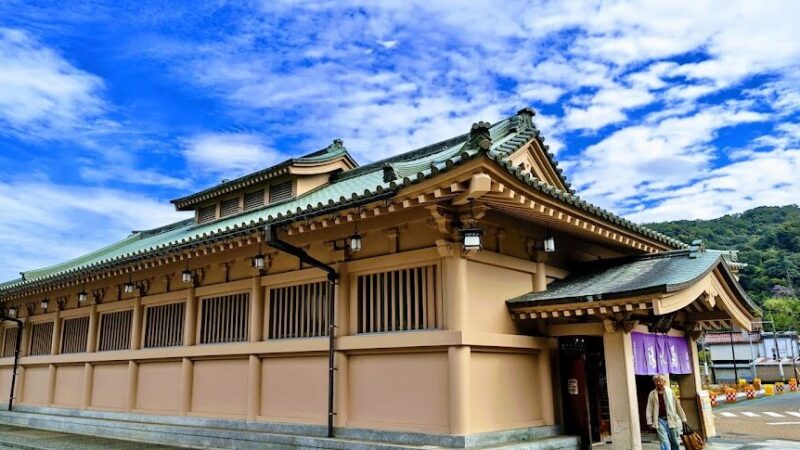
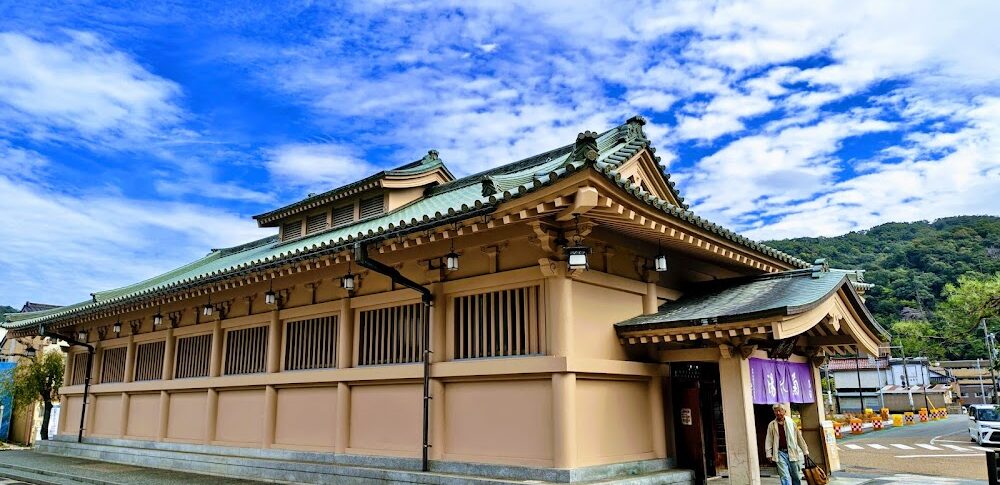
From its discovery, the hot spring was abundant in its flow rate, and because of its excellent water quality, it was embraced by local people as “medicinal water.” The shared bathhouse that became the center of the hot spring was later developed into “Kiku no Yu” (Chrysanthemum Bath), which remains a symbolic landmark of Yamanaka Onsen today.
Revitalization and Development During the Bunnji Period
During the Bunnji Period (1185-1190), from the late Heian Period into the early Kamakura Period, Yamanaka Onsen underwent major revitalization. During this time, hot spring facilities were improved, and the foundation of a hot spring therapy destination was established. After the Middle Ages, while receiving the protection of the Kaga Domain, it developed into an important hot spring destination in the Hokuriku region.
Visit by Matsuo Basho and “Three Great Hot Springs of Japan”
The person who brought Yamanaka Onsen’s fame throughout Japan was Matsuo Basho, a haiku master of the Edo Period. On July 27 of Genroku 2 (1689), while traveling the *Oku no Hosomichi* (The Narrow Road to the Deep North), Basho visited Yamanaka Onsen and became so fond of this place that he extended his originally planned stay of a few days to nine days.
Basho ranked Yamanaka Onsen as one of the “Three Great Hot Springs of Japan,” along with Arima Onsen (Hyogo Prefecture) and Kusatsu Onsen (Gunma Prefecture), and left the famous verse: “Yamanaka ya / Kiku wa teoriaji / Yu no nioi” (At Yamanaka / I would not pluck chrysanthemums / For the fragrance of waters). This verse, expressing that one would even forget to pick chrysanthemum flowers because of the wonderful aroma of the hot spring, expresses the excellent quality of Yamanaka Onsen’s waters.
Development After the Modern Period
After the Meiji Period, with improvements in transportation networks, Yamanaka Onsen developed as one of Hokuriku’s premier tourist hot spring destinations. During the Showa Period, many literary figures visited, and renowned cultural figures such as Akiko Yosano, Kyoka Izumi, and Rosanjin Kitaoji loved Yamanaka Onsen and left their impressions in their works.
In modern times, while retaining traditional hot spring atmosphere, inns and hotels with modern facilities line the streets, welcoming numerous domestic and international tourists as a thriving hot spring destination.
Water Quality and Effects of Yamanaka Onsen | Renowned as a “Beautiful Skin Hot Spring”
Characteristics of the Water Quality
Yamanaka Onsen’s water quality is sulfate spring (calcium-sodium sulfate spring containing gypsum), colorless and transparent with a slightly alkaline pH and mild-tasting water. The texture is extremely soft, and the skin becomes silky smooth after bathing, earning it high praise as a “beautiful skin hot spring.”
Main Water Quality Data:
- Water Quality: Calcium-sodium sulfate spring (containing gypsum and mirabilite)
- pH Value: 7.5~8.5 (slightly alkaline)
- Spring Temperature: Approximately 50~70°C
- Flow Rate: Abundant (several hundred liters per minute or more)
Expected Benefits
As a sulfate spring, the following effects are expected:
General Indications:
- Neuralgia, muscle pain, joint pain
- Frozen shoulder, motor paralysis, joint stiffness
- Bruises, sprains, chronic digestive disorders
- Hemorrhoids, coldness, post-illness recovery
- Fatigue recovery, health promotion
Water Quality-Specific Indications:
- Arteriosclerosis, cuts, burns
- Chronic skin disease, chronic gynecological disorders
The beautiful skin effect is particularly appreciated by bathing guests, as slightly alkaline water softens old keratin and sulfate ions promote skin metabolism.
“Kiku no Yu” and Shared Bathhouses
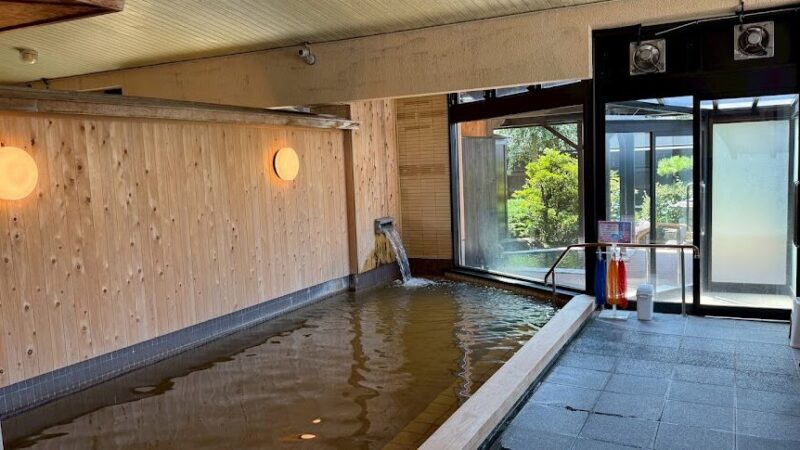
The source of Yamanaka Onsen centers on the shared bathhouse “Kiku no Yu” (Chrysanthemum Bath). Named after Basho’s verse, this bathhouse is open to both local residents and tourists and is cherished as a facility where one can easily enjoy Yamanaka Onsen’s source water.
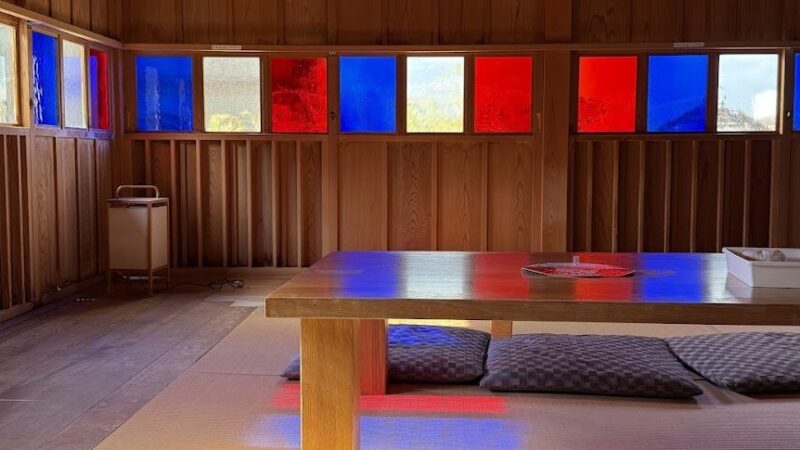
Separate baths exist for men and women, each maintaining historical architectural style while remaining meticulously clean. With affordable rates and the possibility of day-trip bathing, it’s recommended to stop by during your stroll.
Kakusen Valley | The Greatest Charm of Yamanaka Onsen’s Scenic Beauty
What is Kakusen Valley
Kakusen Valley is approximately 1.3 km of gorge formed by the Daishoji River flowing through Yamanaka Onsen and is the greatest sight of Yamanaka Onsen tourism. The landscape created by steep rock faces, clear streams, and nature’s seasonal changes continues to captivate visitors.
A walking path is maintained along the valley, allowing leisurely strolls to enjoy natural beauty. Kakusen Valley, showing different faces with spring’s new green, summer’s deep green, autumn’s crimson leaves, and winter’s snowy scenery, offers new discoveries with each visit.
Kohrogi Bridge
One of the representative attractions of Kakusen Valley is Kohrogi Bridge, a beautiful arched bridge made entirely of cypress wood, with its vermillion color striking against the valley’s deep green. The bridge’s name has various explanations, including a theory that “kourogi kiki” (travelers in difficulty) was corrupted, and another that it was named after the beautiful chirping of crickets.
The view from Kohrogi Bridge is magnificent, and especially during the autumn foliage season, it attracts many tourists. The beauty visible from above the gorge makes it a popular photography spot.
Ayatori Bridge
Another symbol of Kakusen Valley is Ayatori Bridge, completed in 2000 with a modern design. Its distinctive feature is the elegant S-shaped curve. Designed by Hiroshi Teshigahara, master of the Sogetsu School of Ikebana (flower arrangement), its original shape inspired by “ayatori” (cat’s cradle) adds modern art elements to the traditional valley scenery.
The 94.7-meter-long, 1.5-meter-wide pedestrian-only bridge allows panoramic views of Kakusen Valley. The view seen in morning light is particularly exceptional.
Kuroya Bridge and Kakusen Valley Walking Path
Kuroya Bridge is positioned at the highest point upstream of Kakusen Valley, serving as the starting point of the walking path connecting Kohrogi Bridge and Ayatori Bridge. This path spans approximately 1.3 kilometers and takes about 30 to 40 minutes for a leisurely walk.
The maintained path features moderate ups and downs, offering a light hiking experience. Rest stops and viewpoints are provided along the way, allowing visitors to feel the valley’s nature up close.
Kawatoko Cafe
At the foot of Ayatori Bridge, a Kawatoko Cafe operates seasonally from spring to autumn, a limited-time facility. While enjoying the valley’s clear stream, guests can savor matcha and seasonal sweets in a luxury setting.
Incorporating Kyoto’s riverside culture, this facility has become popular as a unique Yamanaka Onsen experience. A quiet moment with tea while hearing the babbling brook offers a blissful escape from urban bustle.
Tourist Attractions of Yamanaka Onsen | Touring History and Culture
Basho’s Hall
Basho’s Hall is a facility introducing Matsuo Basho and Yamanaka Onsen’s connection. Displays include anecdotes from Basho’s stay, his remaining verses, and records of travels from that time.
The hall features abundant exhibits including Basho’s direct calligraphy (reproductions) and materials related to *Oku no Hosomichi*, allowing visitors to experience Edo Period travel culture and haiku literature. A cultural facility worth visiting first when arriving at Yamanaka Onsen.
Yamanaka-za (Yamanaka Onsen Cultural Hall)
Yamanaka-za is a cultural facility where “Yamanaka-bushi,” a traditional performing art of Yamanaka Onsen, is performed. Yamanaka-bushi, designated as Ishikawa Prefecture’s intangible folk cultural property, is a folk song characterized by unique vocal inflections and shamisen melodies.
Regular performances are held where professional geishas perform authentic Yamanaka-bushi. Experience classes are also offered, allowing visitors to attempt singing and dancing Yamanaka-bushi themselves.
Yuge Kaido (Yugenomoto Park Area)
The center of Yamanaka Onsen features Yuge Kaido, the hot spring town’s main street. Along the stone-paved road, gift shops, dining establishments, and galleries stand side by side, creating a streetscape brimming with hot spring character.
Ideal for strolling in yukata (casual summer kimono), this area features shops dealing in local crafts like Yamanaka lacquerware and traditional Kaga confectionery shops. At dusk, lanterns light the street, heightening the nostalgic atmosphere.
Yamanaka Lacquerware Workshop Visits
The Yamanaka area, where Yamanaka Onsen is located, is nationally recognized as a production center for Yamanaka lacquerware. With approximately 450 years of history, Yamanaka lacquerware is characterized by lathe-turning techniques that showcase the beauty of wood grain, and its products are highly valued for being thin yet durable.
Multiple lacquerware workshops surround the hot spring town, with some facilities allowing visitors to observe craftsmen’s techniques up close. Some workshops also offer lacquer painting experiences, allowing visitors to create their own unique works.
Iooji Temple
Iooji Temple, long venerated as the protective temple of Yamanaka Onsen, stands on a high plateau overlooking the hot spring town. From the temple grounds, one can view the hot spring town and Kakusen Valley, making it an excellent viewpoint, particularly spectacular during autumn foliage season.
This temple, said to have been visited by Basho, has a monument inscribed with Basho’s verse, making it a pilgrimage destination for literary fans. The quiet temple grounds are perfect for calming the mind.
Access Information | How to Reach Yamanaka Onsen
Access by Train and Bus
From Tokyo:
- Approximately 2 hours 30 minutes from Tokyo Station to Kanazawa Station via Hokuriku Shinkansen
- Approximately 1 hour 15 minutes from Kanazawa Station to Yamanaka Onsen via express bus
From Osaka and Nagoya:
- Approximately 2 hours 30 minutes from Osaka Station to Kanazawa Station via Thunderbird Limited Express
- Approximately 3 hours from Nagoya Station to Kanazawa Station via Shirasagi Limited Express
- To Yamanaka Onsen via express bus or through Kaga Onsen Station from Kanazawa Station
From Kaga Onsen Station:
- Approximately 30 minutes via local bus from Kaga Onsen Station on the Hokuriku Line
- Approximately 20 minutes by taxi (fare approximately 3,000~4,000 yen)
From Kaga Onsen Station, Canvas, a sightseeing bus, also operates, allowing visitors to tour Yamanaka Onsen, Yamashiro Onsen, and Katayamazu Onsen.
Access by Car
Via Hokuriku Expressway:
- Approximately 20 minutes from Kaga IC via Route 8 and prefectural roads
- Approximately 15 minutes from Katayamazu IC via prefectural roads
Via Tokai-Hokuriku Expressway:
- Approximately 1 hour 30 minutes from Shirakawa-go IC via Routes 156 and prefectural roads
The hot spring town features parking areas at each inn as well as multiple public parking facilities. However, crowding occurs during weekends and autumn foliage season, so early arrival is recommended.
Access from Komatsu Airport
Komatsu Airport is approximately 40 minutes by car from Yamanaka Onsen. Visitors can either rent a car from the airport or take a bus to Kaga Onsen Station and transfer to a local bus.
Recommended Inns and Hotels | Yamanaka Onsen Accommodations
Luxury Inns
Hana Murasaki is one of Yamanaka Onsen’s representative luxury inns. Known as a five-star establishment, it boasts an ideal location overlooking Kakusen Valley, refined cuisine, and meticulous service. All rooms are designed to enjoy the valley scenery, making it perfect for special commemorative dates and important trips.
Kichijo Yamanaka is also a popular luxury inn, featuring modern Japanese spaces, high-quality hot springs, and creative cuisine using local ingredients. Guest rooms with private open-air baths are plentiful, making it ideal for those prioritizing private time.
Mid-Range Inns
Kawakaso is a popular inn offering comprehensive facilities and services at reasonable prices. The grand bath’s view of the gorge is superb, and it is beloved by many repeat guests for its excellent cost-performance ratio.
Kochou and Hanatsubaki are also well-regarded for maintaining traditional hot spring inn atmosphere while providing modern comfort.
Day-Trip Bathing Facilities
Facilities for enjoying Yamanaka Onsen without overnight stays are also comprehensive. Besides the aforementioned “Kiku no Yu,” many inns offer day-trip bathing plans, including lunch-included options that are popular.
Yamanaka Onsen Through the Seasons | Seasonal Charm
Spring (March-May)
Spring at Yamanaka Onsen is a season of beautiful fresh greenery emerging with snowmelt. The trees of Kakusen Valley simultaneously unfurl young leaves, enveloping the entire gorge in pale green. From late April to May, mountain cherries bloom, adding color to the hot spring town.
The mild climate makes it ideal for strolling. Kawatoko Cafe begins operations this season, offering tea time while feeling the spring breeze.
Summer (June-August)
Summer’s Yamanaka Onsen provides coolness through the gorge’s deep green. Kakusen Valley’s clear stream remains cold even in summer, and walks along the gorge allow visitors to experience nature’s air conditioning.
From July to August, summer festivals and fireworks displays are held, enlivening the hot spring town. Evening yukata strolls are a uniquely summer pleasure.
Autumn (September-November)
Autumn at Yamanaka Onsen’s greatest attraction is autumn foliage. From late October through mid-November, Kakusen Valley is wrapped in blazing crimson leaves, experiencing its most beautiful season of the year.
The foliage viewed from Kohrogi Bridge and Ayatori Bridge is spectacular, with the vermillion bridge and trees tinted red and yellow creating a magnificent contrast. This season draws tourists nationwide, so advance reservations are necessary.
Winter (December-February)
Winter’s Yamanaka Onsen presents snow-covered valleys in a fantastical atmosphere. Kakusen Valley blanketed in snow is wrapped in silence, with ink-painting-like beauty.
Because of cold weather, the hot spring’s warmth becomes particularly appreciated. Snow-viewing open-air baths offer luxury experiences unique to winter Yamanaka Onsen. Additionally, fresh seafood caught in winter’s Japan Sea used in cuisine represents another major winter charm.
Gourmet Information | Savoring Kaga Flavors at Yamanaka Onsen
Characteristics of Kaga Cuisine
The Kaga region where Yamanaka Onsen is located is a food treasure blessed with Japan Sea seafood and Kaga Plain mountain bounty. Kaiseki cuisine at inns features refined and beautiful Kaga cuisine utilizing local ingredients.
Winter’s most prized delicacy—Zuwai crab (Kano crab), sweet shrimp, snow crab and other seafood, vegetables called Kaga vegetables, and mountain delicacies like wild plants and mushrooms, with seasonal ingredients coloring each meal.
Gourmet Spots on the Hot Spring Street
Various dining establishments are scattered around the Yuge Kaido area. Offering set meals and bowls using local ingredients, hand-made noodles, local specialty cuisine, cafes, and diverse options exist.
Recommended Gourmet:
- Dishes using hot spring eggs
- Yamanaka udon (local specialty)
- Sweets using Kaga stick tea
- Cuisine presented in Yamanaka lacquerware
Souvenir Information
The most popular souvenir from Yamanaka Onsen is Yamanaka lacquerware. Products range from bowls and plates suitable for daily use to high-end maki-e works, covering various price points.
Other standard souvenirs include Kaga stick tea (a type of roasted tea), local confectionery, and hot spring buns. Recently, modern-design small items utilizing Yamanaka lacquerware techniques have become increasingly popular.
Surrounding Attractions | Touring Kaga Region from Yamanaka Onsen Base
Yamashiro Onsen
Yamashiro Onsen, located approximately 15 minutes by car from Yamanaka Onsen, occupies another section of Kaga Hot Springs. Centered around the historic Kosoyu bathhouse, it is known for its historical hot spring town atmosphere and as a center of Kutani ware production.
“Hot spring hopping” between the two destinations is popular, allowing visitors to enjoy different water qualities and atmospheres.
Katayamazu Onsen
Katayamazu Onsen, spreading along Lake Shibayama’s shores, is characterized by a lakeside resort atmosphere. Located approximately 20 minutes by car from Yamanaka Onsen, the lake-floating “Ukimido” and lakeside foot baths serve as tourist attractions.
Natadera Temple
Natadera Temple, located approximately 10 minutes by car from Yamanaka Onsen, is an ancient temple founded in 717. Its grounds, utilizing natural rock mountains, are designated as a nationally recognized scenic site and are particularly famous as an autumn foliage destination.
Areas called Kiseki Yusenkyoku (Scenic Wonderland), beautiful gardens, and a historically important main hall offer abundant points of interest.
Kutani Ware Kilns and Museums
The Kaga region is also famous as a production center for Kutani ware. Multiple kilns and museums exist around Yamashiro Onsen, allowing visitors to learn Kutani ware’s history and manufacturing processes. Facilities offering painting experiences are ideal for creating travel memories.
Senrigahama Nagisa Drive Way
Approximately 50 minutes by car from Yamanaka Onsen, Senrigahama Nagisa Drive Way is Japan’s only beach drivable by car, famous for its approximately 8 km of sandy shore. The exhilaration of driving on this sand beach offers an experience unattainable elsewhere.
Yamanaka Onsen Events and Festivals
Yamanaka Onsen Koikoi Festival (April)
A festival celebrating spring’s arrival featuring town processions and traditional performing art presentations. A spring landmark of Yamanaka Onsen where local residents and tourists enjoy together.
Yamanaka Onsen Bonfire Noh (August)
A summer night event offering rare opportunities to observe noh drama in an ethereal atmosphere. Noh performed on stages lit by ceremonial fires with Kakusen Valley as backdrop conveys the essence of Japanese traditional culture.
Yamanaka Onsen Chrysanthemum Bath Festival (September)
A festival honoring Matsuo Basho’s verse, with the hot spring town decorated in chrysanthemum flowers. Haiku competitions and chrysanthemum exhibitions create a culturally rich atmosphere.
Yamanaka Onsen Crab Soup Large Pot Serving (November)
An event announcing winter’s arrival where giant pots of crab soup are offered free. A heartwarming event allowing visitors to feel local warmth.
Yamanaka Onsen Trip Planning | Sample Courses
One Night, Two Days Sample Course
Day 1:
- 12:00 PM Kaga Onsen Station arrival, bus to Yamanaka Onsen
- 1:00 PM Inn check-in, lunch
- 3:00 PM Kakusen Valley stroll (Kohrogi Bridge~Ayatori Bridge)
- 4:30 PM Kawatoko Cafe tea time
- 6:00 PM Inn dinner (Kaga cuisine)
- 8:00 PM Hot spring town yukata stroll
- 9:00 PM Leisurely hot spring bathing
Day 2:
- 7:00 AM Morning bath
- 8:00 AM Breakfast
- 10:00 AM Check-out
- 10:30 AM Yamanaka-za Yamanaka-bushi appreciation
- 11:30 AM Yuge Kaido shopping and lunch
- 1:00 PM Yamanaka lacquerware workshop observation and experience
- 3:00 PM Departure to Kaga Onsen Station
Two Nights, Three Days Sample Course (including surrounding attractions)
Adding to the one night, two days course, visiting Natadera Temple or Yamashiro Onsen on Day 2 and incorporating Kutani ware kiln visits allows deeper enjoyment of the Kaga region.
Conclusion | Fully Experiencing Yamanaka Onsen’s Charms
Yamanaka Onsen in Kaga City, Ishikawa Prefecture, is a celebrated hot spring destination over 1,300 years old, which Matsuo Basho ranked among “Three Great Hot Springs of Japan.” The scenic beauty of Kakusen Valley, hot springs renowned for beautiful skin effects, abundant culture and history, and cuisine using rich Kaga ingredients concentrate diverse charms.
Yamanaka Onsen presents different faces with each season, offering new discoveries with each visit. Please experience the luxury of time, distanced from daily bustle and healed by nature and hot springs, at Yamanaka Onsen.
With good access from Kaga Onsen Station, combined sightseeing tours including nearby Yamashiro Onsen, Katayamazu Onsen, and Natadera Temple are recommended. At Yamanaka Onsen, where traditional culture and nature harmonize, fully enjoy Japan’s beauty and the profound depths of hot spring culture.