Dogo Onsen, Ehime Prefecture Complete Guide | The Charm of Japan’s Oldest Hot Spring and Thorough Explanation of 3 Onsen Facilities
Dogo Onsen, located in Matsuyama City, Ehime Prefecture, is known as Japan’s oldest hot spring with a history spanning over 3,000 years. Featured in the Nihon Shoki and Man’yōshū poetry collections, it is centered around the Dogo Onsen Honkan, designated as a National Important Cultural Property, and is one of Shikoku’s leading hot spring tourist destinations. This article comprehensively explains everything you need to know before visiting, from the historical background of Dogo Onsen to details of its 3 hot spring facilities, access methods, and nearby tourist attractions.
What is Dogo Onsen | History and Charm of Japan’s Oldest Hot Spring
A Famous Hot Spring Boasting 3,000 Years of History
Dogo Onsen is counted among Japan’s three oldest hot springs, with a history dating back approximately 3,000 years. This hot spring, which emerges in Iyo Province (present-day Ehime Prefecture), is recorded in the Nihon Shoki and has been cherished by many people since ancient times. It appears in classic literary works such as The Tale of Genji and Man’yōshū poetry collection, occupying an important position in Japanese cultural history.
The White Heron Legend and the Discovery of the Hot Spring
The discovery of Dogo Onsen is accompanied by the “White Heron Legend.” According to tradition, people learned of the hot spring’s beneficial effects after witnessing a wounded white heron healing its injury in warm water gushing from the rocks. This legend remains as a symbol of Dogo Onsen, with white heron motifs visible in various locations today.
Spring Quality and Benefits
Dogo Onsen’s spring quality is alkaline simple hot spring water, characterized by its colorlessness, transparency, and lack of taste or odor. The source water temperature ranges from approximately 42 to 51 degrees Celsius, and is said to be effective for neuralgia, muscle pain, joint pain, fatigue recovery, and health promotion. Due to its gentle spring quality, it is also known as a “beauty hot spring,” and the skin becomes smooth and supple after bathing.
Characteristics and Charm of Dogo Onsen’s 3 Facilities
The Dogo Onsen area has 3 public bathhouses, each with distinct characteristics. Here, we explain the details of each facility.
Dogo Onsen Honkan | An Iconic Symbol of Cultural Heritage
Historical Value and Architectural Beauty
Dogo Onsen Honkan is a three-story wooden building constructed in 1894 (Meiji 27) and was designated as a National Important Cultural Property in 1994. As a symbol of Dogo Onsen, its dignified exterior captivates many tourists. It also appears in Natsume Soseki’s novel “Botchan,” with deep connections to literary works.
Currently, Dogo Onsen Honkan is undergoing preservation and restoration work, but some bathing areas continue to operate, allowing visitors to enjoy the historic hot spring. Special experiences allowing visitors to observe the construction work are also offered.
Bathing Courses and Rates
Dogo Onsen Honkan offers multiple bathing courses. Visitors can choose from the Kami no Yu First Floor (1st floor bath only), Kami no Yu Second Floor (with 2nd floor rest area), and Rei no Yu Third Floor Private Room, depending on budget and length of stay. Each course offers a different experience, allowing leisurely time in a historic setting.
Operating Hours and Access
Address: 5-6 Dogo Yunomachi, Matsuyama City, Ehime Prefecture 790-0842
Located a short 5-minute walk from Dogo Onsen Station, it is positioned at the center of the hot spring town. Operating hours vary depending on the season and construction progress, so it is recommended to check the official website in advance.
Dogo Onsen Annex Asuka no Yu Onsen | Fusion of Cutting-Edge Art and Tradition
Concept and Facility Features
Asuka no Yu Onsen opened in 2017 as a new Dogo Onsen facility. Themed around “Ancient Dogo,” it presents legends and stories related to Dogo Onsen through collaborative works of Ehime Prefecture’s traditional crafts and cutting-edge art.
The interior design is contemporary while conveying the sense of Japanese traditional beauty, creating a space that appeals to both younger and older visitors.
Bathing Facilities and Private Baths
Asuka no Yu Onsen is equipped with a large public bath as well as private bathing facilities. The private baths allow visitors to enjoy Dogo’s waters in a more private setting. The rest areas are also well-equipped, allowing visitors to relax comfortably after bathing.
Facility Information
Address: 19-22 Dogo Yunomachi, Matsuyama City, Ehime Prefecture 790-0842
Located about a 2-minute walk from Dogo Onsen Honkan, it has a convenient location for dropping by while exploring the hot spring town.
Dogo Onsen Tsubaki no Yu | A Friendly Public Bathhouse Loved by Locals
A Public Bathhouse for Casual Use
Tsubaki no Yu, opened in 1953, is a public bathhouse and the most reasonably priced of Dogo Onsen’s 3 facilities. It is cherished by local residents and serves as a place for interaction between tourists and locals.
Simple and User-Friendly Facilities
Tsubaki no Yu is a simple facility dedicated purely to bathing. The bathing area is spacious, and visitors can fully enjoy Dogo’s waters with direct source spring flow. It is used by many people as a convenient hot spring to visit casually between sightseeing activities.
Operating Information
Address: 19-22 Dogo Yunomachi, Matsuyama City, Ehime Prefecture 790-0842
Located just a 3-minute walk from Dogo Onsen Station, access is excellent. Bathing rates are the most affordable among the 3 facilities.
Details on Bathing Rates and Operating Hours
Rate Structure
Dogo Onsen’s 3 facilities have different rate systems. Dogo Onsen Honkan’s rates vary depending on the bathing course selected, offering a wide range from the basic Kami no Yu First Floor to the private room Rei no Yu.
Asuka no Yu Onsen’s rates differ between large public bath use only and private bath use. Tsubaki no Yu offers a flat rate and allows visitors to enjoy Dogo’s waters at the most reasonable prices.
Rates may be revised periodically, so it is recommended to check the latest information on the Dogo Onsen official website before visiting.
Operating Hours and Congestion Levels
Each facility has different operating hours, which may also vary by season. Particularly, Dogo Onsen Honkan’s operating hours may change depending on the progress of preservation and restoration work.
Real-time information about congestion is provided on the Dogo Onsen official website. Congestion is expected during tourist season and weekends, so weekday mornings and late afternoons are relatively less crowded times.
Access Methods to Dogo Onsen
Access by Train
From Matsuyama City Station
Take the Iyo Electric Railway streetcar bound for Dogo Onsen and get off at the final stop, “Dogo Onsen Station.” The journey takes approximately 25 minutes. The vintage streetcar ride is one of the highlights of Matsuyama sightseeing.
From JR Matsuyama Station
Transfer to the Iyo Electric Railway streetcar in front of JR Matsuyama Station and travel to Dogo Onsen Station in approximately 30 minutes. Alternatively, local buses are available.
Access by Airplane
From Matsuyama Airport to Dogo Onsen takes approximately 40 minutes by limousine bus. Direct access from the airport is convenient for visitors coming from distant locations. By taxi, the journey takes approximately 30 minutes.
Access by Car
Take the Matsuyama Expressway “Matsuyama IC” and drive for approximately 30 minutes. Multiple parking lots are available around Dogo Onsen, but parking becomes congested during tourist season, so public transportation is recommended.
Walking Access from Dogo Onsen Station
From Dogo Onsen Station to Dogo Onsen Honkan is approximately a 5-minute walk, and to Asuka no Yu Onsen and Tsubaki no Yu is approximately a 3-minute walk. All facilities are within walking distance, allowing visitors to explore the hot spring town while moving between facilities.
Tourist Attractions Around Dogo Onsen
Dogo Onsen Shopping Street
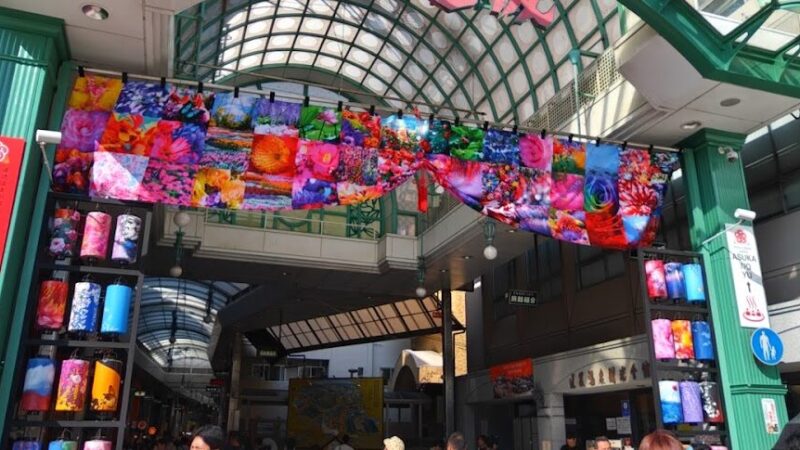
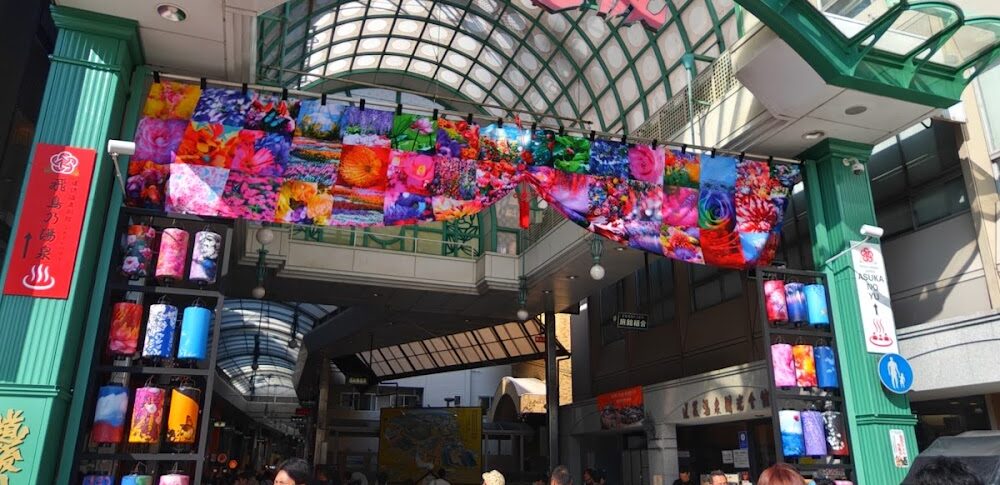
Along the path from Dogo Onsen Station to the Honkan, the Dogo Haikara Street (Dogo Shopping Street) stretches out. This approximately 250-meter arcade street is lined with souvenir shops, restaurants, and cafes, offering the atmosphere unique to hot spring towns. A abundant selection of souvenirs is available, including Imabari towels, mikan products, and Botchan dumplings, specialty products of Ehime.
Dogo Park (Yutsuki Castle Ruins)
Located about a 5-minute walk from Dogo Onsen, Dogo Park is a historic park developed on the ruins of the medieval Yutsuki Castle. It is known as a famous cherry blossom viewing spot in spring, drawing many visitors for hanami (flower viewing). The park has a museum where visitors can learn about Iyo’s history.
Ishite-ji Temple
Ishite-ji Temple, the 51st sacred site of the Shikoku Pilgrimage Route, is approximately a 20-minute walk from Dogo Onsen. This ancient temple houses the National Treasure Nio (Deva King) Gate and numerous Important Cultural Properties, making it well worth visiting for both pilgrimage and sightseeing.
Matsuyama Castle
Towering at the center of Matsuyama City, Matsuyama Castle is one of Japan’s three great flatland castles and one of the 12 existing original castle keeps. It is approximately 30 minutes from Dogo Onsen by streetcar. The view from the keep is spectacular, offering a panorama of Matsuyama City and the Seto Inland Sea.
Botchan Train
This sightseeing train is a restoration of the steam locomotive featured in Natsume Soseki’s novel “Botchan.” It connects Dogo Onsen Station, Matsuyama City Station, and JR Matsuyama Station area, allowing visitors to explore the city while enjoying a retro atmosphere.
Recommended Accommodations at Dogo Onsen
Luxury Inns
The Dogo Onsen area has diverse lodging options, from historic traditional inns to modern hotels. At traditional inns such as Yamato-ya Honten, Hotel Tubaki-kan, and Hotel Katsuragi, guests can enjoy traditional hospitality, high-quality hot springs, and kaiseki cuisine prepared with local ingredients.
Reasonably Priced Hotels
Numerous reasonably priced hotels are available within a 1-minute walk from Dogo Onsen Honkan. Many facilities feature 100% source spring water flowing directly, and their central location in the hot spring town allows guests to enjoy hot spring hopping in yukata (casual kimono).
Combining Day-Use Bathing and Overnight Stays
Many inns that are members of the Dogo Onsen Ryokan Cooperative offer day-use bathing plans. Without staying overnight, guests can enjoy these inns’ signature hot springs and meals, making it possible to have a fulfilling hot spring experience even during brief visits.
How to Spend Time at Dogo Onsen and Suggested Itineraries
Day-Trip Course (4 hours)
- Arrival at Dogo Onsen Station → Dogo Haikara Street exploration (30 minutes)
- Bathing at Dogo Onsen Honkan or Asuka no Yu Onsen (1 hour)
- Lunch and shopping at Dogo shopping street (1.5 hours)
- Second bathing at Tsubaki no Yu (30 minutes)
- Rest at a cafe before returning (30 minutes)
1-Night, 2-Day Course
Day 1
- Afternoon: Arrival at Dogo Onsen, inn check-in
- Explore the hot spring town in yukata, visit Dogo Onsen Honkan
- Dinner: Savor Ehime’s seafood and mountain delicacies at the inn
- Evening: Bathe in the inn’s hot spring or at Tsubaki no Yu
Day 2
- Morning: Breakfast at the inn followed by an early morning bath
- Forenoon: Visit Ishite-ji Temple or explore Dogo Park
- Midday: Bathe at Asuka no Yu Onsen
- Afternoon: Sightseeing at Matsuyama Castle before returning home
2-Night, 3-Day Course
Building on the 1-night, 2-day course above by incorporating nearby Ehime attractions such as the Shimanami Kaido, Imabari Towel Museum, and Uchiko Town’s traditional townscape creates an even more fulfilling trip.
Practical Information for Enjoying Dogo Onsen
Items to Bring and Preparations
Dogo Onsen’s 3 facilities generally require towels and soap to be paid for separately or brought from home. Upper-tier courses at Dogo Onsen Honkan include towel rental, but items must be brought for Tsubaki no Yu and similar facilities. These items can be purchased at nearby shops, but preparing in advance is convenient.
Tips to Avoid Crowds
Dogo Onsen is a popular tourist destination year-round, but the following periods experience particularly high congestion:
- Golden Week
- Summer vacation period (late July to August)
- Year-end and New Year season
- 3-day holidays
To avoid crowds, visiting on weekdays, bathing early morning or late evening is recommended. Using the congestion status display on the official website can reduce wait times.
Etiquette
Dogo Onsen is a public bathhouse where local residents also bathe. Observe the following manners:
- Wash your body before entering the bathing area
- Do not put towels in the hot spring water
- Avoid speaking loudly
- Photography is permitted only in designated areas
- Avoid prolonged bathing
Live Cameras and Latest Information
The Dogo Onsen official website provides real-time views of the location via live cameras and congestion status of each facility. Checking before visiting allows for efficient travel planning.
The Four Seasons’ Charm of Dogo Onsen
Spring (March to May)
Cherry blossoms at Dogo Park come into bloom, allowing visitors to enjoy flower viewing and hot springs simultaneously. The warm climate makes the season ideal for exploring.
Summer (June to August)
Various events, including the Dogo Onsen Summer Festival, are held. Even on hot summer days, bathing in the hot spring leaves one refreshed.
Autumn (September to November)
Autumn foliage creates beautiful scenery around Ishite-ji Temple and Dogo Park. The mild climate makes this season ideal for sightseeing.
Winter (December to February)
The cold season makes the warmth of the hot spring especially special. New Year’s Eve and New Year’s Day feature special events, with many travelers choosing to welcome the new year at the hot spring.
Ehime Prefecture’s Food Culture and Dogo Onsen
Tai Meshi (Sea Bream Rice)
A signature regional dish of Ehime Prefecture, with the Matsuyama area featuring a cooked rice dish style and the southern Yo district featuring a marinated sashimi bowl style. It can be enjoyed at inns and restaurants around Dogo Onsen.
Jako Ten
A breaded and fried fish cake originating in southern Ehime Prefecture, made from pureed small fish. Available for purchase at Dogo shopping street and popular as a souvenir.
Mikan Products
Ehime Prefecture boasts the highest citrus production in Japan. Various mikan products including juice, jelly, and jam are sold around Dogo Onsen.
Botchan Dumplings
A confection named after the novel “Botchan,” featuring three-colored dumplings skewered together with an adorable appearance. It is a standard souvenir from Dogo Onsen.
Preservation and Future of Dogo Onsen
Preservation and Restoration Work
Dogo Onsen Honkan has been undergoing major preservation and restoration work since 2019 to pass its value as an Important Cultural Property to future generations. Some bathing areas continue to operate during construction, and special programs allowing visitors to observe the work are also implemented.
Initiatives Toward Sustainable Tourism
While preserving the value of the hot spring as a historic site, Dogo Onsen is advancing efforts to meet modern needs. These include environmentally conscious operations, barrier-free accessibility, and multilingual support, aiming to become a hot spring destination enjoyable for all.
Creation of New Attractions
New facilities like Asuka no Yu Onsen that fuse tradition with contemporary art, and various events held throughout the Dogo Onsen area demonstrate continuous evolution.
Conclusion: Experience Japan’s Hot Spring Culture at Dogo Onsen
Dogo Onsen in Matsuyama City, Ehime Prefecture, as Japan’s oldest hot spring with a 3,000-year history, offers special experiences to all who visit. The three facilities—the Important Cultural Property Dogo Onsen Honkan, the contemporary Asuka no Yu Onsen, and the approachable Tsubaki no Yu—each possess distinct charm and can be selected according to visitors’ preferences and purposes.
Beyond the hot spring itself, the Dogo Onsen area is filled with diverse attractions including historic townscapes, rich food culture, and nearby sightseeing spots. Whether visiting for the day or staying overnight, there are various ways to enjoy Dogo Onsen.
With excellent access from Matsuyama Airport and Matsuyama City, it takes only a short time to arrive, making Dogo Onsen ideal as a base for Shikoku sightseeing. While checking the official website for congestion status and latest information, discover your own unique way to enjoy Dogo Onsen.
Why not spend luxurious time refreshing both body and mind at Dogo Onsen, a symbol of Japanese hot spring culture? A special experience awaits you in the historic hot spring town where Japanese tradition and modern comfort harmonize.