Shuzenji Hot Spring, Shizuoka Prefecture Complete Guide | Enjoying 1200 Years of History and Izu’s Little Kyoto
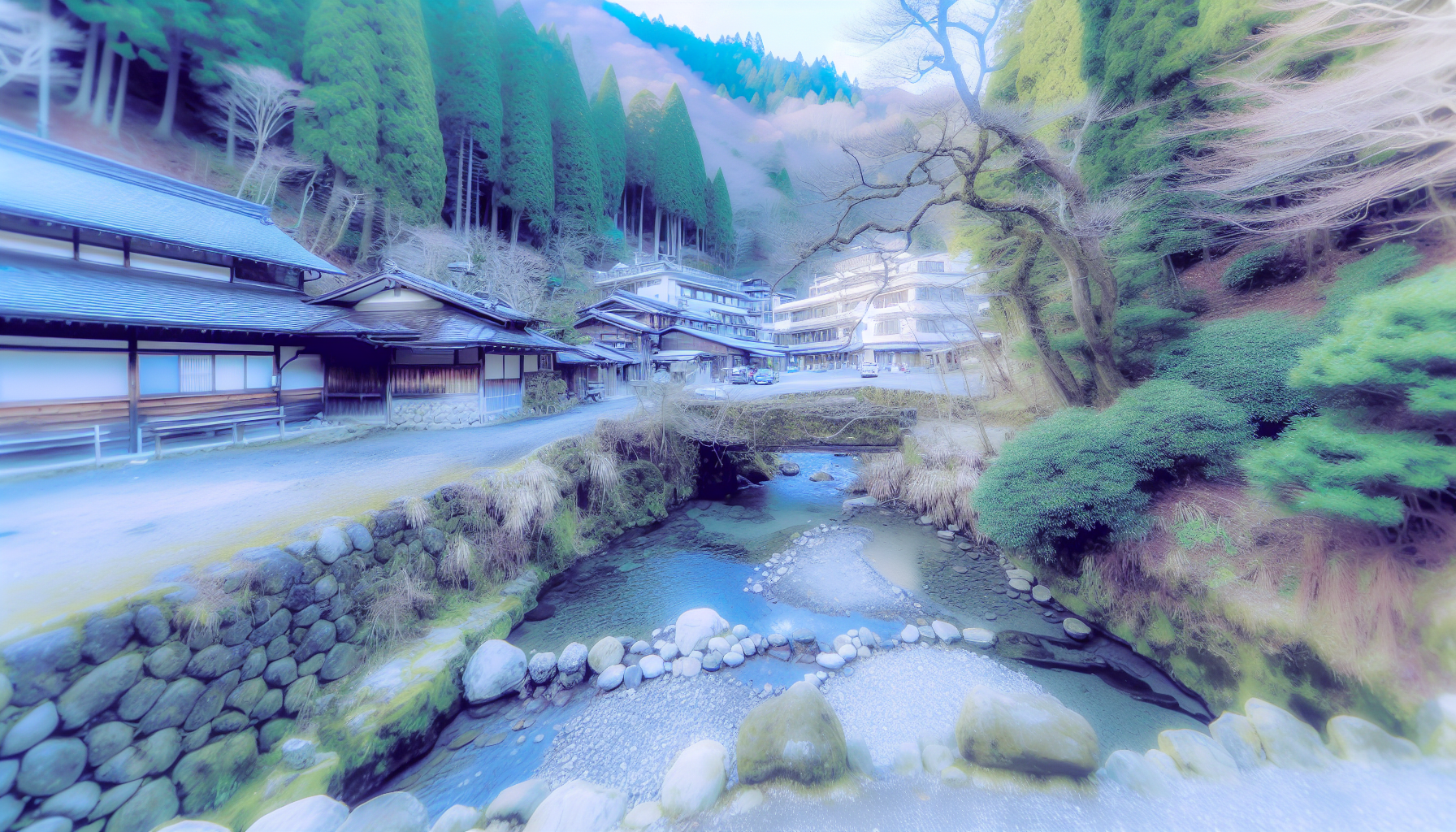
Shuzenji Hot Spring, located in Izu City, Shizuoka Prefecture, is the oldest hot spring resort on the Izu Peninsula, boasting over 1200 years of history since the Heian period. A legend remains that Kobo Daishi Kukai opened the hot spring, and a picturesque hot spring town spreads along the clear stream of the Katsura River, earning it the name “Little Kyoto of Izu,” where it has been beloved by many literati and scholars. This article provides detailed guidance on the charm of Shuzenji Hot Spring, including its history, water quality, tourist attractions, and access information.
History and Origin of Shuzenji Hot Spring
Kobo Daishi Legend and the Tokko Bath
The opening of Shuzenji Hot Spring dates back to 807 (Daido 2). According to legend, Kobo Daishi Kukai, who visited this place, was moved to tears by the sight of a young boy washing his sick father’s body in the Katsura River (Shuzenji River). Moved by the boy’s filial piety, Kobo Daishi struck the rocks in the river with a tokko-sho (a Buddhist ritual object) he was holding, and a miraculous hot spring is said to have gushed forth.
This legendary hot spring is preserved as the “Tokko-no-yu (Tokko Bath)” in the middle of the Katsura River, becoming a symbolic presence of Shuzenji Hot Spring. Connected by a red-painted bridge, the Tokko Bath cannot be entered for bathing nowadays, but it remains a central tourist attraction that many visitors come to see.
Status as One of the Three Ancient Hot Springs of Izu
Shuzenji Hot Spring is counted as one of the “Three Ancient Hot Springs of Izu” along with Atami Hot Spring and Ito Hot Spring, and has developed as the center of hot spring culture on the Izu Peninsula. From the Heian period through the Kamakura period, it flourished as a gate town of Shuzenji Temple (the present-day Shuzenji), and also served as a spiritual center attracting many pilgrims.
During the Kamakura period, it became the tragic stage of the Minamoto clan, where Minamoto no Yoriie, the brother of Minamoto no Yoritomo, and Minamoto no Yoriie, Yoritomo’s son, were confined and spent their final days in this place. This historical background gives Shuzenji Hot Spring its unique emotional depth.
A Hot Spring Resort Loved by Literati and Scholars
From the Meiji through the Showa period, Shuzenji Hot Spring was beloved by many literati and scholars. Particularly famous is Natsume Soseki, who during his stay at the Kikuya inn (now the Arai inn) in Shuzenji Hot Spring in 1910 (Meiji 43), suffered from a gastric ulcer and vomited blood, falling into a critical condition—the “Shuzenji Great Illness” is a well-known episode in literary history.
Others such as Okamoto Kido, Ozaki Koyo, Akutagawa Ryunosuke, and Ibuse Masuji visited this hot spring resort and used it as the setting for their works. Throughout the hot spring town, there are poetry monuments and literary monuments of these literary figures, where visitors can enjoy a literary walk.
Water Quality and Benefits of Shuzenji Hot Spring
Characteristics of the Hot Spring
The water quality of Shuzenji Hot Spring is centered on alkaline simple hot spring. Colorless and transparent without any peculiar taste, it is also known as a “beauty bath” for its soft feel against the skin. With a spring temperature of around 50 degrees Celsius, many inns offer pure spring source flowing, allowing guests to fully enjoy the hot spring’s benefits.
Main Water Quality Data:
- Water Quality: Alkaline Simple Hot Spring
- pH Value: 8.0~9.0 (weakly alkaline)
- Spring Temperature: Approximately 50°C
- Discharge Volume: Abundant
Expected Benefits
The hot spring of Shuzenji is expected to have the following benefits:
General Indications:
- Neuralgia
- Muscle pain
- Joint pain
- Frozen shoulder
- Motor paralysis
- Joint stiffness
- Bruises and sprains
- Chronic gastrointestinal disease
- Hemorrhoids
- Poor circulation
- Recovery from illness
- Fatigue recovery
- Health promotion
The alkaline water quality has the effect of softening old dead skin, and after bathing, skin becomes smooth. Additionally, the thermal effect of the hot spring promotes blood circulation, allowing both mind and body to relax.
Outdoor Baths and Day-Use Hot Spring Facilities at Shuzenji Hot Spring
Hako Bath (Hakuyu)
Shuzenji Hot Spring once had seven outdoor baths, but they disappeared over time. In 2000 (Heisei 12), the “Hako Bath” was revived, allowing outdoor bath culture to flourish once again.
The Hako Bath is an atmospheric wooden structure made entirely of cypress, with only an indoor bath, a small hot spring facility where visitors can easily enjoy high-quality pure spring source flowing. Located along the Katsura River, it is ideal for stopping by while strolling through the hot spring town.
Facility Information:
- Operating Hours: 10:00~18:00 (reception until 17:30)
- Closed: Thursdays (open if a holiday)
- Admission: ¥350 for adults, ¥200 for children
- Water Quality: Alkaline Simple Hot Spring
Tokko Bath
Located in the middle of the Katsura River, the birthplace of Shuzenji Hot Spring, “Tokko Bath,” cannot be entered for bathing nowadays, but remains as a symbol of the hot spring town and a popular photography spot for many visitors. Illuminated at night, it creates a mystical atmosphere.
Inns Offering Day-Use Bathing
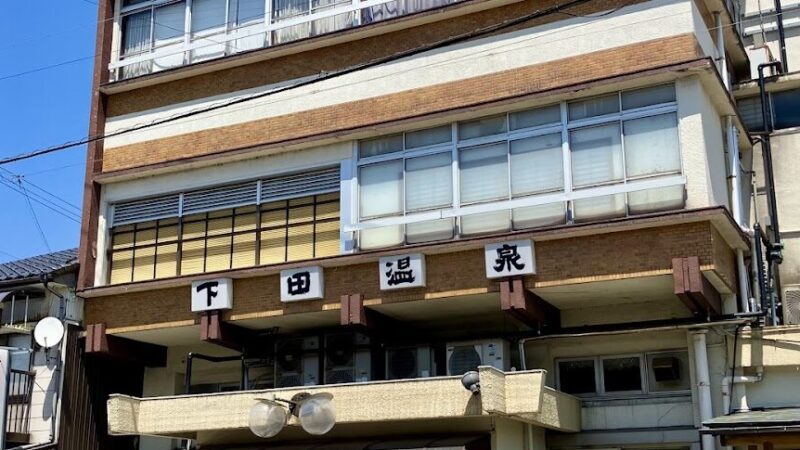
Many inns at Shuzenji Hot Spring accept day-use bathing. It is appealing to experience the atmospheric hot springs of old inns casually.
Main Day-Use Bathing Facilities:
- Arai Inn: An old established inn founded in Meiji 5. The building is designated as a National Registered Tangible Cultural Property, offering a hot spring experience of high historical value.
- Yu no Kuni Kaikan: A walk-in hot spring facility near Shuzenji Station. Equipped with a large bath, open-air bath, and sauna, it also has a dining area.
- Sora Watsutsugisou Kinryu: A luxury inn situated on 15,000 tsubo (about 50,000 square meters) of land. Day-use plans allow guests to enjoy hot spring bathing and meals.
Since reception times and fees vary by facility, it is recommended to confirm in advance by phone.
Tourist Attractions in Shuzenji Hot Spring Town
Shuzenji Temple
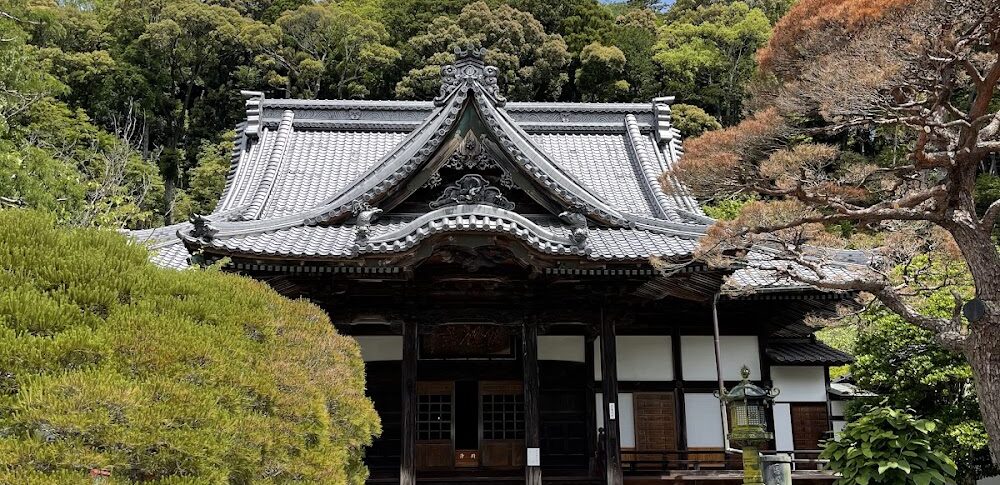
The ancient temple “Shuzenji,” which gave its name to Shuzenji Hot Spring, is a Soto Zen temple said to have been founded by Kobo Daishi in 807. It contains the main hall, gate, treasure house, and other structures, with the grave of Minamoto no Yoriie and an important cultural property, the sitting statue of Dainichi Nyorai.
The temple grounds are wrapped in silence, providing a peaceful space. Particularly beautiful during the autumn foliage season, the temple attracts many visitors. It is a must-visit spot when coming to Shuzenji Hot Spring.
Bamboo Grove Path
Another famous spot at Shuzenji Hot Spring is the “Bamboo Grove Path.” The walking trail through the bamboo grove extending about 300 meters along the Katsura River evokes the atmosphere of Kyoto’s Arashiyama and is the reason the area is called “Little Kyoto of Izu.”
Walking through the bamboo grove, the rustling of bamboo leaves in the wind and the murmur of the river create a pleasant atmosphere, allowing visitors to forget the hustle and bustle of the city. Along the way, red-painted bridges such as “Katsura Bridge,” “Maple Bridge,” and “Waterfall Bridge” create popular photo spots.
Shigetsuden Hall
Shigetsuden, which is said to have been built by Hojo Masako, the mother of Minamoto no Yoriie, to pray for his peace, is an important historical site telling the story of Shuzenji Hot Spring. The current structure was rebuilt in 1489 and is designated as a National Important Cultural Property as the oldest wooden building in Izu.
Inside is enshrined a sitting statue of Shakyamuni Buddha, conveying the tragedy of the Minamoto clan to the present day.
Hie Shrine
Hie Shrine, located on a elevated plateau overlooking Shuzenji Hot Spring town, has long been worshipped as the guardian deity of Shuzenji Temple. From the shrine grounds, the hot spring town can be seen in full view, and the scenery at twilight is especially beautiful.
Every April, the “Shuzenji Hot Spring Festival” is held, featuring traditional events such as portable shrine processions and parades of children in formal dress.
Romance Bridge Tour
The five bridges spanning the Katsura River at Shuzenji Hot Spring have become a popular strolling course known as the “Romance Bridge Tour.” Each bridge is said to have benefits such as “love connection,” “children,” and “safe childbirth,” and it is said that those who cross all bridges will achieve romantic fulfillment.
The Five Bridges:
- Watsutsuki Bridge (Togetsu-kyo)
- Katsura Bridge (Katsura-bashi)
- Maple Bridge (Kaede-bashi)
- Tiger Creek Bridge (Kokei-kyo)
- Waterfall Bridge (Takishita-bashi)
A popular sightseeing course with couples and groups of women.
Nearby Tourist Attractions
Shuzenji Niji no Sato (Rainbow Village)
“Shuzenji Niji no Sato,” located about 10 minutes by car from Shuzenji Hot Spring, is a theme park spread over approximately 500,000 square meters, with English Village, Canada Village, and Japanese gardens scattered throughout.
Flowers of each season can be enjoyed, with particularly beautiful weeping cherry blossoms in spring and autumn foliage. The Romney Railway (mini steam locomotive) running through the park is also popular, making it a recommended spot for families.
Joren Waterfall
About 30 minutes by car from Shuzenji Hot Spring, “Joren Waterfall,” one of Izu’s representative waterfalls, is also selected as one of Japan’s 100 Best Waterfalls. Water flowing from a height of 25 meters and width of 7 meters is impressive, creating a healing space filled with negative ions.
The waterfall appears in the lyrics of Ishikawa Sayuri’s hit song “Amagi Koe” and attracts many visitors as a tourist attraction.
Amagi Pass and Old Amagi Tunnel
In the central part of the Izu Peninsula, the “Old Amagi Tunnel” is located at Amagi Pass, completed in Meiji 38. The 445.5-meter-long stone tunnel is designated as a National Important Cultural Property and is known as the setting for Kawabata Yasunari’s novella “The Izu Dancer.”
Currently maintained as a walking path, it allows visitors to stroll while feeling historical romance.
Daruma Mountain Highland
About 40 minutes by car from Shuzenji Hot Spring, the 982-meter Daruma Mountain offers panoramic views of Mount Fuji, Suruga Bay, and the Southern Alps. The sunset scenery is particularly wonderful, with a view of the west Izu coastline also called the “Matsushima of Izu.”
Well-maintained hiking courses allow visitors to fully enjoy nature.
Cycle Sports Center
About 15 minutes by car from Shuzenji Hot Spring, the “Izu Velodrome (Japan Cycle Sports Center)” is a theme park where various bicycle attractions can be enjoyed. Featuring unusual bicycles, BMX courses, and cycle coasters, the facility is fully equipped for entertainment for everyone from children to adults.
Access Information to Shuzenji Hot Spring
Access by Train
From Tokyo:
- Take the JR Tokaido Shinkansen to Mishima Station (approximately 45 minutes from Tokyo Station)
- Transfer to the Izu Hakone Railway Sunzu Line and get off at Shuzenji Station (approximately 30 minutes)
- Take a bus from Shuzenji Station to Shuzenji Hot Spring for approximately 8 minutes, or take a taxi for approximately 7 minutes
From Nagoya/Osaka:
- Take the JR Tokaido Shinkansen to Mishima Station
- Transfer to the Izu Hakone Railway Sunzu Line and get off at Shuzenji Station
- Take a bus or taxi from Shuzenji Station to Shuzenji Hot Spring
Bus from Shuzenji Station:
- Tokai Bus heading to “Shuzenji Hot Spring”
- Travel Time: Approximately 8 minutes
- Fare: ¥220 for adults
- Frequency: 2-3 buses per hour
Access by Car
From Tokyo:
- Via Tomei Expressway “Numazu IC” – Izu Longitudinal Expressway and Izu Central Road in approximately 35 minutes (approximately 30km)
- Via Shin-Tomei Expressway “Nagaizumi Numazu IC” – Izu Longitudinal Expressway and Izu Central Road in approximately 35 minutes
From Nagoya/Osaka:
- Via Tomei Expressway “Numazu IC” – Izu Longitudinal Expressway and Izu Central Road in approximately 35 minutes
Parking Information:
Several public parking lots are available in Shuzenji Hot Spring town. Main parking lots include:
- Shuzenji Hot Spring Parking Lot (free and paid areas)
- Shuzenji Temple Parking Lot
- Dedicated parking lots at each inn
Weekends and autumn foliage season can be crowded, so early arrival is recommended.
Access by Highway Bus
Direct express buses operate from Tokyo Station Yaesu Exit to Shuzenji Hot Spring.
- Travel Time: Approximately 2 hours 40 minutes
- Fare: Approximately ¥2,600 per way
- Operator: Tokai Bus
Since there is no need to transfer and buses go directly to the hot spring town, this is recommended for those with luggage or who prefer to travel comfortably.
Recommended Inns and Hotels at Shuzenji Hot Spring
Luxury Inns
Sora Watsutsugisou Kinryu
A luxury inn situated on 15,000 tsubo of extensive land. Features a Japanese garden that captures the seasons, pure spring source flowing hot springs, and creative Japanese cuisine. All rooms are designed in a detached cottage style, recommended for those prioritizing privacy.
Arai Inn
An old established inn founded in Meiji 5, designated as a National Registered Tangible Cultural Property. Known for being where Natsume Soseki stayed during the “Shuzenji Great Illness,” it also holds literary value.
Asaba
A prestigious old-established inn with a Noh stage. Highly rated in Michelin guides, offering the finest hospitality experience.
Mid-Range Inns
Yu Kairo Kikuya
Popular for its seven types of free private baths. A soft drink, ice cream, and late-night ramen service are all complimentary, adding to the appeal.
Nenoyu Taizanso
Located along the Katsura River with beautiful bamboo grove views. Pure spring source flowing hot springs and kaiseki cuisine using local ingredients are well-received.
Budget-Friendly Accommodations
Shuzenji Hot Spring National Registered Tangible Cultural Property Inn Arai Inn Annex Tamashuoen Arai
Arai Inn’s annex offers more affordable access to stay in a historically important building.
Shuzenji Hot Spring Hot Spring Hopping Inn Shuzenji Hotel
Centrally located in the hot spring town, convenient for sightseeing. Multiple baths allow guests to enjoy a variety of hot springs.
Gourmet Information at Shuzenji Hot Spring
Local Specialties
Sweetfish Dishes
The Katsura River is known as a clear stream and a famous fishing spot for sweetfish. Local restaurants and inns serve salt-grilled sweetfish, sweetfish candied in sugar, and more.
Wasabi Dishes
Izu is a producer of high-quality wasabi. Various wasabi dishes can be enjoyed, including wasabi pickles, wasabi rice bowls, and wasabi soft-serve ice cream.
Izu’s Seafood
Fresh seafood caught in Suruga Bay is also a charm of Shuzenji Hot Spring. From various fish and shellfish such as kinmedai simmering, spiny lobster, and dried horse mackerel can be enjoyed throughout the seasons.
Shuzenji Black Rice
Dishes made with “black rice,” an ancient grain cultivated locally, are also a specialty.
Recommended Gourmet Spots
Bokunenjin
A famous hand-made noodle shop. Aromatic noodles made from locally-sourced buckwheat flour are popular.
Zen-fu-tei Nanaban
A dining spot in the center of the hot spring town. Sweetfish dishes and set meals using local ingredients can be enjoyed.
Tea House Yorasshae
A sweets shop near the bamboo grove path. A place to rest with matcha and Japanese sweets.
Events and Festivals at Shuzenji Hot Spring
Shuzenji Hot Spring Festival (April)
Held mid-April each year, this is the largest event in the hot spring town. Portable shrine processions, children’s parades, and performances of traditional arts are held, enlivening the hot spring town.
Shuzenji Autumn Foliage Festival (November)
Known as a place of beautiful autumn foliage, the “Autumn Foliage Festival” is held from mid to late November. Illumination events are held at Shuzenji Temple, Rainbow Village, and autumn foliage groves, allowing visitors to enjoy mystical foliage.
Bamboo Lantern Evening (Year-round)
At the bamboo grove path, bamboo lantern illumination events are held regularly. The mystical atmosphere created by bamboo lights is popular as a date spot.
How to Enjoy Shuzenji Hot Spring – Model Courses
Day-Trip Course (Approximately 4 hours)
10:00 Arrive at Shuzenji Station, take bus to Shuzenji Hot Spring
10:15 Stroll through the bamboo grove path
10:45 Visit Shuzenji Temple
11:30 View Tokko Bath, stroll through hot spring town
12:00 Lunch (noodles or sweetfish dishes)
13:30 Day-use bathing at Hako Bath
14:30 Purchase souvenirs
15:00 Depart from Shuzenji Hot Spring
1-Night 2-Day Course
Day 1
14:00 Arrive at Shuzenji Hot Spring, check in to inn
15:00 Stroll through hot spring town (bamboo grove path, Shuzenji Temple, Romance Bridge Tour)
17:00 Hot spring bath at inn
18:00 Dinner (kaiseki cuisine)
20:00 Evening hot spring town stroll (view illumination)
Day 2
7:00 Morning bath
8:00 Breakfast
10:00 Check out
10:30 Visit Shuzenji Rainbow Village or Joren Waterfall
12:30 Lunch
14:00 Depart from Shuzenji Hot Spring
2-Night 3-Day Course
By adding Amagi Pass hiking and Daruma Mountain Highland drives to the 1-night 2-day course, visitors can fully enjoy Izu’s nature.
Seasonal Charm of Shuzenji Hot Spring
Spring (March~May)
The weeping cherry blossoms of Shuzenji Rainbow Village and cherry blossoms of Shuzenji Temple are among many famous cherry blossom spots. The Shuzenji Hot Spring Festival in April is also noteworthy. The fresh green of the bamboo grove is also beautiful, making it a refreshing season.
Summer (June~August)
Sweetfish fishing and river playing in the Katsura River are enjoyable activities. The bamboo grove stays cool, making it comfortable as a summer retreat. Fireflies may be seen on summer nights.
Autumn (September~November)
The best season for Shuzenji Hot Spring. From mid to late November, the autumn foliage is spectacular, with Shuzenji Temple, foliage groves, and Rainbow Village turning red and yellow. The autumn foliage festival’s illumination is a must-see.
Winter (December~February)
The season for hot spring bathing. In cold winter, the warmth of hot springs is especially appreciated. The clear air offers spectacular views of Mount Fuji from Daruma Mountain Highland. Spending time slowly in the quiet winter hot spring town is also recommended.
Reviews and Reputation of Shuzenji Hot Spring
Evaluation of Hot Springs and Water Quality
Many visitors highly praise the water quality of Shuzenji Hot Spring. Comments such as “skin becomes silky smooth,” “feels refreshed after bathing,” and “pure spring source flowing is excellent” are frequently heard.
Atmosphere and Convenience of Hot Spring Town
The atmospheric hot spring town known as “Little Kyoto of Izu” is well-received. Reviews highlight “the bamboo grove path is wonderful,” “riverside strolls feel great,” and “a quiet and calm hot spring town.”
On the other hand, some comment that “the hot spring town is compact and can be sightseeing in one day,” so combining with nearby attractions makes for a more enriching trip.
Overall Satisfaction
With a good balance of history, hot springs, nature, and gourmet, overall satisfaction is high. Particularly high ratings come from travelers aiming for “adult hot spring trips,” “couple trips,” and “literary walks,” with many repeat visitors.
Conclusion: The Charm of Shuzenji Hot Spring
Shuzenji Hot Spring in Izu City, Shizuoka Prefecture, possesses many attractions as Izu’s oldest hot spring resort with over 1200 years of history. The Tokko Bath where the Kobo Daishi legend remains, the bamboo grove path, Shuzenji Temple and other tourist attractions, high-quality alkaline simple hot spring, the atmospheric hot spring town beloved by literati and scholars, and abundant nearby nature and tourism resources.
Accessibility is also attractive—about 2 hours from Tokyo by transferring the shinkansen and local trains, or about 2.5 hours by car. While day-trips are sufficient, staying one night or more to slowly experience the atmosphere of the hot spring town is recommended.
Shuzenji Hot Spring, which shows different faces with each season, offers new discoveries with every visit. Enjoy a hot spring trip that heals both body and mind at “Little Kyoto of Izu,” where history and nature, hot springs and culture harmonize.
Shuzenji Hot Spring Basic Information
- Location: Shuzenji, Izu City, Shizuoka Prefecture
- Water Quality: Alkaline Simple Hot Spring
- Access: Approximately 8 minutes by bus from Shuzenji Station on the Izu Hakone Railway
- Inquiry: Izu City Tourism Association Shuzenji Branch TEL 0558-72-2501
- Official Website: https://www.shuzenji-kankou.com/
When planning your trip to Shuzenji Hot Spring, it is recommended to confirm in advance the business information of accommodation facilities and tourist attractions, as well as event details. Enjoy a wonderful hot spring trip.