Wakura Onsen, Ishikawa Prefecture | Complete Guide to the Charm, History, and Tourism of Noto Peninsula’s Leading Hot Spring 2025
What is Wakura Onsen | Famous Hot Spring on the Seaside of Noto Peninsula, Ishikawa Prefecture
Wakura Onsen (わくらおんせん) is a hot spring resort representing Noto Peninsula, located in Nanao City, Ishikawa Prefecture. It is characterized by its picturesque location facing Nanao Bay and high-temperature sodium chloride hot spring water that bubbles forth from the sea, and has long been cherished as the “hot spring of the sea.”
It is one of the Hokuriku region’s leading hot spring tourist destinations, attracting approximately one million visitors annually. Many luxury ryokans line the area, including Kagaya, which has consistently ranked in the top positions of “100 Hotels and Ryokans Selected by Professionals in Japan.” It receives high evaluations from both domestic and international visitors as a luxurious hot spring resort where one can simultaneously enjoy Noto’s fresh seafood, hot springs, and the spectacular views of Nanao Bay.
Basic Information about Wakura Onsen
- Location: Wakura-machi, Nanao City, Ishikawa Prefecture
- Water Quality: Sodium Calcium-Chloride Spring (hypertonic weak alkaline hot spring)
- Source Temperature: Approximately 80–90°C
- Efficacy: Neuralgia, muscle pain, joint pain, fatigue recovery, cold sensitivity, skin diseases, etc.
- Characteristics: Hot spring water that emerges from the sea, with high salt concentration providing excellent heat retention and moisturizing effects
- Access: Approximately 5 minutes by car from Wakura Onsen Station on the JR Noto Line, approximately 40 minutes by car from Noto Airport
History of Wakura Onsen | A Sea Hot Spring with 1,200 Years of Tradition
Legend of Hot Spring Discovery
The history of Wakura Onsen dates back approximately 1,200 years. According to tradition, during the Kōnin era (806–810), a fisherman discovered a white heron healing its wounds in the offshore waters of Nanao Bay, which is said to have triggered the discovery of the hot spring. When the fisherman, intrigued, drew closer, he found warm water gushing forth from the sea, marking the beginning of Wakura Onsen.
This “white heron legend” has become the symbol of Wakura Onsen, and statues and decorations featuring white herons can be seen throughout the hot spring town.
Historical Transitions
Heian to Muromachi Periods
Initially known as the “sea hot spring,” it was characterized by an unusual bathing style where bathers soaked in a hot water pool in the sea during low tide. Protected by the Hatakeyama clan, the guardians of Noto Province, it developed as a hot spring resort.
Edo Period
Historical lords of the Kaga clan began visiting for hot spring treatments, and hot spring facilities were improved under the clan’s protection. During this period, techniques for drawing hot spring water to land developed, and the form of hot spring resort as it exists today became established.
Meiji Era and Beyond
With the opening of railway lines, transportation improved, and hot spring bathers began visiting from throughout Japan. In 1879 (Meiji 12), a public bathhouse was established, solidifying the foundation of the hot spring resort.
Showa to Heisei Eras
During the Showa period, large-scale ryokans were constructed one after another, and Wakura Onsen grew into a major hot spring tourist destination representing the Hokuriku region. In particular, Kagaya, founded in 1946 (Showa 21), became known for “Japan’s finest hospitality,” spreading the fame of Wakura Onsen throughout the nation.
Etymology of the Name
There are various theories about the name “Wakura,” but the most plausible is that it derives from “Wakuura” (湧浦), which literally means a bay or inlet from which hot spring water wells forth, accurately describing the characteristics of the spring.
Water Quality and Efficacy of Wakura Onsen | Characteristics of High-Temperature Chloride Spring from the Sea
Characteristics of the Water Quality
The greatest characteristic of Wakura Onsen is that it is a high-temperature chloride hot spring that emerges from the sea. The source temperature is extremely high at approximately 80–90°C, and the salt concentration reaches approximately twice that of seawater.
Water Quality: Sodium Calcium-Chloride Spring (hypertonic weak alkaline hot spring)
- pH Value: 7.9 (weakly alkaline)
- Total Component Content: Approximately 18,000 mg/kg or more
- Main Components: Sodium ions, calcium ions, chloride ions
Efficacy of Chloride Springs
Chloride springs are also called “hot springs of heat” and have the following characteristics and benefits.
Heat Retention Effect
Salt adheres to the skin and forms a protective layer, so body temperature does not drop easily after bathing, and warmth persists for extended periods. It is particularly effective for improving cold sensitivity.
Moisturizing Effect
The moisturizing action of salt leaves the skin feeling supple. With high cosmetic effects, it is also known as a “beauty hot spring.”
Antiseptic Action
Salt provides antiseptic effects that help improve cuts and skin diseases.
Indications
General Indications
- Neuralgia, muscle pain, joint pain
- Frozen shoulder, motor paralysis, joint stiffness
- Bruises, sprains, chronic gastrointestinal diseases
- Hemorrhoids, cold sensitivity, post-illness recovery
- Fatigue recovery, health enhancement
Water Quality-Specific Indications (Chloride Springs)
- Cuts, peripheral circulatory disorders
- Cold sensitivity, depressive state
- Dry skin conditions
Precautions for Bathing
Due to high salt concentration, the following points require attention.
- After bathing, do not rinse with fresh water shower, as this would diminish the heat retention effect; simply dry off with a towel instead
- Those with hypertension should avoid prolonged bathing
- Ensure adequate fluid intake before and after bathing
- Those with sensitive skin should keep bathing time short
Major Ryokans and Hotels in Wakura Onsen | Distinguished Accommodations Including Kagaya
Kagaya | Legendary Ryokan Known for Japan’s Finest Hospitality
A flagship ryokan representing Wakura Onsen, it achieved the unprecedented feat of ranking #1 overall for 36 consecutive years in “100 Hotels and Ryokans Selected by Professionals in Japan” (through 2017).
Features
- 232 guest rooms in a large-scale ryokan
- Spectacular location overlooking Nanao Bay
- Attentive service with dedicated guest room attendants
- Kaiseki cuisine utilizing Noto ingredients
- Comprehensive in-house facilities (Noh theater, gallery, spa, etc.)
Hot Spring Facilities
Multiple large public baths and outdoor baths provide bathing with views of Nanao Bay. Private rental baths are also available.
Aenokaze | Modern Large Resort Ryokan
A modern-style large ryokan that opened in 2003 as a sister property of the Kagaya group.
Features
- All rooms with ocean views
- Buffet-style dining also available
- Open and spacious design
- Popular with families and group travelers
- Relatively affordable pricing
Tada-ya | Historic Ryokan Established 130 Years Ago
A historic ryokan founded in 1885 (Meiji 18), boasting one of the longest histories among Wakura Onsen establishments.
Features
- 34 guest rooms in a mid-sized ryokan
- Quiet and peaceful atmosphere
- Located on a peninsula jutting into Nanao Bay with spectacular views
- Cuisine utilizing seasonal Noto ingredients
- Attentive and refined service
Yukemuri no Yado Biwansou
A ryokan with spectacular views located on a hilltop overlooking Nanao Bay.
Features
- All rooms overlook Nanao Bay
- Exceptional views from the outdoor bath
- Cuisine centered on Noto seafood
- Relatively small-scale with a warm, homey atmosphere
Day-Use Bathing Facilities
Sōyu (総湯)
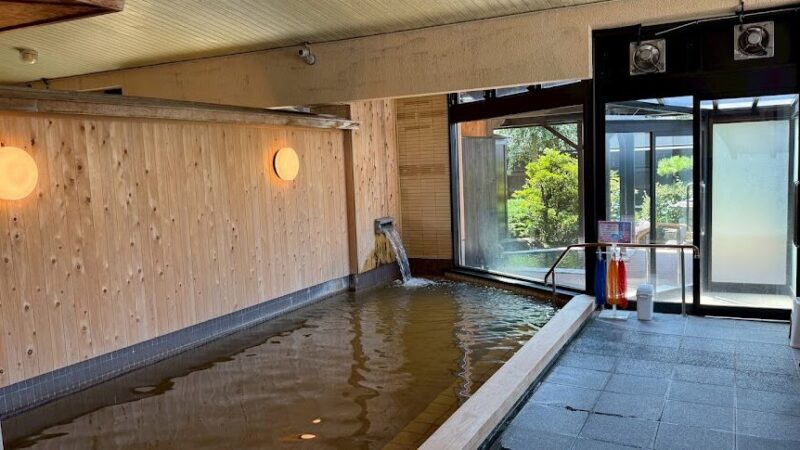
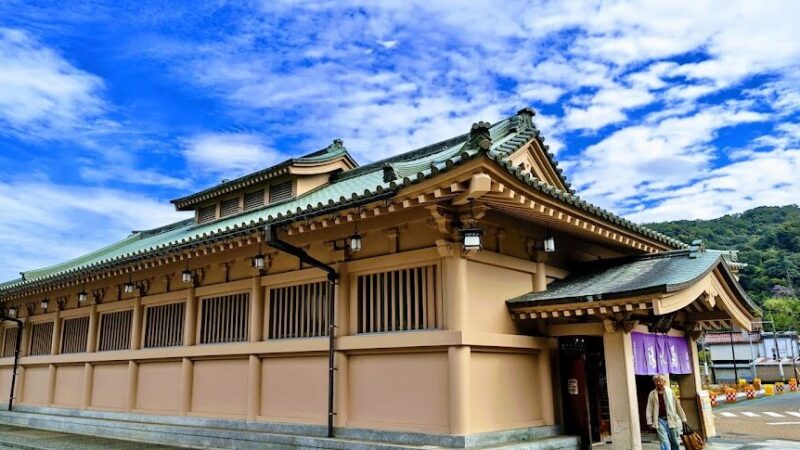
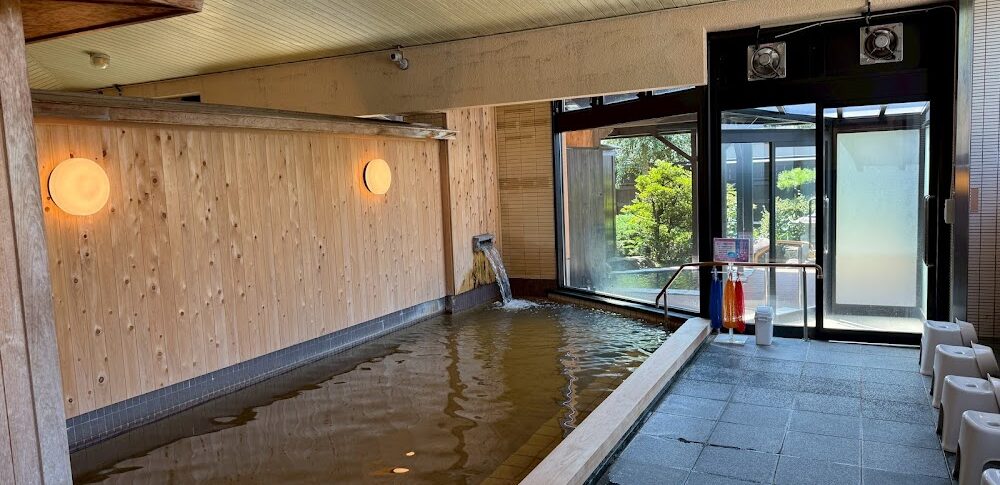
A public bathhouse in Wakura Onsen used by local residents as well. One can enjoy Wakura Onsen’s hot water in a casual setting.
- Hours: 7:00 AM–10:00 PM
- Admission: ¥480 for adults, ¥130 for children (ages 3–elementary school)
- Facilities: Indoor bath, sauna
Wakura Onsen Tourist Information Hall (Wakutama no Yu)
A day-use bathing facility designed for tourists, with an attached foot bath.
Tourist Attractions in Wakura Onsen | Sights in the Hot Spring Town and Surroundings
Yuttaripa Park (Aioi Boat Hot Spring)
A free foot bath facility overlooking Nanao Bay. The large foot bath, approximately 54 meters long, is a popular rest stop during hot spring town walks.
Facility Information
- Hours: Available 24 hours
- Admission: Free
- Amenities: Foot bath, benches, gazebos
Bentenzaki Source Spring Park
Located at the site believed to be the birthplace of Wakura Onsen, this seaside park features a “hot spring egg cooking hot spring” where visitors can make onsen tamago (hot spring eggs), and a spring water drinking area.
Highlights
- Viewing of the bubbling source spring
- Hot spring egg-making experience (bring your own eggs or purchase nearby)
- Walking paths with views of Nanao Bay
Wakura Onsen Matsuri Kaikan (Hot Spring Town Festival Hall)
A facility introducing traditional festivals and culture of the Noto region. A highlight is the exhibition of the massive festival float “Deka-yama” from the Seiha Festival, standing 12 meters tall.
Exhibition Contents
- Deka-yama (12-meter-high massive festival float) on display
- Materials related to Noto festival culture
- Recreations of festival atmosphere through video and sound
Tsuji-guchi Hirotaka Bijutsukan (Le Musée de H)
An art museum café where visitors can enjoy the sweets and works of Tsuji-guchi Hirotaka, a world-renowned pastry chef from Wakura Onsen.
Facility Features
- Display of Tsuji-guchi’s sugar craft and candy art works
- Creative sweets using Noto ingredients
- Café space to enjoy sweets
- Shop for souvenir purchases
Noto Island Bridge and Noto Island
Noto Island, approximately 10 minutes by car from Wakura Onsen, is connected by the Noto Island Bridge, which spans 1,050 meters.
Attractions on Noto Island
- Notojima Aquarium: Popular for whale sharks and dolphin shows
- Noto Island Glass Art Museum: Museum of contemporary glass art
- Noto Island Bridge: Spectacular views from the bridge
- Coastal Drive: Beautiful coastal scenery
Nanao Castle Ruins
Located approximately 20 minutes by car from Wakura Onsen, these are the ruins of a mountain castle from the Sengoku period. Designated a National Historic Site, the views from the main fort site encompass Nanao Bay and the entire Noto Peninsula.
History
Built as the castle of the Hatakeyama clan, it is famous for its attack by Uesugi Kenshin. Stone walls and other structures remain in good condition.
Cuisine in Wakura Onsen | Noto’s Seafood and Local Dishes
Noto Seafood
One of Wakura Onsen’s greatest attractions is the fresh seafood from Noto Peninsula. Nanao Bay is a natural harbor with abundant fish and shellfish.
Representative Seafood
- Noto Oysters: Winter-season large oysters with concentrated flavor
- Nodoguro (Golden Acne Fish): White fish known as a luxury item
- Gasu Shrimp: Local shrimp with strong sweetness
- Winter Yellowtail: The king of winter flavors
- Rock Oysters: Large summer-season oysters
- Squid: Fresh, transparent squid with sweetness
Noto Beef
“Noto Beef,” a branded wagyu raised on Noto Peninsula, is a delicacy available at Wakura Onsen. It is characterized by fine marbling and rich flavor.
Local Sake
Ishikawa Prefecture is a famous sake production region, and many local brands are available at Wakura Onsen.
Representative Local Sake
- Chikuha
- Taikei
- Taniizumi
Gourmet Spots in Wakura Onsen Town
Le Musée de H
The café attached to the aforementioned Tsuji-guchi Hirotaka Museum offers creative sweets using Noto ingredients.
Noto Milk
A sweets shop popular for gelato made with fresh Noto milk.
Seafood Restaurants
Various restaurants throughout the hot spring town serve fresh seafood for lunch or dinner.
Access to Wakura Onsen | Transportation Methods and Travel Times
By Train
From Tokyo
- Hokuriku Shinkansen to Kanazawa Station: approximately 2 hours 30 minutes
- Limited express train from Kanazawa Station to Wakura Onsen Station on the JR Noto Line: approximately 1 hour
- Bus or taxi from Wakura Onsen Station to the hot spring town: approximately 5 minutes
- Total travel time: approximately 4 hours
From Osaka and Nagoya
- Special express train “Thunderbird” to Kanazawa Station: approximately 2 hours 40 minutes from Osaka, approximately 3 hours from Nagoya
- Limited express train from Kanazawa Station to Wakura Onsen Station: approximately 1 hour
Direct Limited Express from Kanazawa Station
The “Noto Kagaribi” limited express connects Kanazawa Station and Wakura Onsen Station in approximately 1 hour, with several trains operating daily.
By Car
From Tokyo
- Via Kan-etsu and Hokuriku expressways: approximately 6 hours
- Via Kanazawa Morimoto IC to Noto Satoyama-Kaido road to Wakura Onsen: approximately 1 hour 30 minutes
From Osaka and Nagoya
- Via Hokuriku and Noto Satoyama-Kaido expressways
- From Osaka: approximately 4 hours 30 minutes
- From Nagoya: approximately 4 hours
Nearest IC
- Approximately 5 minutes from “Wakura IC” on Noto Satoyama-Kaido
By Airplane
Using Noto Airport
- From Haneda Airport to Noto Airport: approximately 1 hour
- From Noto Airport to Wakura Onsen by shuttle bus or rental car: approximately 40 minutes
Using Komatsu Airport
- From Haneda and Fukuoka airports to Komatsu Airport: approximately 1 hour
- From Komatsu Airport to Wakura Onsen by car: approximately 1 hour 30 minutes
Transportation from Wakura Onsen Station to the Hot Spring Town
Local Bus
Local buses connect Wakura Onsen Station to the hot spring town with a travel time of approximately 5 minutes.
Taxi
Taxis are available at the station front, taking approximately 5 minutes to reach the hot spring town at a cost of approximately ¥1,000.
Ryokan Shuttle Service
Many ryokans offer free shuttle service from Wakura Onsen Station. Prior reservation is usually required, so confirm when making your accommodation reservation.
Annual Events in Wakura Onsen | Seasonal Festivities
Spring Events
Seiha Festival (Aobikari Festival) – May 3–5
The annual festival of Jiji Daimyojin Shrine in Nanao City, designated as a National Important Intangible Folk Cultural Property. A magnificent festival where giant festival floats called “Deka-yama,” 12 meters tall and weighing 20 tons, parade through town.
Summer Events
Wakura Onsen Summer Fireworks – Early August
Approximately 2,000 fireworks are launched from the sea of Nanao Bay, illuminating the hot spring town and bay. A unique feature is the ability to enjoy the fireworks from ryokan guest rooms and outdoor baths.
Noto Yosakoi Festival – Early June
A yosakoi dance festival held throughout Nanao City, including Wakura Onsen. Many teams from across Japan participate in spirited performances.
Fall Events
Wakura Onsen Autumn Grand Festival – Mid-October
A traditional festival in which portable shrines and drums are paraded through the hot spring town. Both local residents and tourists celebrate together.
Winter Events
Wakura Onsen Winter Fireworks – Early February
Fireworks launched in the clear winter air have a different beauty than summer displays. The contrast between snow scenery and fireworks is enchanting.
Noto Oyster Festival – January–March
An event where visitors can fully enjoy “Noto oysters,” the winter delicacy. Participating ryokans offer special oyster dishes.
Tourist Attractions Around Wakura Onsen | Sights on Noto Peninsula
Wajima City (approximately 1 hour by car)
Wajima Morning Market
One of Japan’s three largest morning markets with over 1,000 years of history. Fresh seafood, local vegetables, and crafts are displayed.
Wajima Lacquerware Hall
Visitors can observe the manufacturing process of “Wajima-nuri,” the traditional craft, and view products for sale.
Chirihama Nagisa Drive Way (approximately 40 minutes by car)
Japan’s only location where vehicles can drive on a sandy beach, this 8-kilometer drive way allows the exhilarating experience of driving along the waves.
Keta Taisha (approximately 50 minutes by car)
Known as the principal shrine of Noto Province, this ancient shrine is revered as a shrine for matchmaking. Its extensive sacred grove (forbidden forest) is designated a National Natural Monument.
Mitsuke Island (Battleship Island) (approximately 1 hour 20 minutes by car)
Located in Suzu City on Noto Peninsula, this 28-meter-high rock formation is also called “Battleship Island” due to its shape. It is an iconic scenic spot representing Noto.
Shiroyama Senmaida (approximately 1 hour 30 minutes by car)
An spectacular sight with approximately 1,000 small paddies cascading down a slope facing the Japan Sea. Designated a National Scenic Beauty and selected as one of Japan’s 100 Best Terraced Rice Fields.
Noto Kongō (approximately 50 minutes by car)
A scenic area featuring steep cliffs and unusual rock formations created by the rough waves of the Japan Sea. The views from a sightseeing boat are magnificent.
Accommodation Plans in Wakura Onsen | Choosing by Budget
Luxury Ryokan Plans (1 night 2 meals ¥30,000+)
Recommended Accommodations
Kagaya, Tada-ya, Yukemuri no Yado Biwansou, etc.
Plan Features
- Attentive service with dedicated guest room attendants
- Kaiseki cuisine using luxury Noto ingredients
- Spacious guest rooms or rooms with private outdoor baths
- Comprehensive in-house facilities (spa, lounge, etc.)
- Ideal for special occasions or business entertainment
Standard Plans (1 night 2 meals ¥15,000–¥25,000)
Recommended Accommodations
Aenokaze, mid-sized Wakura Onsen ryokans, etc.
Plan Features
- Balanced service and pricing
- Kaiseki cuisine centered on Noto seafood
- Well-equipped hot spring facilities
- Suitable for families and group travel
- Excellent value for money
Affordable Plans (1 night 2 meals ¥10,000–¥15,000)
Recommended Accommodations
Small ryokans, minshuku (guesthouses), etc.
Plan Features
- Casual enjoyment of Wakura Onsen
- Home-style local cuisine
- Warm, homey atmosphere
- Room-only plans also available
- Suitable for long-term stays or recuperative visits
Day-Use Plans
Many ryokans offer day-use plans combining bathing with lunch or dinner.
Pricing: Approximately ¥5,000–¥15,000
Inclusions: Bathing plus lunch or dinner, with some plans including private rest rooms
Tips for Enjoying Wakura Onsen | Travel Planning Pointers
Best Seasons
Winter (December–February)
Noto oysters and winter yellowtail are at their most delicious. The rough winter Japan Sea makes the warmth of the hot spring particularly comforting. Note that snow may affect transportation.
Spring (March–May)
Mild weather makes this ideal for sightseeing. The Seiha Festival in May is a must-see event.
Summer (June–August)
Rock oysters are in season. Beach swimming is also available, and summer fireworks are a highlight.
Fall (September–November)
Stable weather and colorful autumn foliage. Fresh seafood is abundant.
Recommended Length of Stay
1 Night 2 Days
A basic course centering on Wakura Onsen and Noto Island. Enjoy the hot spring and savor Noto’s seafood.
2 Nights 3 Days
Use Wakura Onsen as a base to visit major Noto Peninsula tourist sites like Wajima and Suzu. Tour at a relaxed pace.
3 or More Nights
Circle Noto Peninsula or enjoy a leisurely recuperative stay. Interact with local residents.
Packing Checklist
- Winter Season: Warm clothing, gloves, scarves (the Japan Sea side is windy and cold)
- Summer Season: Sunscreen, hat, sunglasses
- Year-Round: Comfortable walking shoes, camera, medication
- When Traveling by Car: Winter studless tires or chains are essential
Reservation Timing
Peak Seasons (Golden Week, Obon, Year-End/New Year)
Reserve 2–3 months in advance. Popular ryokans fill up early.
Regular Seasons
One month advance is possible, but weekends and holidays warrant earlier reservation.
Last-Minute Discounts
Discounted plans may appear shortly before check-in if rooms remain vacant. Check if your schedule is flexible.
Points for Choosing a Ryokan
Recommendations by Priority
- Service Priority: Kagaya, Tada-ya
- Scenery Priority: Yukemuri no Yado Biwansou, Kagaya
- Value Priority: Aenokaze, mid-sized ryokans
- Families with Children: Aenokaze (buffet available), ryokans offering in-room dining
- Couples: Ryokans with private outdoor bath rooms
Hot Spring Culture and Etiquette in Wakura Onsen | How to Appreciate More Deeply
Hot Spring Bathing Etiquette
Before Bathing
- Wash your body before entering the bath (splash rinsing alone is insufficient)
- Do not put towels in the bath
- If hair is long, tie it back
While Bathing
- Speak quietly
- Do not swim or dive
- Be considerate of other bathers
After Bathing
- Lightly wipe off water before entering the changing room
- To make the most of chloride spring properties, avoid rinsing with shower; simply towel off instead
Ways to Enjoy the Hot Spring
Comprehensive Hot Spring Experience
Bathe in early morning, midday, evening, and night to fully immerse yourself in the hot spring experience. Keep each soak to 10–15 minutes to minimize physical strain.
Hot Spring Hopping
Use day-use facilities at multiple ryokans to experience the characteristics of different baths.
Foot Bath Walks
Enjoy multiple foot baths scattered throughout the hot spring town while taking a stroll.
Bathing Methods to Maximize Health Benefits
Divided Bathing
Rather than one long soak, multiple shorter sessions with breaks between them reduce strain and increase effectiveness.
Alternating Hot-Cold Bathing
Alternating between hot spring and cold water (or shower) enhances blood circulation. However, those with heart conditions should avoid this method.
Drinking the Spring Water
The drinking spring area at Bentenzaki Source Spring Park allows intake of small amounts to experience internal benefits.
Souvenirs from Wakura Onsen | Recommended Items
Hot Spring Buns
A classic souvenir of Wakura Onsen featuring dough made with hot spring water filled with sweet red bean paste.
Tsuji-guchi Hirotaka Sweets
Creative confections using Noto ingredients available at “Le Musée de H.” Particularly popular are “Noto Milk Roll” and “Noto Salt Sablé.”
Noto Seafood
Ishiru (Fish Sauce)
A traditional Noto condiment made from fermented squid or sardines. Its unique flavor adds depth to dishes.
Dried Fish
Dried seafood from Noto waters is popular as a souvenir. Nodoguro (golden acne fish) dried product is particularly premium.
Seafood Delicacies
Salted squid and konowata (sea cucumber entrails) represent Noto specialties.
Local Sake
Ishikawa Prefecture’s sake is highly regarded nationally, with many breweries in and around Wakura Onsen. Sampling various styles to find your preference is part of the enjoyment.
Wajima Lacquerware
Wajima-nuri, a luxury craft, is produced in nearby Wajima City. Daily-use items like chopsticks and bowls are abundantly available.
Noto Sea Salt
Natural sea salt made from Noto seawater is characterized by mineral richness and mellow flavor. Perfect for those who enjoy cooking.
Conclusion | Experience the Ultimate Hot Spring at Wakura Onsen
Wakura Onsen boasts 1,200 years of history and tradition as Ishikawa Prefecture’s representative hot spring resort on Noto Peninsula. The high-temperature chloride hot spring emerging from the sea is renowned for its excellent heat retention and moisturizing properties, earning it the designation of “beauty hot spring.”
Beyond the springs themselves, Wakura Onsen offers many attractions: hospitality at luxury ryokans like Kagaya, fresh Noto seafood, and spectacular views of Nanao Bay. It also serves as an ideal base for exploring Noto Peninsula, with nearby attractions including Wajima Morning Market, Chirihama Nagisa Drive Way, and Shiroyama Senmaida.
Seasonal flavors, festivals, hot spring town walks, and most importantly, warm hospitality continue to captivate visitors. In the leisurely flow of time away from daily hustle and bustle, both body and spirit can experience profound refreshment at Wakura Onsen—a special place where the blessings of the sea hot spring combine with Noto’s rich natural and cultural heritage.
The opening of the Hokuriku Shinkansen has improved access from Tokyo, making it easier to visit. Why not consider Wakura Onsen as your next travel destination? The unique experience that only a seaside hot spring can offer, combined with Noto’s abundant nature and culture, is sure to create unforgettable memories.