Futamata Radium Hot Spring (Hokkaido) Complete Guide: The World’s Only Limestone Dome and Hidden Therapeutic Hot Spring
In the mountainous area of Oshamambe Town, Yamakoshi District, Hokkaido, in a remote region where mobile phone signals do not reach, there exists a hot spring resort that is rare globally. This is “Futamata Radium Hot Spring.” Known as a therapeutic bathing destination since the Meiji era, this hot spring, which still attracts patients seeking treatment from across the country, is a special place with a limestone travertine dome—one of only two in the world alongside America’s Yellowstone National Park.
This article comprehensively introduces information you should know before visiting Futamata Radium Hot Spring, including its history, spring quality, health benefits, facility information, and access methods.
Futamata Radium Hot Spring: Basic Information
Futamata Radium Hot Spring is a hot spring resort located in Daiomine, Oshamambe Town, Yamakoshi District, Hokkaido. It is known by multiple names such as “Futamata Hot Spring,” “Futamata Radium Hot Spring,” and “Futamata Radium Hot Spring,” but is officially known as “Futamata Radium Hot Spring.”
Approximately 30 minutes into the mountainous area from Oshamambe’s town center, in a valley along the upper reaches of the Kawashirogawa River, there stands a single inn called “Futamata Radium Hot Spring Ryokan.” The serene environment surrounded by mountains is truly worthy of being called a hidden hot spring.
Characteristics of the Hot Spring
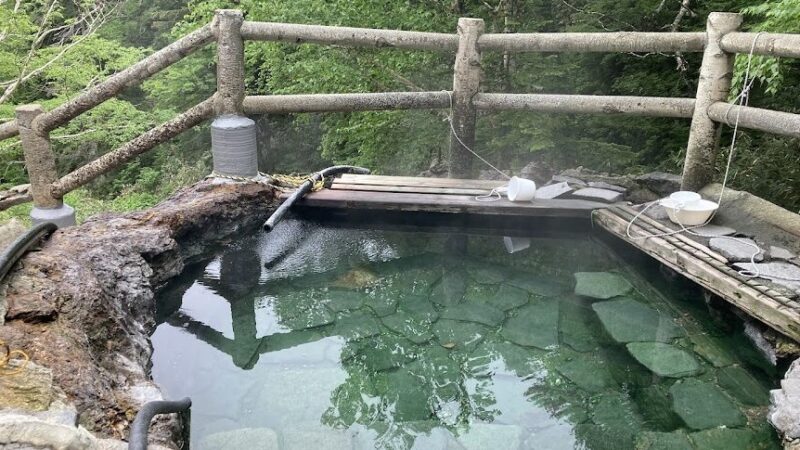
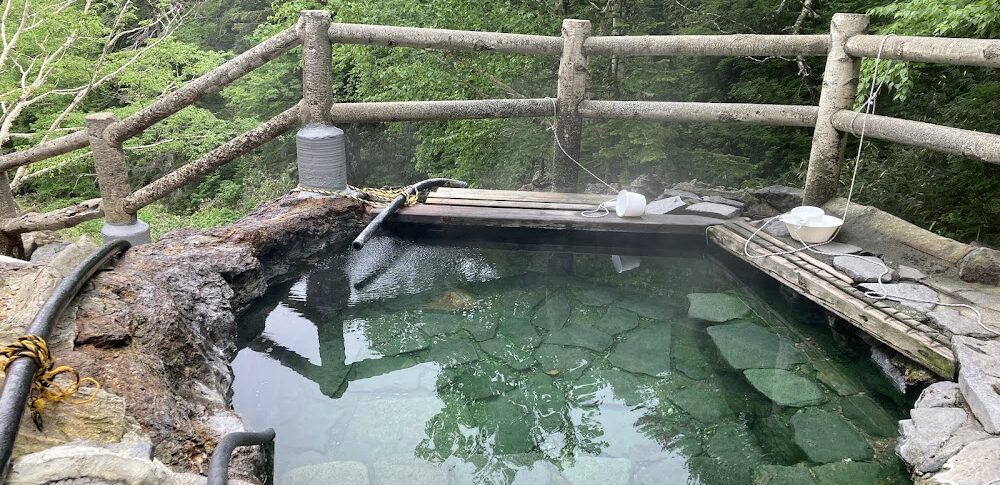
The greatest characteristic of Futamata Radium Hot Spring is the “limestone travertine dome” formed by the long-term accumulation of calcium carbonate from the hot spring waters. This natural formation is designated as a Hokkaido Natural Monument and exists nowhere else in Japan. From a global perspective, it is an extremely rare existence, with only two locations worldwide—Yellowstone National Park in America and this Futamata Radium Hot Spring.
The limestone travertine dome contains 95.75% calcium carbonate, and the purity of this composition is unparalleled worldwide. The sight of spring components accumulating over thousands of years to form this massive dome-shaped structure is truly spectacular.
History of Futamata Radium Hot Spring
The history of Futamata Radium Hot Spring is old, already being known as a therapeutic bathing destination in the Meiji era. From that time, the spring’s efficacy gained a reputation, and records show that people suffering from various illnesses visited for treatment and recuperation.
The scale of the hot spring resort is extremely small, with only the single inn “Futamata Radium Hot Spring Ryokan” currently drawing from the source. In 2001, the building was renovated to its current form, and the facilities became more modern, but the tradition and atmosphere of the therapeutic bathing destination continue to be preserved today.
Over many years, this hot spring has functioned not as a mere tourist attraction, but as a place for serious patients seeking health improvement. Therefore, long-term therapeutic bathing guests remain numerous to this day, and repeat visitors who come multiple times never cease.
Spring Quality and Hot Spring Characteristics
Details of Spring Quality
Futamata Radium Hot Spring possesses a composition of spring minerals that is rarely seen even in the world. It is called “Radium Hot Spring” because it contains trace amounts of radium, but under the classification based on hot spring law, the radioactivity concentration does not reach the required standard and is not strictly classified as a radioactive hot spring.
However, it is precisely this combination of trace radium and high-concentration calcium carbonate that creates the uniqueness of Futamata Radium Hot Spring. The characteristics of the spring components include the following:
- Calcium carbonate content rate: An extremely high purity of 95.75%
- Trace amounts of radium: Expected to have effects in promoting metabolism
- Abundant minerals: Various mineral components dissolved in the hot spring
Hot Spring Flowers (Hot Spring Precipitates)
Futamata Radium Hot Spring is also nationally famous for its “hot spring flowers.” The hot spring flowers, which are crystallized hot spring components, have been used since ancient times to improve skin condition. Many people use “Futamata Hot Spring flowers” at home and experience their effects.
Hot spring flowers can be purchased at the hot spring resort and can be added to your home bath to easily experience the components of Futamata Radium Hot Spring.
Efficacy and Health Benefits
Futamata Radium Hot Spring is expected to provide various health benefits from its unique spring quality.
Primary Efficacy
Trace amounts of radiation (radium) are believed to promote metabolism in appropriate doses, and are said to have the following effects:
- Skin conditions: Atopic dermatitis, eczema, psoriasis, etc.
- Joint and muscle pain: Rheumatism, neuralgia, arthritis
- Chronic diseases: Hypertension, arteriosclerosis, diabetes
- Fatigue recovery: Chronic fatigue, stress relief
- Skin beauty effects: Promotes skin metabolism, moisturizing effects
Use as Therapeutic Bathing
Many people still visit Futamata Radium Hot Spring for therapeutic bathing purposes. Therapeutic bathing is a traditional Japanese method of treatment where one stays at a hot spring for an extended period to improve health. Generally, a stay of one to several weeks is recommended, allowing the hot spring’s effects to be maximized.
Among those who have actually visited, many report saying things like, “The effect was better than expected” or “My skin condition improved dramatically.”
Facility Information: Futamata Radium Hot Spring Ryokan
Types of Bathing Facilities
Futamata Radium Hot Spring Ryokan has a total of 12 types of bathing pools:
- Men’s indoor bath: A spacious large bathing pool
- Women’s indoor bath: A relaxing indoor bath
- Large public bath (mixed bathing): Spacious overall space
- Hot spring pool: A pool using 100% natural hot spring water
- Various outdoor baths: Outdoor baths attached to each bathing area
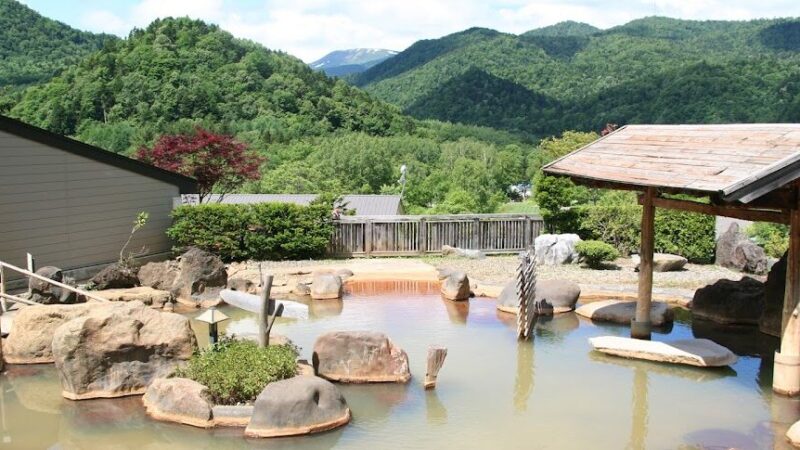
All bathing pools are source flowing baths, allowing you to fully experience the power of the hot spring. Especially from the outdoor baths, you can slowly soak while gazing at Hokkaido’s pristine nature.
Lodging Facilities
Since the 2001 renovation, the facilities are modern and clean. While maintaining the function as a therapeutic bathing destination, an environment where guests can spend time comfortably is established.
Self-catering facilities are also fully equipped for long-term guests, with room rates set to make it easy for therapeutic bathing guests to use repeatedly.
Day-Use Bathing
In addition to lodging, day-use bathing is also available. Even for those visiting from far away, you can easily experience the benefits of Futamata Radium Hot Spring. However, it is recommended to confirm operating hours and fees in advance.
Access Methods
Futamata Radium Hot Spring is located in the depths of a mountainous area, so access requires careful attention.
Access by Train
The nearest station is “Oshamambe Station” on the Hakodate and Chitose lines.
- From Sapporo: Approximately 2 hours by express train
- From Hakodate: Approximately 1 hour 30 minutes by express train
- From Oshamambe Station to the hot spring: Approximately 30 minutes by taxi
Since there is no public transportation from Oshamambe Station to the hot spring, use of a taxi is essential. It is recommended to make a reservation with a taxi company in advance.
Access by Road
By private vehicle:
- From Oshamambe town center via National Route 37
- Approximately 30 minutes of mountain road driving
- There are sections with narrow roads, so care is needed when driving
- In winter, there is risk of snow accumulation and freezing, so winter tires are essential
You can search for “Futamata Radium Hot Spring” or “Daiomine, Oshamambe Town, Yamakoshi District, Hokkaido” on your car’s navigation system. In some sections along the way, mobile phone signals are weak, so it is recommended to check the map in advance.
Precautions Regarding Access
- There are areas where mobile phone signals do not reach
- You may sometimes encounter wild animals such as foxes
- There are narrow roads where only one car can pass
- In winter, road conditions become severe, so advance confirmation is necessary
Tourist Information in the Surrounding Area
While Futamata Radium Hot Spring is a hidden single inn, there are other points of interest in the surrounding area of Oshamambe Town.
Oshamambe Town
Oshamambe is famous for “crab rice.” The “Crab Rice” station bento at JR Oshamambe Station is known nationwide and can be enjoyed before and after your hot spring visit.
Onuma Quasi-National Park
Heading toward Hakodate from Oshamambe, you will find Onuma Quasi-National Park. It is a tourist destination offering beautiful scenery with a view of Mount Komagatake, and many people visit it along with Futamata Radium Hot Spring.
Items to Bring and Advice for Visiting
Convenient Items to Bring
- Towels: Useful to have multiple
- Change of clothes for therapeutic bathing: Bring extra for long stays
- Books for reading: To leisurely spend time in the quiet environment
- Medications: Since there is no pharmacy nearby
- Cash: In case credit cards cannot be used
Best Season to Visit
Futamata Radium Hot Spring can be used year-round, but each season offers different attractions:
- Spring (April–June): Beautiful fresh greenery, comfortable climate
- Summer (July–August): Ideal as a summer retreat, verdant scenery
- Autumn (September–November): Spectacular autumn foliage, pleasant season for hot springs
- Winter (December–March): Can enjoy viewing snow from the bath, but be careful with access
Lodging Reservations and Inquiries
Reservations for Futamata Radium Hot Spring Ryokan can be made by phone or through the official website. Particularly during weekends, holidays, and therapeutic bathing season, the facility may become crowded, so early reservation is recommended.
Long-stay therapeutic bathing plans are also available, and rates may receive discounts depending on the length of stay. Details are recommended to be confirmed directly with the facility.
Summary of the Charm of Futamata Radium Hot Spring
Futamata Radium Hot Spring is not merely a tourist hot spring but a special place for those who seriously address their health. The limestone travertine dome—one of only two in the world, the unique spring quality containing trace amounts of radium, the history continuing as a therapeutic bathing destination since the Meiji era, and the serene environment where mobile phone signals do not reach—all of these together provide ideal conditions for healing body and mind while away from daily life.
As visitors’ comments saying “It was even better than expected” and “The hot spring’s effects exceeded my imagination” show, Futamata Radium Hot Spring provides an experience beyond expectations. Why not experience the world-unique hot spring power in Hokkaido’s pristine nature?
While access presents some difficulties, this is precisely the charm of a hidden hot spring and a reason worth visiting. Whether for day-use or lodging, Futamata Radium Hot Spring will surely leave you with special memories.
Frequently Asked Questions (FAQ)
Q1: Is Futamata Radium Hot Spring a radioactive hot spring?
A1: It is called “Radium Hot Spring” because it contains trace amounts of radium, but under the classification based on hot spring law, the radioactivity concentration does not reach the required standard and is not strictly classified as a radioactive hot spring. However, trace radiation is said to be beneficial to health.
Q2: Is day-use bathing possible?
A2: Yes, day-use bathing is available. However, it is recommended to confirm operating hours and fees in advance with the facility. Since you will need to take a taxi to and from Oshamambe Station, plan with plenty of time.
Q3: Can the limestone travertine dome be viewed?
A3: Yes, the limestone travertine dome is located right beside the ryokan and can be viewed by lodging guests and day-use bath visitors alike. You can see up close this precious natural formation designated as a Hokkaido Natural Monument.
Q4: Does it operate during winter?
A4: It operates year-round, but in winter there is snow accumulation and freezing on the roads, so access requires careful attention. Winter tires are essential, and in some weather conditions, passage may be difficult. It is recommended to check road conditions in advance.
Q5: How long should one stay for therapeutic bathing?
A5: A stay of one to several weeks is generally recommended. To experience the hot spring’s effects, a stay of at least three days is desirable. Long-stay plans are also available, so consult with the facility.
Q6: Can mobile phones be used?
A6: The area around the hot spring is in the depths of mountains, so mobile phone signals are weak. It is an ideal environment for digital detox, but it is recommended to confirm emergency communication methods in advance.
Q7: Where can hot spring flowers be purchased?
A7: They can be purchased at Futamata Radium Hot Spring Ryokan. By adding them to your home bath, you can easily experience the components of Futamata Radium Hot Spring. Online purchase may be possible in some cases, so check the official website.