Niseko Yumoto Hot Spring (Hokkaido) Complete Guide | Thorough Explanation of Source Flowing Hot Spring Sulfur Water and the Charm of Oyunuma
Niseko Yumoto Hot Spring is located in Rankoshi Town, Isoya District, Hokkaido, and is a hot spring resort particularly rich in history and natural blessings among the Niseko Hot Spring District. The milky white sulfur hot spring sourced from Oyunuma at the foot of Chisenupuri Mountain is known for its high beautifying effects and has long been cherished as a hot spring therapeutic resort. This article provides detailed explanations of everything you need to know before visiting Niseko Yumoto Hot Spring, including its charm, water quality, access methods, and surrounding sightseeing spots.
Characteristics and Charm of Niseko Yumoto Hot Spring
Natural Blessings Gushing from Oyunuma
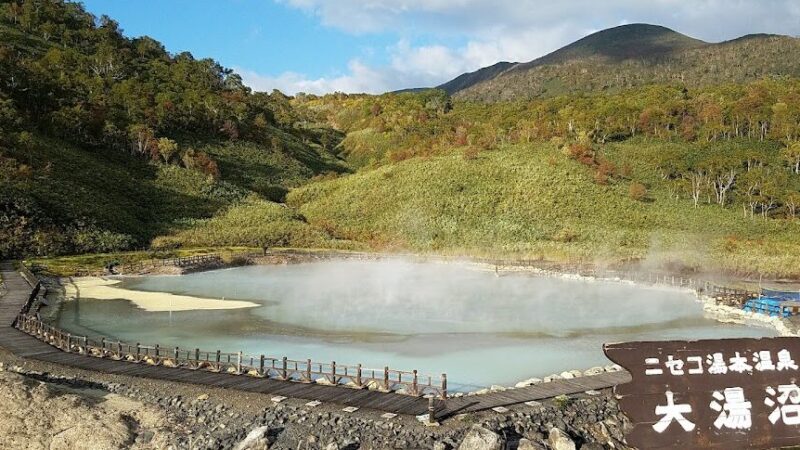
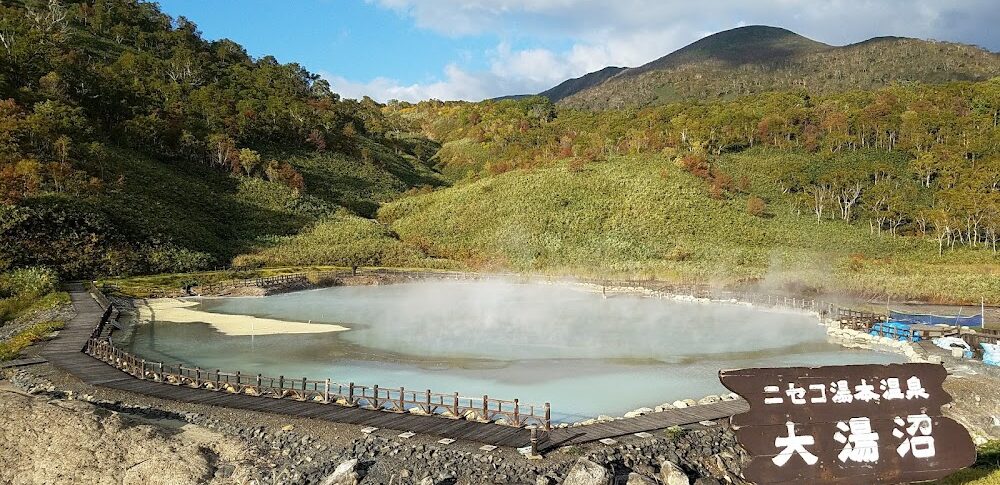
The greatest characteristic of Niseko Yumoto Hot Spring lies in its source, “Oyunuma” (Hot Spring Lake). This hot spring lake, measuring approximately 70 meters north to south and 30 meters east to west, constantly releases sulfur gas from its bottom and maintains a perpetually boiling state. The billowing white smoke rises tens of meters high, creating a spectacular landscape that evokes the powerful forces of nature.
The water temperature of Oyunuma is around 80 degrees Celsius, with a pH value of approximately 2.0, indicating strong acidity. The hot spring water drawn from this source is adjusted to a comfortable temperature at each lodging facility and provided as a source-flowing hot spring. The environment where nature’s power can be utilized directly as hot spring water is a luxury unique to Niseko Yumoto Hot Spring.
Beautiful Skin Effects Brought by Milky White Sulfur Hot Water
Niseko Yumoto Hot Spring’s water quality is classified as “sulfur hot spring (sulfur-containing sodium chloride and sulfate hot spring).” The characteristic milky white cloudy bath is evidence of abundant sulfur components. When soaking in the hot spring, the distinctive sulfur scent wafts, creating a strong sense of being at a hot spring resort.
Sulfur hot springs are known as “beauty baths” and can be expected to provide the following benefits:
- Skin beautifying effects: Softens dead skin cells and makes skin smooth
- Blood circulation promotion: Dilates capillaries and improves blood flow
- Improvement of chronic skin diseases: Effective for atopic dermatitis and chronic eczema
- Detox effects: Removes bodily waste through perspiration
- Relief of rheumatism and neuralgia: Pain relief through thermal effects and mineral components
Many lodging facilities also offer mud packs using “yuflower” (yubana), which accumulates at the bottom of the bathtub. This yuflower contains concentrated hot spring components, and applying it to the face and body can provide further skin beautifying effects.
Position within the Niseko Hot Spring District
Multiple hot spring resorts are scattered throughout the Niseko area, collectively called the “Niseko Hot Spring District.” Among them, Niseko Yumoto Hot Spring has the oldest history, with its opening dating back to the Meiji era. Located on the northeast side of Niseko Annupuri and at the foot of Chisenupuri Mountain at approximately 560 meters elevation, it also boasts the appeal of enjoying natural landscapes of all four seasons.
During winter, it serves as a base for skiers and snowboarders seeking Niseko’s finest powder snow, while in summer it functions as a place of healing after outdoor activities such as hiking and rafting, attracting many tourists throughout the year.
Address and Access to Niseko Yumoto Hot Spring
Basic Information
Location: Yuri, Rankoshi Town, Isoya District, Hokkaido
Inquiry: Rankoshi Town Tourism Association 0136-57-5655
For Those Coming by Car
Car access to Niseko Yumoto Hot Spring is convenient. The main routes are as follows:
From the Sapporo Area
- From central Sapporo via National Route 230 in approximately 2 hours (approximately 120km)
- From Otaru IC via Shiribeshi Expressway and National Route 5 in approximately 100 minutes (approximately 90km)
- From New Chitose Airport via National Routes 276 and 5 in approximately 2 hours 30 minutes (approximately 150km)
From the Hakodate Area
- From Hakodate City via National Route 5 in approximately 3 hours (approximately 200km)
Car Navigation Tips
Searching for “Niseko Yumoto Hot Spring” or “Oyunuma” will provide accurate directions. During winter, studded tires are essential due to snow and icy road surfaces. Also, considering poor visibility from snowstorms, it is recommended to plan travel with plenty of time to spare.
For Those Coming by Train
When using public transportation, JR Hakodate Main Line is the nearest railway line.
Main Route
- JR Sapporo Station → JR Kutchan Station (approximately 2 hours by express or rapid train)
- JR Kutchan Station → By taxi approximately 25 minutes (approximately 15km, estimated fare: around 4,000 yen)
Or
- JR Sapporo Station → JR Konbu Station (approximately 2 hours 15 minutes by express or rapid train)
- JR Konbu Station → By taxi approximately 30 minutes (approximately 18km, estimated fare: around 5,000 yen)
About Route Buses
Depending on the season, route buses operate from Kutchan Station toward the Niseko area, but buses running directly to Yumoto Hot Spring are limited. Most lodging facilities provide advance reservation shuttle services, so it is recommended to confirm this at the time of booking.
Access from Airport
From New Chitose Airport
- Using a rental car: Approximately 2 hours 30 minutes
- Airport bus + JR + taxi: Approximately 3 hours 30 minutes to 4 hours
- Some lodging facilities offer airport shuttle service (advance reservation required, paid)
During the winter ski season, direct buses from New Chitose Airport to the Niseko area sometimes operate. Check traffic information for your planned travel dates in advance.
Lodging Facilities at Niseko Yumoto Hot Spring
Tsukibi-no-Yado Akahane Onsen
One of the representative lodging facilities of Niseko Yumoto Hot Spring is “Tsukibi-no-Yado Akahane Onsen.” It boasts an open-air bath with 100% source-flowing sulfur hot spring, where guests can bathe while enjoying the changing scenery of the four seasons. A mud pack using yuflower accumulated at the bottom of the bath is very popular with guests and is known to deliver skin beautifying effects.
Guest rooms are centered around Japanese-style tatami rooms, providing a calm and peaceful atmosphere where guests can spend relaxing time. Meals feature kaiseki cuisine using fresh Hokkaido ingredients, allowing guests to enjoy local vegetables and seafood.
Yukichchichibu
“Yukichchichibu” is another popular inn in the Yumoto Hot Spring area. This facility also provides source-flowing hot spring water, and particularly receives high praise for the views from its open-air bath. In winter, snow-viewing baths are available, while in summer guests can bathe while enjoying new greenery and autumn leaves.
The warmth of hospitality characteristic of family-run management and home-cooked style cuisine are its attractions. It has many repeat customers and is recommended for those seeking a homey atmosphere.
About Day-Use Bathing
Some lodging facilities accept day-use bathing. However, available hours and fees vary by facility, and due to priority given to overnight guests, use may not be available during peak times. It is recommended to confirm by phone before visiting.
The general price range for day-use bathing is approximately 500 to 800 yen, and towels must be brought from home or purchased separately at most facilities.
Surrounding Hot Spring Resorts
Multiple attractive hot spring resorts are scattered throughout the Niseko area besides Yumoto Hot Spring. Since each has different water qualities and atmospheres, enjoying a hot spring tour is also recommended.
Niseko Annupuri Hot Spring
A hot spring resort located at the foot of Niseko Annupuri International Ski Resort. Many lodging facilities directly connected to the ski resort are particularly popular with winter sports enthusiasts. The water quality is sodium bicarbonate and sodium chloride hot spring, characterized by clear water different from Yumoto Hot Spring. It is highly effective for fatigue recovery and helps alleviate muscle pain after skiing.
Goshiki Hot Spring
A secret hot spring located at approximately 750 meters elevation at the foot of Iwanupuri Mountain. As its name suggests, it is known as a mystical hot spring where the water color changes depending on the time and weather. A type of sulfur hot spring, it is characterized by an even more concentrated sulfur scent than Yumoto Hot Spring. The rustic open-air bath is popular, allowing guests to experience unity with nature.
Niseko Moiwa Mountain Hot Spring
A hot spring resort around Niseko Moiwa Ski Resort. The water quality is sodium bicarbonate hot spring, known as a “beauty bath” for its soft skin feel. A relatively new hot spring resort with many modern facilities, this is its characteristic.
Niseko Yakushi Hot Spring
Located along National Route 5 with good accessibility. The water quality is sodium chloride hot spring with clear water, said to be effective for neuralgia and joint pain. Day-use bathing facilities are well-equipped, making it popular as a hot spring where visitors can easily stop by.
Konbu Hot Spring
A hot spring resort located at the gateway to the Niseko Hot Spring District. Close to JR Konbu Station, it offers relatively convenient access by public transportation. The water quality is sodium chloride and bicarbonate hot spring, characterized by high heat retention due to its salt content. Various types of lodging facilities are available, from large hotels to small inns.
Sightseeing Spots Around Niseko Yumoto Hot Spring
Oyunuma Natural Exhibits Hall
An exhibition facility located right next to Oyunuma, the source of the hot spring. Exhibits related to understanding Niseko’s nature and the origins of hot springs are displayed. From the observation deck of Oyunuma, you can see up close the boiling hot spring lake and rising white smoke, experiencing the powerful forces of nature. Admission is free, making it perfect to visit during a casual walk.
Chisenupuri Mountain Climbing
Chisenupuri, at 1,134 meters elevation, is popular as a relatively easy-to-climb mountain within the Niseko Mountain Range. From the trailhead to the summit takes approximately 2 hours, making it accessible to beginners. The summit offers panoramic views of Niseko Annupuri and Yotei Mountain, and on clear days, you can see as far as the Japan Sea.
The combination of mountain climbing and bathing in Yumoto Hot Spring after descending is highly recommended.
Niseko Panorama Line
Part of National Route 66, a spectacular scenic drive route traversing the Niseko Mountain Range. A road running from Yumoto Hot Spring through Goshiki Hot Spring and Iwanupuri Hot Spring toward the Niseko Annupuri area, allowing visitors to enjoy the magnificent nature of Niseko from their car windows. Particularly during autumn foliage season, the landscape is filled with vibrant colors, drawing many drivers.
The road is closed during winter due to heavy snow, limiting use to spring through autumn.
Jinsen Marsh
A high-altitude wetland marsh located approximately 15 minutes by car from Yumoto Hot Spring. A boardwalk about 800 meters in circumference is constructed, creating a walking trail that takes approximately 30 minutes to complete. The landscape where the sky and surrounding mountains are reflected in the water surface is beautiful, creating a mystical atmosphere worthy of its name, “where gods play.”
Early morning visits during quiet hours or visits during autumn foliage season are especially recommended.
Niseko Village
A comprehensive resort facility located approximately 20 minutes by car from Yumoto Hot Spring. Winter offers skiing and snowboarding, while summer features golf, zip-lining, Segway tours, and various other activities throughout the year. Shopping and restaurants are well-equipped, offering a facility where families can enjoy a full day of activities.
Niseko Yumoto Hot Spring’s Pleasures Throughout the Four Seasons
Spring (April to June)
The season when new greenery sprouts as snow melts. Mountains begin to show spreading green while some snow remains. This period has relatively fewer tourists, allowing for quiet enjoyment of hot springs. From around Golden Week, wild vegetable foraging becomes possible, with lodging facilities sometimes offering dishes prepared with locally harvested mountain vegetables.
Summer (July to August)
Even when the main island of Japan experiences extreme heat, Niseko has a cool and comfortable climate. Maximum temperatures hover around 25 degrees Celsius, making it ideal as a summer retreat. Outdoor activities such as mountain climbing, hiking, and rafting followed by hot spring bathing are exceptional experiences. Summer open-air baths offer a sense of openness, allowing bathing while enjoying the starry sky.
Autumn (September to November)
Niseko’s autumn is a season of beautiful autumn leaves. From late September through early October, mountains like Chisenupuri and Iwanupuri begin turning red and yellow with foliage. The luxury of bathing in hot spring while viewing autumn leaves is a unique experience. Additionally, this period offers abundant Hokkaido flavors, making meals all the more enjoyable.
Winter (December to March)
Many skiers from Japan and abroad visit seeking Niseko’s world-famous powder snow. While Yumoto Hot Spring is somewhat removed from major ski resorts, its charm lies in being able to enjoy a quiet atmosphere. Snow-viewing baths are a winter-exclusive pleasure, creating a fantastical experience while bathing and viewing accumulated snow.
During winter, temperatures often drop below minus 10 degrees Celsius. Open-air baths see steam rising and hair freezing in the intense cold, but this too is a distinctly Hokkaido hot spring experience.
Tips for Spending Time at Niseko Yumoto Hot Spring
How to Bathe in Hot Springs
Since sulfur hot springs are highly stimulating, observe the following points when bathing:
- Hydration Before and After Bathing: Due to strong perspiration effects, frequent water intake is important
- Bathing Duration: Keep each bathing session to approximately 10-15 minutes, avoiding prolonged soaking
- Thorough Pre-Bathing Rinse: Use adequate rinsing to acclimate your body to the hot spring before entering
- Remove Metal Accessories: Metal may discolor due to sulfur components
- Skip the Final Rinse: To retain hot spring components on skin, it is more effective not to shower after exiting
Packing Checklist
- Towels: Necessary to bring when using day bathing
- Skincare Products: Sulfur hot springs tend to dry skin, making moisturizing care essential
- Cold-Weather Clothing: Adequate cold protection especially during winter
- Non-Slip Footwear: Suitable for snowy or icy surfaces
- Camera: For photographing Oyunuma and surrounding natural scenery
Booking Tips
Lodging facilities at Niseko Yumoto Hot Spring tend to be small-scale, requiring early advance reservations especially during high seasons (winter ski season and autumn foliage season). The following timing for reservations is recommended:
- Winter (December to March): Begin reservations 3-6 months in advance
- Foliage Season (October): Begin reservations 2-3 months in advance
- Other Seasons: Vacant rooms often available one month in advance
When making phone reservations, it is good to also confirm shuttle service availability, meal contents, and day-use bathing options.
History of Niseko Yumoto Hot Spring
The history of Niseko Yumoto Hot Spring is old, with its opening dating back to the Meiji era. The Ainu people knew of the hot spring’s existence in this area long ago, and the mountain name “Chisenupuri” in the Ainu language means “house-shaped mountain.”
Serious hot spring development by settlers began in the late Meiji period, and by the Taisho era it thrived as a therapeutic hot spring resort. Initially, poor transportation meant visitors were mainly local people and serious hot spring therapy patients, but as roads improved after the Showa era, tourist numbers gradually increased.
After World War II, with the progress of tourism development throughout Hokkaido, the entire Niseko area developed as a ski resort. Yumoto Hot Spring became used as a winter accommodation base for ski tourists and as a starting point for summer mountain climbing and hiking activities.
In recent years, it has gained attention from hot spring enthusiasts seeking authentic source-flowing hot springs and travelers prioritizing contact with nature. The history of developing while avoiding large-scale development and preserving the natural environment has led to its current appeal as a quiet hot spring resort.
Summary: Experience Supreme Hot Spring Bathing at Niseko Yumoto Hot Spring
Niseko Yumoto Hot Spring is a hot spring resort in the Niseko area where you can particularly experience unity with nature. The 100% source hot spring sulfur water gushing from Oyunuma is highly effective for skin beautification and is perfect for relieving daily fatigue.
Access from Sapporo and New Chitose Airport is favorable, taking approximately 2-3 hours by car. Multiple hot spring resorts with different water qualities such as Goshiki Hot Spring and Niseko Annupuri Hot Spring are scattered nearby, making hot spring tours also recommended.
Scenic landscapes throughout the seasons, activities such as mountain climbing and skiing, and above all, high-quality hot springs. Niseko Yumoto Hot Spring, where you can enjoy all of these, is definitely a must-visit hot spring resort when traveling to Hokkaido.
On your next vacation, why not embark on a journey to Niseko Yumoto Hot Spring to refresh both body and mind? The luxurious time of soaking in milky white sulfur hot spring water while feeling Hokkaido’s magnificent nature awaits you.