Sounkyo Hot Spring Hokkaido Complete Guide | Hot Spring Quality, Access, Recommended Accommodations, and Tourism Information
Sounkyo Hot Spring, located at the foot of the Daisetsuzan mountain range in central Hokkaido, is one of the leading hot spring destinations in the prefecture, situated within Daisetsuzan National Park, Japan’s largest national park. The hot spring town, which has developed along approximately 24km of a grand canyon carved by the Ishikari River over many years, boasts magnificent natural scenery and abundant hot spring water, attracting numerous tourists throughout the year.
This article comprehensively introduces information to fully enjoy this hot spring destination, covering everything from the spring quality and efficacy of Sounkyo Hot Spring, access methods, recommended accommodations, tourist spots, and day-use hot spring facilities.
Sounkyo Hot Spring | A Famous Hot Spring in the Hidden Paradise of Daisetsuzan National Park
History and Discovery of Sounkyo Hot Spring
The history of Sounkyo Hot Spring is relatively recent, discovered between 1954 and 1960. However, the region itself has long been known to the Ainu people as “Souunbetsu (a river with many waterfalls)” and was an important route used during hunting. The Ainu called Daisetsuzan “Kamuimintara (the playground of the gods),” expressing the sacredness of this area.
After the discovery of the hot spring, development progressed rapidly, and today it has evolved into one of Hokkaido’s leading hot spring towns with approximately 20 hotels and inns. It boasts the largest scale among hot springs in the Daisetsuzan area and has gained nationwide recognition.
Geography and Natural Environment of Sounkyo
Sounkyo is a large gorge spanning approximately 24km in the upper Ishikari River basin. Lava deposited by volcanic activity about 30,000 years ago was eroded by the flow of the Ishikari River over approximately 10,000 years, forming the canyon. Steep cliffs ranging from 100m to 200m in height, and in some places exceeding 600m, create a spectacular landscape with remarkable columnar jointing of the rock faces.
Daisetsuzan National Park, covering approximately 230,000 hectares, is Japan’s largest national park, with Sounkyo Hot Spring positioned as the gateway to its northeast. Diverse vegetation due to elevation changes, abundant wildlife, and nature displaying different faces throughout the four seasons are the greatest attractions of this hot spring destination.
Spring Quality and Efficacy of Sounkyo Hot Spring | Hot Spring Composition Suitable for Therapeutic Use
Characteristics of Main Spring Qualities
The spring quality of Sounkyo Hot Spring varies slightly among facilities, but is primarily classified into the following two types:
Simple Hot Spring (Simple Sulfur Spring)
- A spring quality with relatively low content of hot spring minerals, offering minimal stimulation
- Gentle on the skin and suitable for a wide age range
- Has a subtle sulfur aroma
Sulfur Spring
- A spring quality containing sulfur components, characterized by its distinctive aroma
- Expected to offer sterilization and blood circulation promotion effects
- Some facilities feature whitish-colored hot spring water
The hot spring water volume of Sounkyo is extremely abundant, with some sources boasting a discharge of over 800 liters per minute. The temperature is also appropriate, and many facilities offer source spring water baths with minimal heating or dilution.
Expected Benefits
The hot spring minerals of Sounkyo Hot Spring are expected to provide the following benefits:
- Neuralgia and Muscle Pain: Blood circulation is promoted by the thermal effect of hot springs, providing pain relief
- Rheumatism and Joint Pain: The minerals in the hot spring are said to have anti-inflammatory effects
- High Blood Pressure and Arteriosclerosis: Blood vessel dilation effects are expected to help stabilize blood pressure
- Diabetes: Continuous bathing as hot spring therapy is recommended
- Fatigue Recovery: Thermal effects and relaxation effects of the hot spring promote recovery
- Cold Sensitivity: The body warms from the core, improving blood flow in peripheral blood vessels
- Skin Conditions: Sterilizing effects of sulfur springs are expected to improve skin troubles
Sounkyo Hot Spring Quality Table
| Item | Details |
|——|———|
| Spring Quality | Simple Hot Spring, Simple Sulfur Spring, Sulfur Spring |
| Temperature | Approximately 40–60°C (source temperature) |
| pH Value | Weakly alkaline to alkaline |
| Discharge Volume | Over 800 liters per minute (varies by facility) |
| Main Components | Sulfur, sodium, calcium, etc. |
| Characteristics | Subtle sulfur aroma, minimal irritation, gentle on skin |
Access to Sounkyo Hot Spring | How to Get There from Sapporo and Asahikawa
By Airplane
From Asahikawa Airport
- Approximately 90 minutes from Asahikawa Airport to Sounkyo Hot Spring
- Renting a car is most convenient (via National Route 39)
- Combination of airport shuttle bus and local buses is also possible
From New Chitose Airport
- Approximately 3 hours 30 minutes from New Chitose Airport to Sounkyo Hot Spring
- Renting a car via expressway is convenient
- Combination of airport bus, JR, and local buses is also possible
By JR Train
From Sapporo Station
- Take JR Limited Express Lilac or Kamui to Asahikawa Station (approximately 1 hour 30 minutes)
- Travel from Asahikawa Station to Kamikawa Station via JR Sekihoku Main Line (approximately 1 hour)
- Travel from Kamikawa Station to Sounkyo Hot Spring via Dohoku Bus Sounkyo Line (approximately 30 minutes)
From Kamikawa Station
- Dohoku Bus Sounkyo Line in approximately 30 minutes
- Only a few buses per day, so advance confirmation of timetable is necessary
- Taxi is also available (approximately 25 minutes, fare around 5,000 yen)
By Car
From Sapporo
- Via Doo-Ouh Expressway → Asahikawa Takasu IC → National Route 39
- Travel time: Approximately 3 hours (approximately 180km)
- Exercise caution for road surface freezing in winter
From Asahikawa
- Continue north on National Route 39 toward Kitami
- Travel time: Approximately 1 hour 30 minutes (approximately 80km)
- Convenience stores and gas stations along the route
From Asahikawa Airport
- Via Prefectural Route 140 → National Route 39
- Travel time: Approximately 1 hour 20 minutes (approximately 70km)
By High-Speed Bus
From Sapporo
- Use Dohoku Bus high-speed bus “Sounkyo/Kamikawa Line”
- Travel time: Approximately 3 hours 30 minutes
- 1-2 buses per day (varies by season)
- Reservation recommended
Access Points
- Winter (November to April): Snow and frozen roads require winter tires. Use of public transportation is recommended for those not confident in driving
- Summer (June to September): Peak tourism season, so book accommodations early
- Rental Car: Ideal for efficiently visiting surrounding tourist spots. Many rental car companies available near Asahikawa Airport and Asahikawa Station
Recommended Hotels and Inns in Sounkyo Hot Spring | Complete Accommodation Guide
Approximately 20 hotels and inns line Sounkyo Hot Spring town, each with distinct characteristics. Here we introduce representative accommodations.
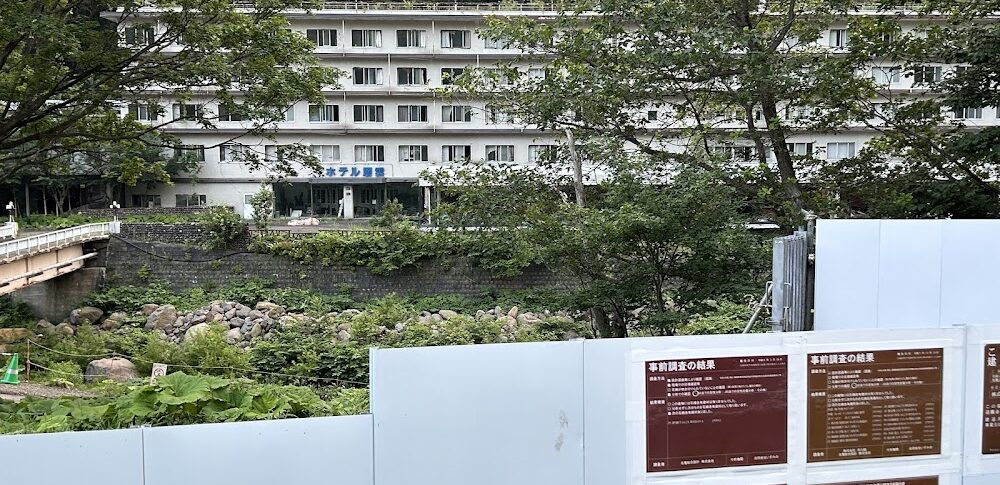
Hotel Taisetsu ONSEN & CANYON RESORT
A large resort hotel representing Sounkyo Hot Spring. Its spectacular open-air bath overlooking the gorge is a highlight, with two large baths on the first and fifth floors, each offering different atmospheres. Guest rooms include Japanese-style, Western-style, and Japanese-Western hybrid rooms, accommodating families and couples. Restaurants serve dishes using seasonal Hokkaido ingredients.
Features:
- Spectacular open-air bath overlooking the gorge
- Abundant hot spring water exceeding 800 liters per minute
- Lounge and shop facilities in the building
- Close to Sounkyo Ice Waterfall Festival venue
Sounkyo Hot Spring Asahitei
An established inn located in the center of Sounkyo Hot Spring town. Popular for its open-air bath overlooking the magnificent Daisetsuzan scenery and indoor bath with wooden warmth. Meals can be chosen from buffet or kaiseki cuisine using Hokkaido’s marine and mountain delicacies. A private bath for family use is also available.
Features:
- Open-air bath with views of Daisetsuzan
- Diverse buffet cuisine
- Private bath available (reservation required)
- Within walking distance to Canyon Mall
Sounkyo Hot Spring Sounkyo Kanko Hotel
A hotel known for its large mixed-gender open-air bath suitable for families. The hotel’s signature mixed-gender open-air bath “Kumoi no Yu,” Japan’s largest, features openness surrounded by nature (special bathing wear required). Guest rooms offer views of Sounkyo’s gorge scenery, allowing enjoyment of seasonal landscapes.
Features:
- Large open-air bath for family enjoyment
- Guest rooms with spectacular gorge views
- Cuisine utilizing local ingredients
- Welcoming atmosphere
Sounkyo-kaku Grand Hotel
One of the hotels with the longest history in Sounkyo Hot Spring. The large bath “Tenka no Yu” is spacious and equipped with a sauna. Meals focus on Japanese kaiseki cuisine using seasonal Hokkaido ingredients, with private dining areas available. The lobby overlooks Sounkyo’s gorge, allowing guests to enjoy spectacular views from check-in.
Features:
- Calm atmosphere befitting an established hotel
- Spacious large bath and sauna
- Kaiseki cuisine in private dining areas
- Lobby lounge with gorge views
Hot Spring Source Ginsenkan
A hot spring inn with its own private hot spring source. The greatest appeal is enjoying source spring baths with 100% source water. Though small-scale, the inn is known for attentive service and has many repeat guests. Cuisine features creative Japanese cuisine emphasizing Hokkaido ingredients.
Features:
- 100% source water flowing directly from private spring
- Attentive service characteristic of small inns
- Cuisine emphasizing Hokkaido ingredients
- Quiet, peaceful atmosphere
Natural Hot Spring Mount View Hotel
An inn appealing for its reasonable pricing. Equipped with a natural hot spring large bath, it is frequently used as a base for sightseeing and business. Abundant accommodation options from meal-free to meal-included plans allow selection based on budget.
Features:
- Excellent cost-performance
- Natural hot spring large bath
- Diverse accommodation plans
- Suitable for long-term stays
Sounkyo Hot Spring Pension Ginga
A small pension-style inn in the hot spring area. Characterized by a homey atmosphere and friendly service. While hot spring use involves nearby facilities, the inn appeals with reasonable pricing and homemade cuisine. Popular with backpackers and solo travelers.
Features:
- Homey atmosphere characteristic of pensions
- Homemade cuisine
- Reasonable pricing
- Ideal for small groups
Tips for Finding Accommodation Plans
Check-in and Check-out Times
- Standard check-in: 15:00–18:00
- Standard check-out: 10:00
- Consult in advance for early departures or late check-ins
Reservation Tips
- Early reservation essential for autumn foliage season (late September to early October)
- Winter Ice Waterfall Festival period (late January to mid-March) also crowded
- Weekdays and off-season offer discounted plans
- Many inns offer multi-night discounts
Day-Use Hot Spring Facilities in Sounkyo Hot Spring | Visitor Information
Enjoy Sounkyo Hot Spring without staying overnight at these day-use facilities.
Hotels and Inns Accepting Day-Use Baths
Many hotels and inns accept day-use bathing:
Hotel Taisetsu
- Hours: 13:00–18:00 (final entry 17:00)
- Fee: Approximately 1,000 yen for adults
- Both first and fifth floor large baths available
- Towel rental available
Sounkyo Kanko Hotel
- Hours: 12:00–18:00
- Fee: Approximately 800 yen for adults
- Signature large open-air bath available for day-use
- Bathing wear rental available
Asahitei
- Hours: 14:00–18:00
- Fee: Approximately 1,000 yen for adults
- Open-air and indoor baths available
- Rest space available
Notes on Day-Use Bathing
- Bathing may be restricted during busy times, as lodging guests are prioritized
- Advance phone confirmation of acceptance is recommended
- Winter hours may change
- Bring towels or use paid rental
- Some facilities offer day-use plans with meals
Tourist Spots Around Sounkyo Hot Spring | Complete Sightseeing Guide
Natural Scenery of Sounkyo
Ginga Falls and Ryusei Falls
Two famous waterfalls representing Sounkyo. Ginga Falls has a drop of 120m and Ryusei Falls a drop of 90m, both selected as “Japan’s Top 100 Waterfalls.” Ginga Falls flows elegantly like white silk, earning the nickname “female waterfall,” while Ryusei Falls drops powerfully and dramatically, earning the nickname “male waterfall.”
The Souhakudai observation platform allows simultaneous viewing of both falls, making it an excellent photo spot. The platform requires approximately 20 minutes of hiking on a mountain trail, but the value is certainly worthwhile.
Columnar Jointing
The columnar jointing visible on Sounkyo’s cliff faces were formed when lava cooled and solidified into regular hexagonal columnar rocks. The regularly arranged columnar jointing creates an awe-inspiring landscape showcasing nature’s formative beauty. Walking the gorge-side promenade from the hot spring area allows close observation.
Daikan and Shokan
Areas of Sounkyo with particularly beautiful columnar jointing. Daikan features cliffs 200m high in succession, while Shokan is a scenic area of strange rock formations. Currently, Shokan is closed due to falling rock danger, but Daikan has an observation platform along the national highway, viewable from the roadside.
Kurohake Ropeway and Mountaineering
Kurohake Ropeway
A ropeway connecting Sounkyo Hot Spring town to Kurohake’s 5th Station (elevation 1,300m) in approximately 7 minutes. From the 5th station, a further lift to the 7th station (elevation 1,520m) is available.
- Operating period: Early June to mid-October (varies by year)
- Winter operation (December–March) as a ski resort
- Fee: Approximately 2,400 yen for adults round trip (ropeway only)
- Travel time: 7 minutes one way
Kurohake Mountaineering
From the 7th station to Kurohake peak (elevation 1,984m) is approximately 1 hour 30 minutes of hiking. Popular as a relatively beginner-friendly mountain, the summit offers panoramic views of the Daisetsuzan range, with views extending to the Okhotsk Sea on clear days.
- Mountaineering season: July–September
- Travel time: Approximately 3 hours round trip from 7th station to peak
- Equipment: Hiking boots, warm clothing, rain gear essential
- A treasury of alpine plants with various flowers blooming in summer
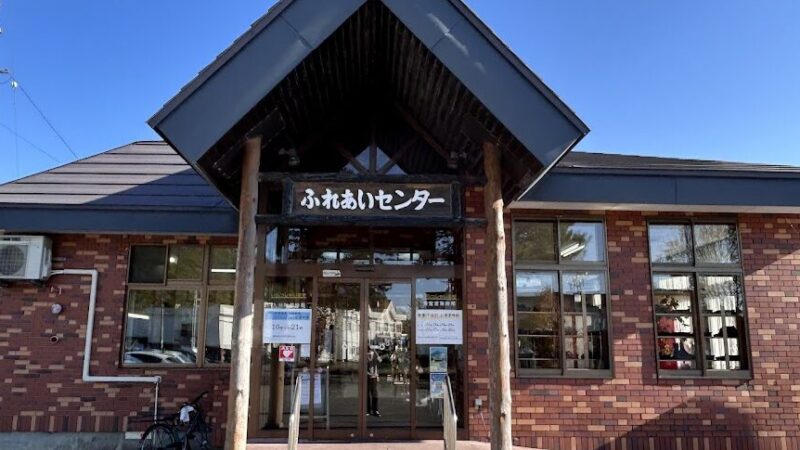
Sounkyo Visitor Center
A facility for learning about Daisetsuzan National Park’s nature, history, and mountaineering information. Diorama and video exhibits deepen understanding of Sounkyo and Daisetsuzan. Ideal for pre-mountaineering information gathering.
- Admission: Free
- Hours: 8:00–17:30 (June–October), 9:00–17:00 (November–May)
- Closed: Year-end and New Year holidays
- Mountaineering consultation corner available
Canyon Mall
A shopping area developed in the center of the hot spring town. Featuring North American mountain resort atmosphere inspired by Banff, Canada, it offers a different ambiance from other hot spring areas. Souvenir shops, restaurants, and convenience stores line the area, ideal for strolling.
Nighttime illumination creates a romantic atmosphere. During winter, it becomes the main venue for the “Sounkyo Hot Spring Ice Waterfall Festival.”
Sounkyo Hot Spring Ice Waterfall Festival
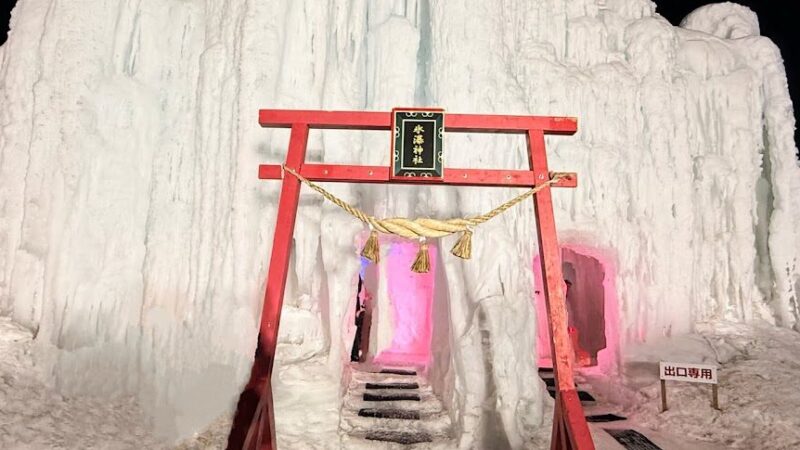
A major winter event held annually from late January to mid-March. Giant ice structures created by freezing Ishikari River water stand throughout the area, creating a fantastical frozen world.
Highlights:
- Ice structures over 10m tall
- Ice tunnels and ice shrines
- Nighttime illumination (changing through 7 colors)
- Ice slide (popular with children)
- Fireworks on weekends
Event Information:
- Period: Late January to mid-March (varies by year)
- Hours: 10:00–22:00
- Admission: Approximately 500 yen
- Venue: Canyon Mall special event space
Four Seasons of Sounkyo Hot Spring | Best Season and How to Enjoy
Spring (April–May)
A season when fresh green shoots appear with snow melt. The contrast between lingering snow on Daisetsuzan and new foliage is beautiful.
- Temperature: 5–15°C
- Attire: Warm clothing essential
- Highlights: Snow melt waterfalls, spring alpine plants
- Notes: Some roads may remain closed for winter
Summer (June–August)
Alpine flowers bloom in profusion, the best mountaineering season. Kurohake and other Daisetsuzan peaks offer excellent hiking.
- Temperature: 15–25°C (lowlands), 5–15°C (mountain peaks)
- Attire: Short sleeves possible during day, long sleeves needed mornings and evenings
- Highlights: Alpine plants, mountaineering, fresh green gorge
- Event: Sounkyo Gorge Valley Fire Festival (late July)
Autumn (September–October)
The most popular season at Sounkyo Hot Spring. Brilliant autumn foliage colors the gorge, creating spectacular scenery.
- Temperature: 5–15°C
- Attire: Long sleeves, warm clothing
- Highlights: Autumn foliage (peak late September to early October)
- Notes: Very crowded during foliage season, book accommodations early
- Foliage peak: Varies by elevation, Kurohake peak mid-September, town area early October
Winter (November–March)
A fantastical world covered in snow and ice. The Sounkyo Hot Spring Ice Waterfall Festival offers unique winter enjoyment.
- Temperature: -10 to -20°C (deep winter)
- Attire: Complete cold-weather gear essential
- Highlights: Ice Waterfall Festival, snow trees, winter gorge beauty
- Activities: Snowshoes, Kurohake ski area
- Notes: Exercise caution for road freezing and reduced visibility from blizzards
How to Spend Time at Sounkyo Hot Spring | Model Courses
Day-Trip Course (Approximately 6 hours)
10:00 Arrival at Sounkyo Hot Spring
10:15 Information gathering at Sounkyo Visitor Center
10:45 Ginga Falls and Ryusei Falls sightseeing
11:30 Hiking to Souhakudai observation platform (40 minutes round trip)
12:30 Lunch at Canyon Mall
13:30 Kurohake Ropeway to 5th station
15:00 Descent and day-use hot spring bath
16:30 Departure
1-Night, 2-Day Course
Day 1
13:00 Arrival at Sounkyo Hot Spring
13:30 Hotel check-in
14:00 Walk along gorge-side promenade
15:30 Ginga Falls and Ryusei Falls sightseeing
17:00 Return to hotel for hot spring bath
18:00 Dinner
19:30 Explore Canyon Mall
Day 2
6:00 Morning bath
7:30 Breakfast
9:00 Kurohake Ropeway mountaineering
13:00 Descent and lunch
14:00 Sounkyo Visitor Center tour
15:00 Check-out and departure
2-Night, 3-Day Course (Daisetsuzan Experience)
Day 1
- Afternoon arrival, hot spring area exploration, hot spring relaxation
Day 2
- Full-day Kurohake mountaineering (or Akadake/Asahidake areas)
- Soothe fatigue with hot spring after hiking
Day 3
- Morning tour of surrounding tourist spots
- Lunch and departure
Sounkyo Hot Spring Gourmet | Recommended Restaurants
Cuisine Using Local Ingredients
Ingredients from Kamikawa Town
- “Daisetsu Salmon” raised in Daisetsuzan mountain stream waters
- “Kamikawa Ramen” from Kamikawa town
- Wild vegetables harvested locally
- Hokkaido-produced venison
Restaurants Around Canyon Mall
Ramen shops, set meal restaurants, and cafes dot the area around Canyon Mall. Many offer dishes using local ingredients, ideal for stopping during sightseeing.
Recommended Dishes:
- Daisetsuzan Ramen: Rich soup using local miso
- Venison Dishes: Healthy low-fat, high-protein cuisine
- Mountain Vegetable Dishes: Seasonal tempura and dressed vegetables
- Jingisukan: Hokkaido’s famous lamb dish
Meals at Accommodations
Most hotels and inns serve cuisine featuring Hokkaido’s seafood and mountain delicacies generously.
Typical Dinner Menu:
- Seafood including king crabs and scallops
- Hokkaido beef steaks
- Local vegetable dishes
- Regional cuisine
- Hokkaido dairy desserts
Buffet-style inns may offer 50 or more dishes, allowing guests to enjoy as much as desired.
Sounkyo Hot Spring Basic Information and Travel Planning Tips
Basic Information
Location: Sounkyo, Kamikawa Town, Kamikawa District, Hokkaido
Inquiries: Sounkyo Tourism Association TEL: 01658-2-1811
Hot Spring Area Size: Approximately 20 hotels and inns
Annual Visitors: Approximately 1 million
Elevation: Approximately 670m
Travel Planning Tips
Length of Stay
- 1–2 nights recommended for hot spring and surrounding sightseeing
- 2–3 nights or more recommended including mountaineering
- Day-trip also allows visiting major spots
Budget Estimate (Per Person)
- Accommodation: 8,000–25,000 yen (1 night with 2 meals)
- Transportation: 10,000–15,000 yen round trip from Sapporo
- Sightseeing: Approximately 5,000 yen for ropeway and admission fees
- Meals and Souvenirs: 5,000–10,000 yen
- Total: Approximately 30,000–55,000 yen
Packing List
- Seasonal clothing (layerable)
- Warm clothing (especially spring, autumn, winter)
- Rain gear
- For mountaineering: Hiking boots, backpack, water bottle, snacks
- Camera (numerous scenic spots)
- Basic medications
Combining with Nearby Hot Spring Areas
Asahidake Hot Spring
- Approximately 1 hour 30 minutes by car from Sounkyo
- Hot spring at the base of Daisetsuzan’s main peak, Asahidake
- Appeals with its remote hot spring atmosphere
Teninkyo Hot Spring
- Approximately 1 hour by car from Sounkyo
- Famous for Hagoromo Falls
- Quieter hot spring area
Hot Springs in Asahikawa City
- Approximately 1 hour 30 minutes by car from Sounkyo
- Close to city, allowing combination of sightseeing and hot springs
Maximizing the Charm of Sounkyo Hot Spring
Sounkyo Hot Spring is Hokkaido’s leading hot spring destination, boasting magnificent natural scenery, high-quality hot springs, excellent accommodations, and seasonal charm. As the gateway to Daisetsuzan National Park, it serves as an ideal base for mountaineering and hiking, perfect for those wishing to fully experience nature.
The spring quality of simple hot springs and sulfur springs offers therapeutic benefits. Abundant source spring water with free-flowing baths allows for thorough relaxation from daily fatigue.
Access is 2–3 hours by car from Sapporo or Asahikawa. Public transportation is available, making visits possible without rental cars, though rental vehicles are recommended for efficiently touring surrounding attractions.
Accommodations range from large resort hotels to small inns and pensions, allowing selection based on budget and preference. Day-use bathing is also available, allowing enjoyment of Sounkyo even with limited time.
The autumn foliage season from late September to early October and winter Ice Waterfall Festival period are particularly popular, with accommodations filling quickly. Plan with advance notice.
Fully savor Hokkaido’s great nature and famous hot springs at Sounkyo Hot Spring. The gorge’s ever-changing seasonal beauty, hot springs warming you from your core, and Hokkaido’s distinctive cuisine will create unforgettable travel memories.